

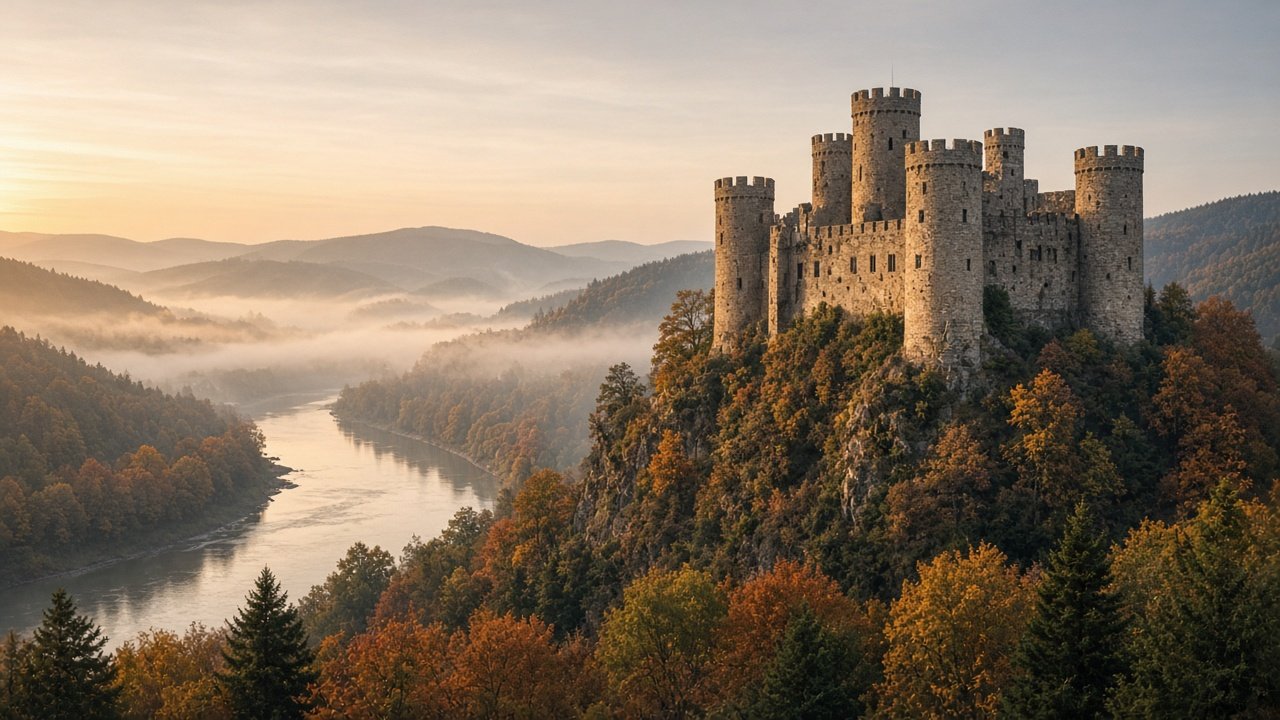

Europe has more castles than anyone has ever managed to count. Some are crumbling ruins on windswept headlands, some are royal homes still in use today, and some are 19th-century fantasies built long after castles stopped being needed for war. Together they tell the story of the continent: Norman conquest, wars between kings, Romantic dreams and centuries of family pride.
This guide is the starting point for exploring castles in Europe on Regal Castles. It travels country by country, from Scotland and England to Germany, France, Spain, Portugal and Central and Eastern Europe, picking out the castles that are most worth your time, explaining what makes each region different, and pointing you to our in-depth guides for each country. Opening days, hours and ticket rules change by season, so always check the official site of each castle before you travel.
If Scotland is first on your list, start with our guide to castles in Scotland, which covers Edinburgh, Stirling, Urquhart, Eilean Donan and Glamis in detail. Our other country travel guides go deeper into each region covered here, and together they make this page a map of the historic castles of Europe.
Castles in Scotland
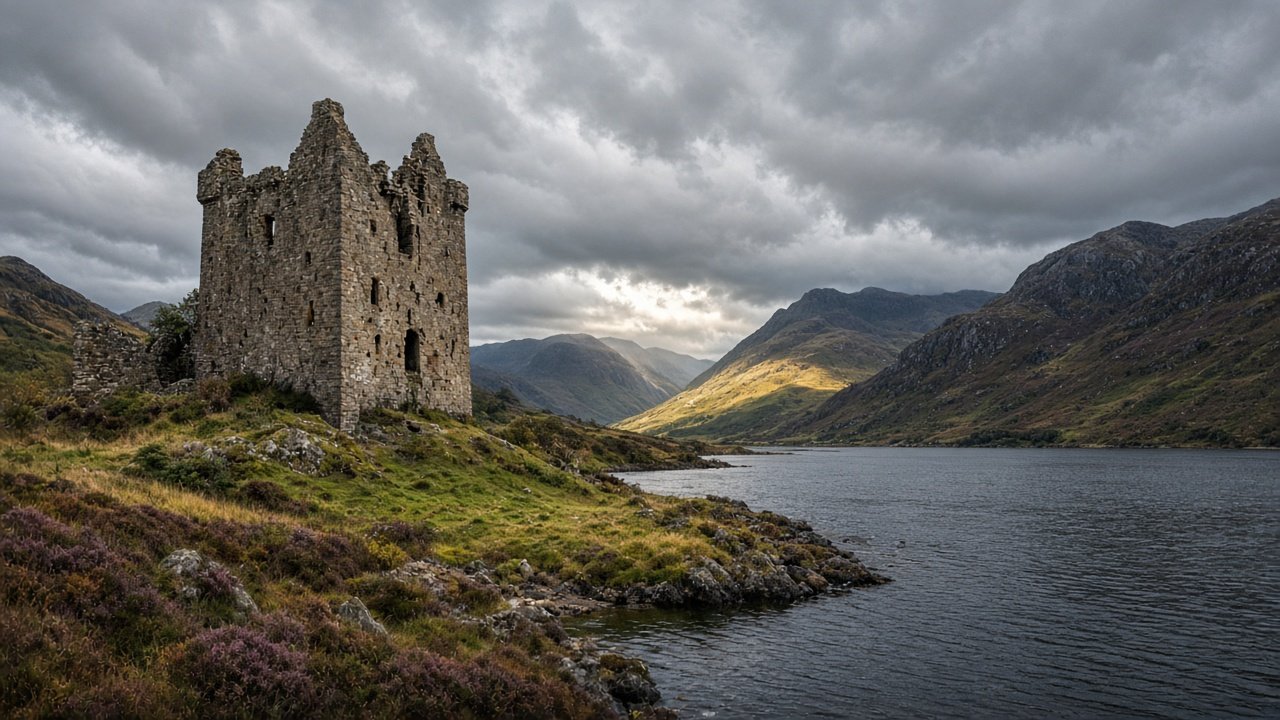
Scotland is often called a land of castles, and for good reason. Centuries of war with England, feuds between clans and a powerful nobility left the country scattered with fortresses, from royal strongholds to small tower houses built for a single family. Many of the most famous are cared for by Historic Environment Scotland or the National Trust for Scotland.
Edinburgh Castle sits on Castle Rock, the plug of an extinct volcano, high above the city. Its oldest surviving building, St Margaret’s Chapel, dates from the early 12th century, and the castle holds the Honours of Scotland, the oldest crown jewels in the British Isles. Stirling Castle, about an hour away, guarded the crossing of the River Forth; the battles of Stirling Bridge (1297) and Bannockburn (1314) were fought within sight of its walls, and Mary, Queen of Scots was crowned in its chapel royal in 1543.
In the Highlands, Eilean Donan stands on a small island where three sea lochs meet, linked to the shore by a stone bridge. First fortified in the 13th century, it was destroyed by government warships in 1719 during a Jacobite rising and rebuilt between 1912 and 1932. With mountains behind and water all around, it is one of the most photographed castles in the world, and it sits on the A87 road to the Isle of Skye. Urquhart Castle looks out over Loch Ness, while Glamis Castle in Angus was the childhood home of Queen Elizabeth The Queen Mother.
In the south-west, near Dumfries, Caerlaverock Castle has an unusual triangular plan inside a water-filled moat. Edward I of England besieged it in 1300, an event celebrated in an Old French heraldic poem, Le Siège de Karlaverok, and the Maxwell family later added an elegant Renaissance range inside its walls. Caerlaverock Castle is one of the most distinctive medieval castles in Scotland and is easy to reach from the A75.
Bonus: Dunnottar Castle
On Scotland’s east coast, just south of Stonehaven, the ruins of Dunnottar Castle sprawl across a flat-topped rock surrounded on three sides by sheer cliffs and the North Sea. Its most famous moment came in 1651–52, when its small garrison held out against Oliver Cromwell’s army while the Honours of Scotland were hidden there and then smuggled out to safety. In 1685 dozens of Covenanters were imprisoned in harsh conditions in a cellar still known as the Whigs’ Vault. Reaching the castle involves a steep path and many steps, but the clifftop views are unforgettable.
Castles in England
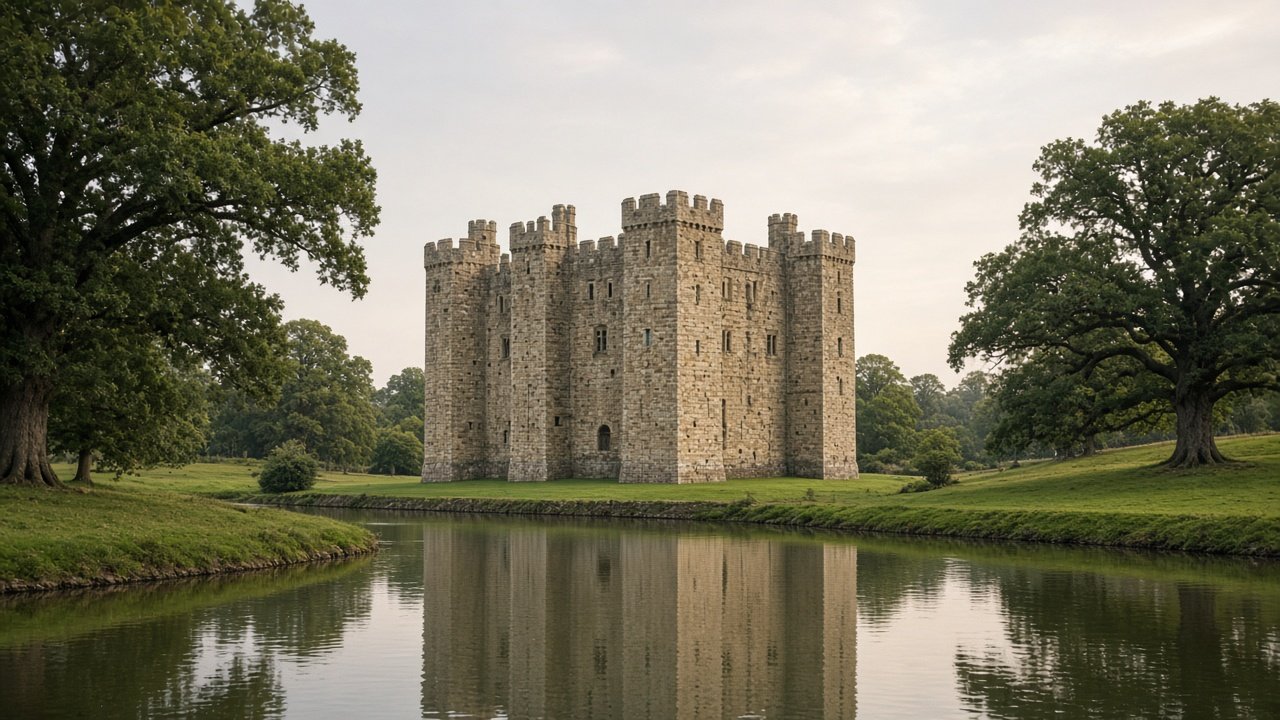
England’s castle story begins in earnest in 1066. After his victory at Hastings, William the Conqueror and his followers built castles across the country to hold down their new kingdom, first as earth-and-timber mottes and then in stone. Many of England’s greatest castles still stand on those Norman foundations. The classic Norman keep is a massive square stone tower: the best-known example is the White Tower at the heart of the Tower of London, begun for William the Conqueror around 1078, while Castle Rising in Norfolk, built around 1138 by William d’Albini, has one of the finest decorated Norman keep interiors in England.
Windsor Castle, founded by William the Conqueror in the years after 1066, is the oldest and largest occupied castle in the world and still a working royal residence. After a serious fire in 1992, the damaged state rooms were restored by 1997. In London, the Tower of London grew around the White Tower, begun by William in the 1070s. It has served as a royal palace, a prison and the home of the Crown Jewels, and it is a UNESCO World Heritage Site.
On the white cliffs above the Channel, Dover Castle centres on the great tower built for Henry II in the 1180s. Beneath it, tunnels cut into the chalk were used in the Second World War, when the evacuation from Dunkirk in 1940 was directed from here. In Kent, Leeds Castle rises from the waters of a lake and has been called “the loveliest castle in the world”. A stone castle was built here from 1119, and it later became a residence of several medieval queens. In the 20th century Olive, Lady Baillie restored its interiors, and today you can tour the castle and explore its gardens, maze and grotto, about an hour from London. Further north, Bamburgh Castle crowns a rocky outcrop of the Whin Sill above the Northumberland coast.
In the Midlands, Warwick Castle was founded by William the Conqueror in 1068 beside the River Avon. Its best-known historical figure is Richard Neville, 16th Earl of Warwick, remembered as “the Kingmaker” for his part in the Wars of the Roses. Like many historic castles in England, Warwick Castle was later softened into one of the country’s great stately homes, with grand state rooms added for comfort, and today it is one of England’s most popular destinations for families. A short drive away, the red sandstone ruins of Kenilworth Castle withstood one of the longest sieges in medieval English history in 1266, and in 1575 Robert Dudley, Earl of Leicester, entertained Queen Elizabeth I there for 19 days. Warwick Castle and Kenilworth Castle are easy to combine in a single day, and Kenilworth is cared for by English Heritage. Warwick Castle, by contrast, is run as a commercial attraction, so book through its own website. If you love stately homes as much as fortresses, the state rooms at Warwick Castle and the restored interiors of Leeds Castle are two of the highlights of England.
Castles in Wales
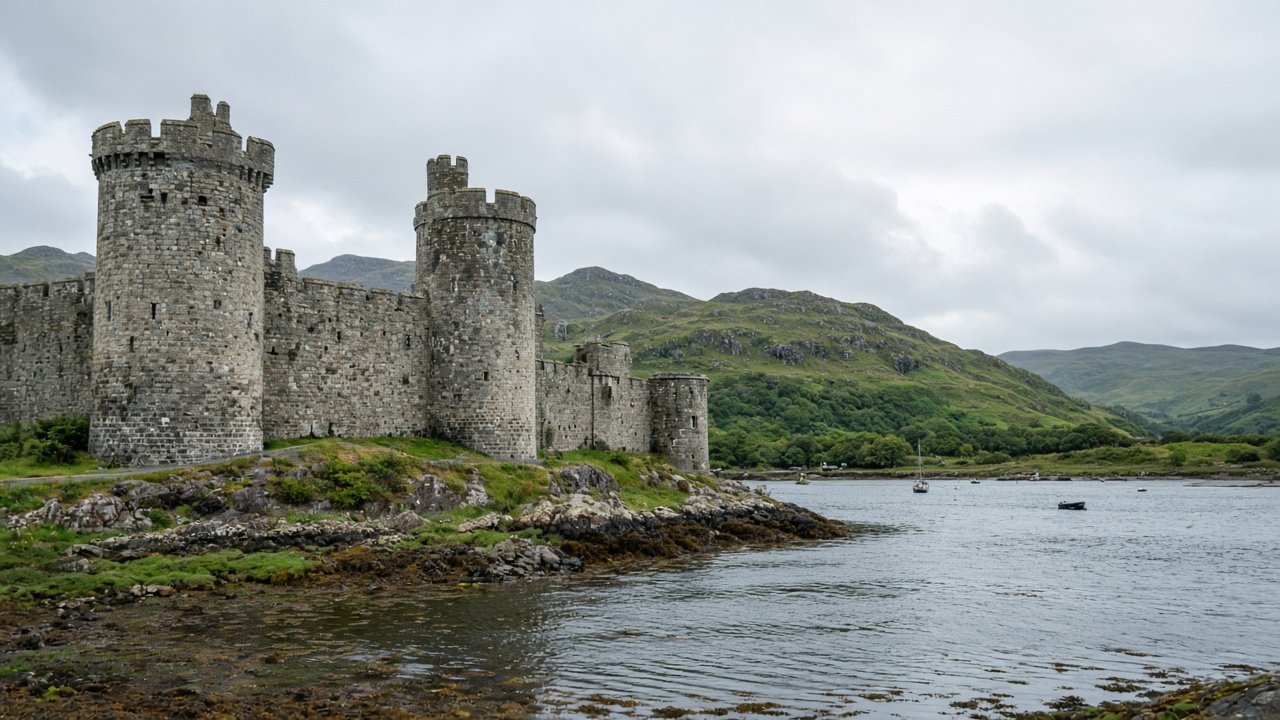
Wales is often said to have more castles per square mile than any other country in Europe, and visitors who drive its roads soon see why Welsh castles are such a draw. Some were built by Welsh princes, but the most famous were built by the English king Edward I after his conquest of Wales in 1283.
Edward’s castles at Caernarfon, Conwy, Harlech and Beaumaris, many designed by the master mason James of St George, were inscribed together as a UNESCO World Heritage Site in 1986. Caernarfon’s banded walls and polygonal towers were meant to recall the walls of Constantinople, and the castle was the setting for the investiture of the Prince of Wales in 1969. Beaumaris, on Anglesey, is a near-perfect example of a concentric castle, with one ring of walls inside another, even though it was never finished. Conwy Castle, built in just a few years from 1283, still stands beside its walled town, whose circuit of walls and towers survives almost complete. The four castles are listed together by UNESCO as the Castles and Town Walls of King Edward in Gwynedd.
In the south, Cardiff Castle packs Roman walls, a Norman motte and lavish Victorian rooms into one site in the heart of the capital, while nearby Castell Coch is a fairy-tale Gothic Revival castle created in the 1870s and 1880s by the architect William Burges for the 3rd Marquess of Bute. A few miles north of Cardiff Castle, Caerphilly Castle was begun in 1268 by the Anglo-Norman lord Gilbert de Clare. Surrounded by artificial lakes and with a famous leaning tower, it is the largest castle in Wales and one of the largest in Britain. Most of these Welsh castles, including Caerphilly and Conwy, are cared for by Cadw, the Welsh Government’s historic environment service.
Castles in Ireland
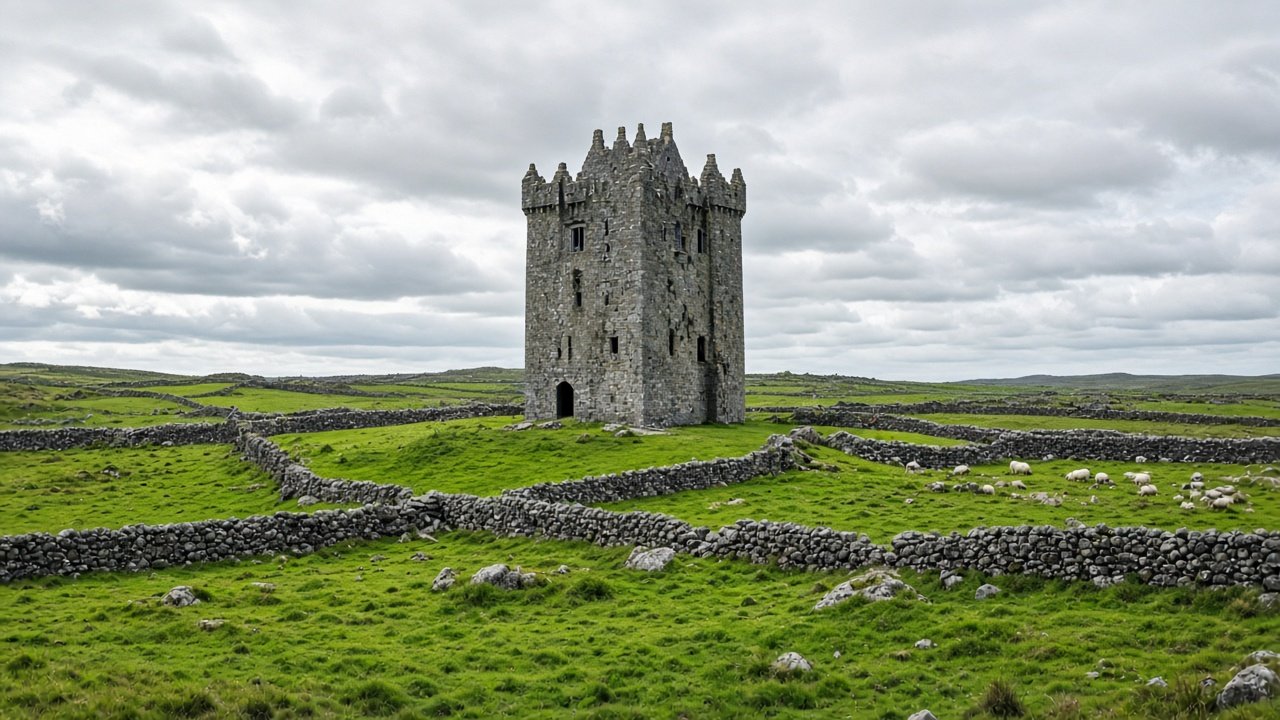
Ireland’s castles range from mighty Anglo-Norman fortresses to thousands of tall, narrow tower houses built by Gaelic and Anglo-Norman families from the 14th to the 17th century. Many are ruins standing alone in farmland; others have been restored as museums or hotels.
Trim Castle in County Meath, begun by Hugh de Lacy in the 1170s, is the largest Anglo-Norman castle in Ireland. Kilkenny Castle was built in the early 13th century and became the seat of the powerful Butler family, who bought it in 1391 and handed it to the people of Kilkenny in 1967. Blarney Castle near Cork, a tower house built by the MacCarthys in the 15th century, is home to the Blarney Stone, which visitors lean backwards over the battlements to kiss for the “gift of the gab”. Bunratty Castle in County Clare, restored in the 20th century, is known for its medieval-style banquets and its neighbouring folk park.
In County Tipperary, Cahir Castle stands on a rocky island in the River Suir and is one of the largest and best-preserved castles in Ireland. It was a stronghold of a branch of the Butler family, and in 1599 it fell to Robert Devereux, Earl of Essex, after a short siege with artillery. Cahir Castle is now cared for by the Office of Public Works (OPW). In County Mayo, Ashford Castle at Cong was founded by the Anglo-Norman de Burgo family in 1228, bought by Sir Benjamin Lee Guinness in 1852 and opened as a hotel in 1939, and it is now one of the most famous castle hotels in the world. On the Antrim coast of Northern Ireland, the ruins of Dunluce Castle cling to the edge of a basalt cliff above the sea. A popular story says part of the kitchens fell into the waves during a storm in the 17th century, though historians doubt the tale.
Ireland is also famous for its ghost stories. Leap Castle in County Offaly is often described as one of the most haunted castles in the world, and Charleville Castle, Malahide Castle and Ross Castle all have legends of their own.
Castles in Germany
Germany has thousands of castles and castle ruins, from Romanesque hilltop fortresses to Baroque palaces. German has two words that help sort them: a Burg is a fortified castle built for defence, while a Schloss is usually a palace or stately home built for comfort and display.
Neuschwanstein, perched on a ridge in the Bavarian Alps, is the ultimate fairy-tale castle. Commissioned by King Ludwig II and begun in 1869, it was inspired by medieval legends and Richard Wagner’s operas, and it remained unfinished at Ludwig’s death in 1886. In 2025 it became part of a UNESCO World Heritage Site with Ludwig’s other palaces. It is one of Germany’s most popular destinations, and interiors are shown on timed tours, which sell out in summer, so book online through the official Neuschwanstein website.
For a very different mood, visit Heidelberg Castle, the great red sandstone ruin above the River Neckar. It was the residence of the Electors Palatine, who added Renaissance palaces in a rich architectural style. French troops wrecked it in 1689 and 1693 during the Nine Years’ War, and lightning struck in 1764. Its romantic ruins later inspired poets and painters, and Heidelberg Castle is also home to the Heidelberg Tun, one of the largest wine barrels in the world.
Along the Upper Middle Rhine between Bingen and Koblenz, a UNESCO World Heritage Site since 2002, castles crown almost every bend of the river, from the Marksburg, the only hilltop castle on the Middle Rhine never destroyed, to Pfalzgrafenstein, a toll castle on an island in midstream. In the Eifel hills, Burg Eltz has belonged to the same family for more than 850 years.
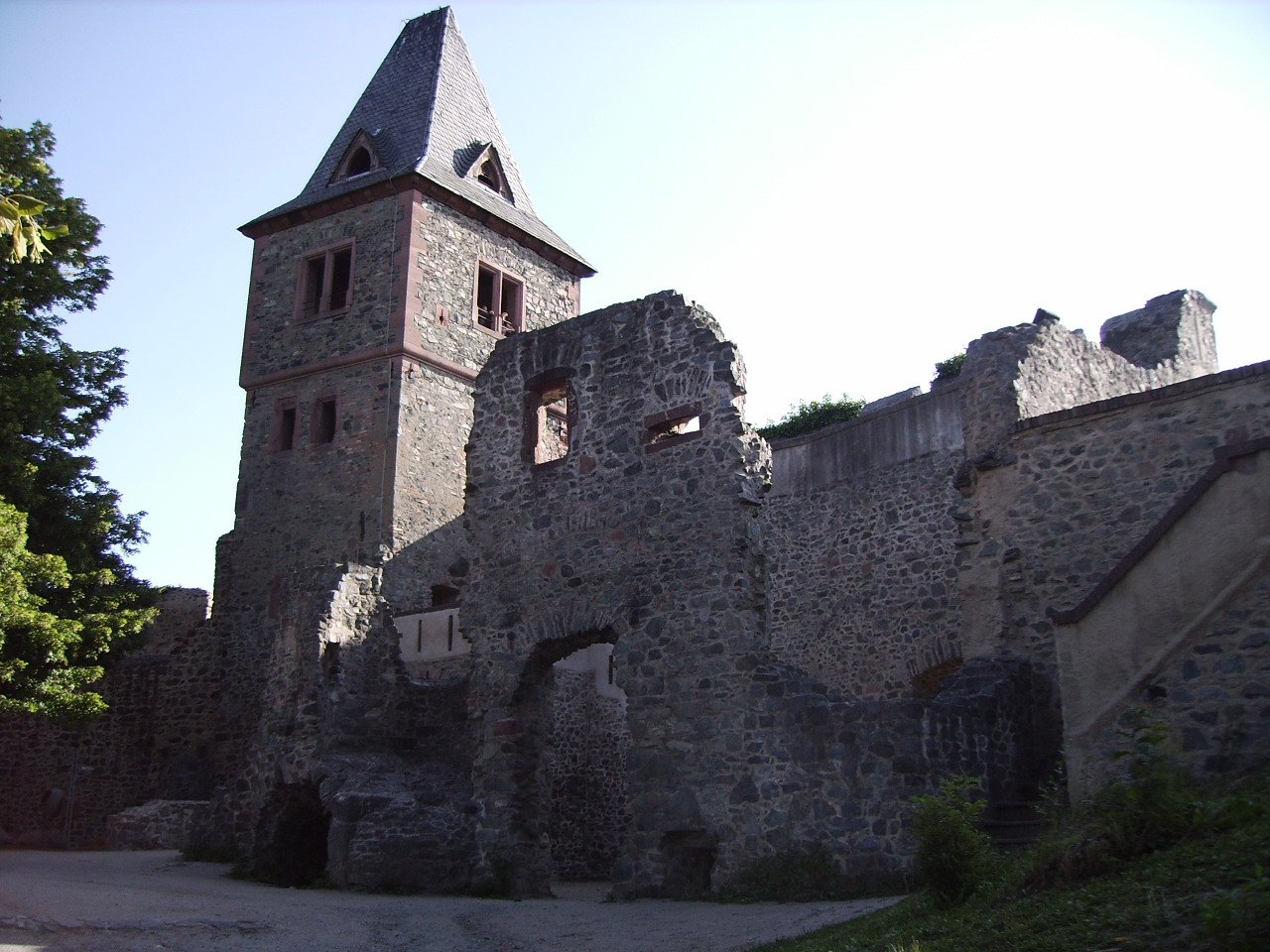
On a wooded hilltop near Darmstadt in Hesse stand the ruins of Burg Frankenstein, built in the 13th century by the Lords of Frankenstein. In 1673 Johann Konrad Dippel, a theologian and alchemist rumoured to have experimented on bodies, was born at the castle. Some writers have suggested that Mary Shelley heard of the castle and its legends while travelling in Germany before writing Frankenstein (1818), but there is no firm evidence for the connection. The castle is especially popular around Halloween, when it hosts well-known events.
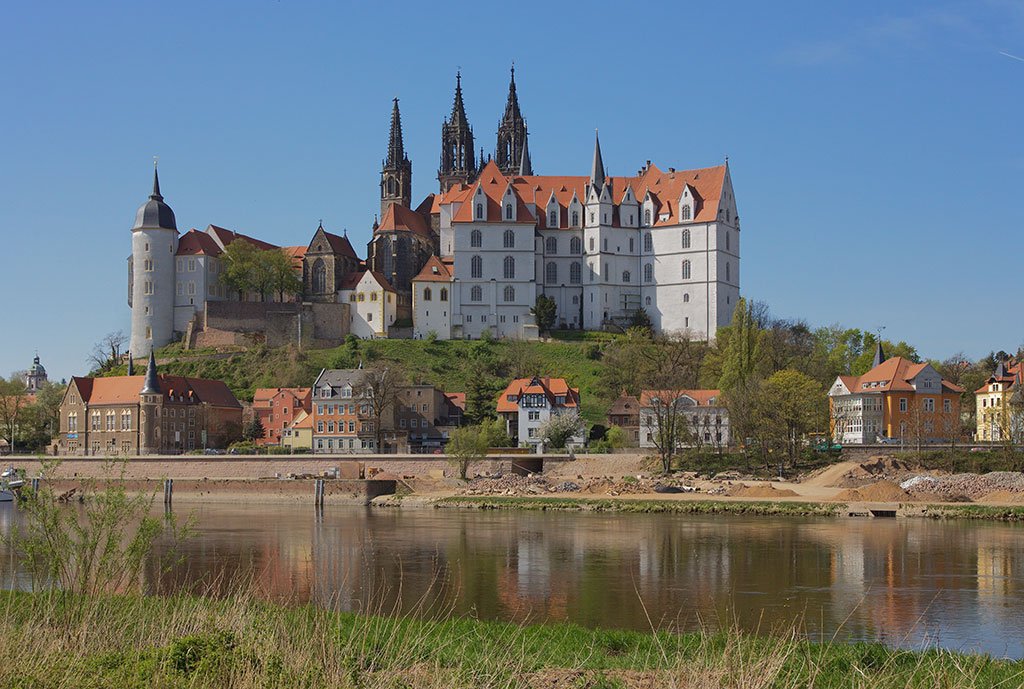
Towering above the Elbe at Meissen, near Dresden, the Albrechtsburg is often described as the first castle in Germany built primarily as a palace rather than a fortress. Construction began in 1471 for the Wettin brothers Ernst and Albrecht, to designs by the master builder Arnold of Westphalia. Its spiral staircase and intricate vaulted ceilings were revolutionary for their time. From 1710 the castle housed the first European factory for hard-paste porcelain, the famous Meissen manufactory, which remained here until 1863. Meissen is about 40 minutes from Dresden by train.
Castles in France
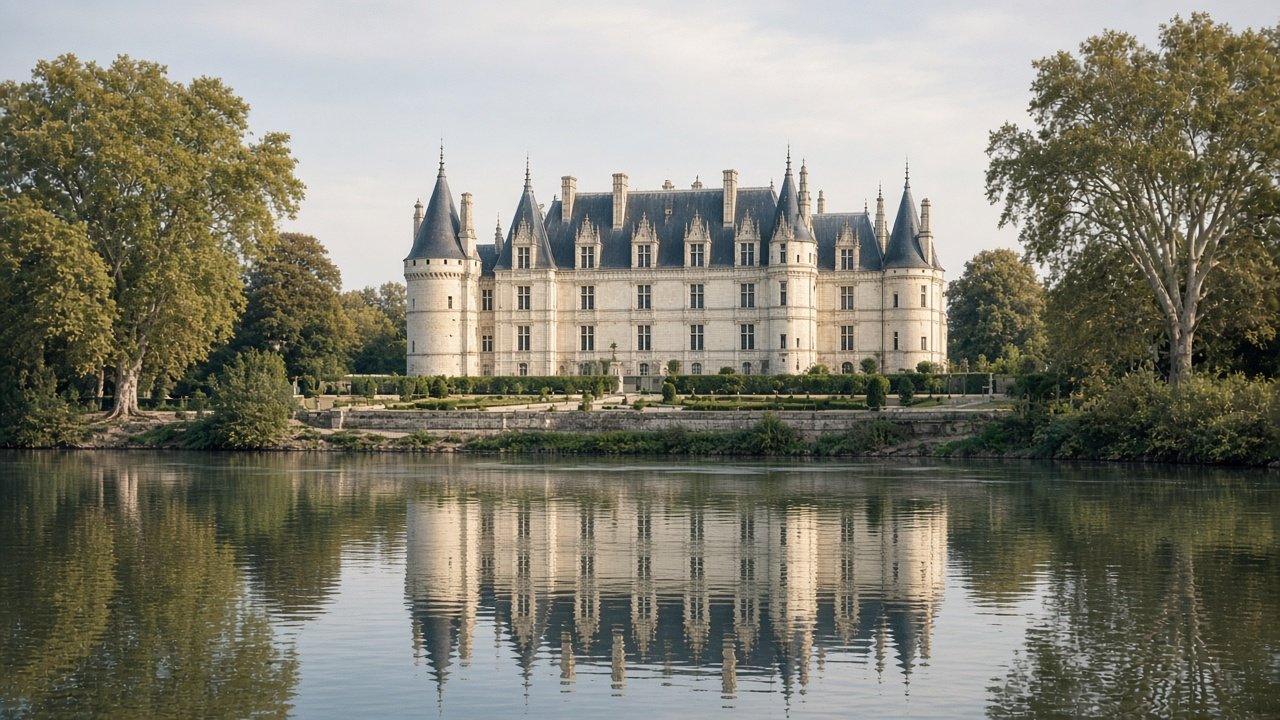
In French, almost any grand country house can be called a château, so it helps to separate the medieval fortresses (châteaux forts) from the elegant Renaissance palaces that made the Loire Valley famous.
The Loire Valley between Sully-sur-Loire and Chalonnes was inscribed as a UNESCO World Heritage Site in 2000. Its stars include Chambord, begun in 1519 for King Francis I, with a famous double-spiral staircase often linked to the ideas of Leonardo da Vinci, and Chenonceau, whose arched gallery spans the River Cher and whose history was shaped by powerful women including Diane de Poitiers and Catherine de’ Medici.
Near Paris, Versailles is a palace rather than a castle, but few places in Europe are as enchanting. It began as a modest hunting lodge for Louis XIII in the 1620s. His son, Louis XIV, transformed it into the most magnificent palace in Europe and moved the court there in 1682. The Hall of Mirrors, where the Treaty of Versailles was signed in 1919, the formal gardens and the Trianon estate draw visitors from around the world, and it is a UNESCO World Heritage Site about 40 minutes from central Paris by train.
For medieval walls, head to the Cité de Carcassonne in the south, a fortified town with a double ring of walls restored in the 19th century by the architect Eugène Viollet-le-Duc, or to Normandy, where Richard the Lionheart built Château Gaillard above the Seine in 1196–98.
Off the Normandy coast, Mont Saint-Michel is a tidal island crowned by a medieval abbey and ringed by fortified walls, which held out against English attacks during the Hundred Years’ War. Mont Saint-Michel and its bay became a UNESCO World Heritage Site in 1979. Further south, in the Dordogne valley, Château de Beynac (Chateau de Beynac) and Château de Castelnaud (Chateau de Castelnaud) face each other across the river. During the Hundred Years’ War Château de Beynac was held for the French crown, while Château de Castelnaud was often on the English side. Today Castelnaud houses a museum of medieval warfare, and both castles are among the favorite castles of visitors to the region.
In Provence, the ruined Château des Baux (often written Château de Baux, or Chateau de Baux) crowns a rocky spur of the Alpilles above the village of Les Baux-de-Provence. It was the stronghold of the powerful lords of Baux, whose line ended in 1426. After rebels took refuge there, the castle and ramparts were dismantled in 1632 on the orders of Cardinal Richelieu, and today visitors walk among the ruins of its keep and walls.
Castles in Spain and Portugal
The Iberian Peninsula’s castles were shaped by centuries of conflict and exchange between Christian kingdoms and Islamic al-Andalus, which is why the word alcázar, from Arabic, appears on so many Spanish fortresses.
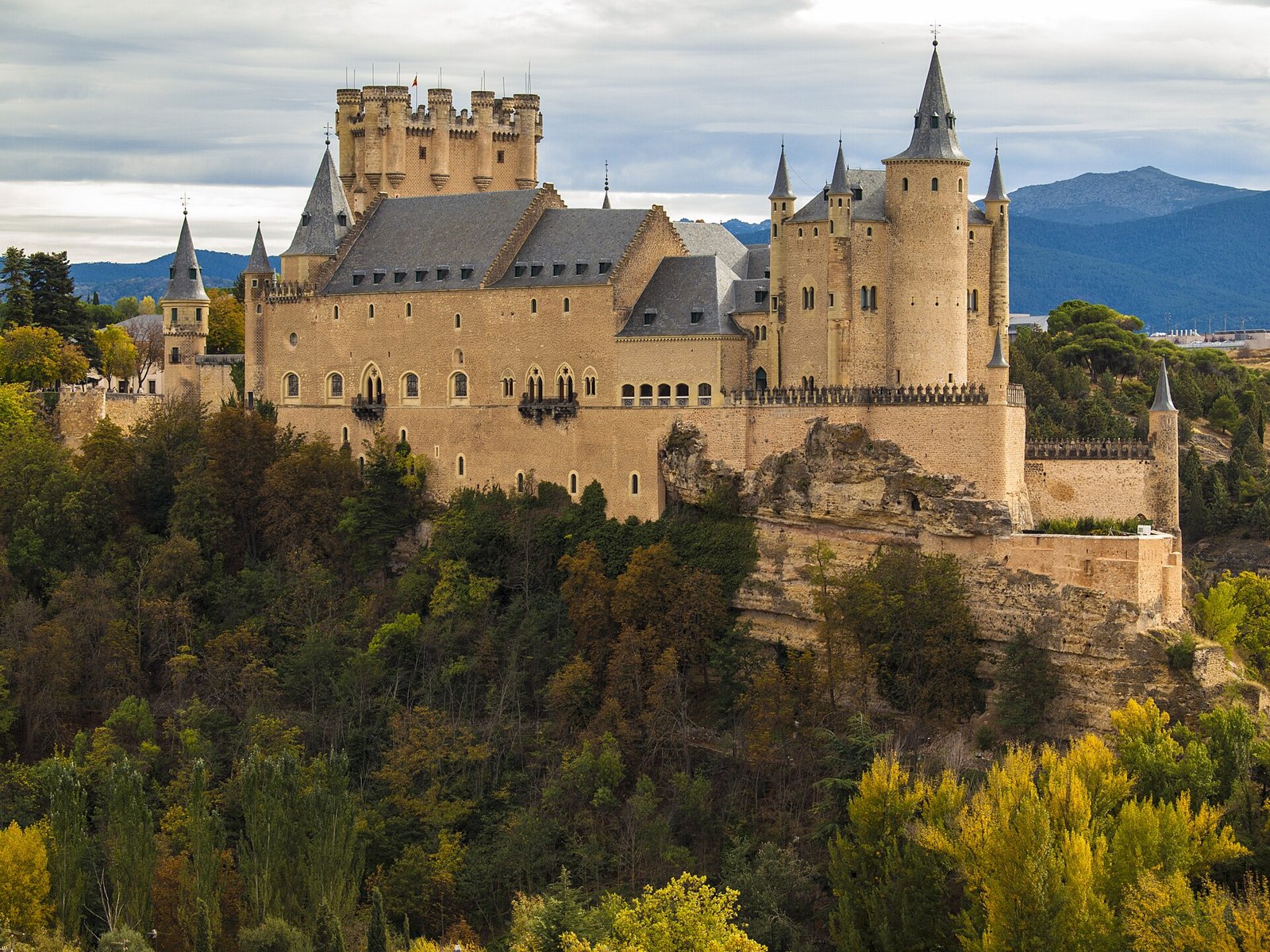
The Alcázar of Segovia rises on a rocky crag where the Eresma and Clamores rivers meet, its slender towers and pointed slate roofs giving it the look of a great stone ship. A fortress existed here in the Islamic period, and from the Middle Ages the Alcázar became a favorite residence of the kings of Castile. In 1474 Isabella I set out from the Alcázar to be proclaimed Queen of Castile in Segovia. Later it served as a state prison and, from 1764, as the Royal Artillery College. A fire in 1862 badly damaged the roofs and interiors, which were later restored. The Alcázar is often said to have been one of the inspirations for Disney’s Cinderella Castle. Segovia is about 30 minutes from Madrid by high-speed train, and the old town and Roman aqueduct are a UNESCO World Heritage Site.
About an hour north-west of Segovia, Coca Castle is one of the finest examples of Mudéjar architecture in Spain, built in decorative brick by Muslim craftsmen working for Christian patrons. It was begun in the mid-15th century for Archbishop Alonso de Fonseca. In Andalusia, the Alhambra in Granada, a fortress and palace complex built mainly by the Nasrid dynasty in the 13th and 14th centuries, has been a UNESCO World Heritage Site since 1984.
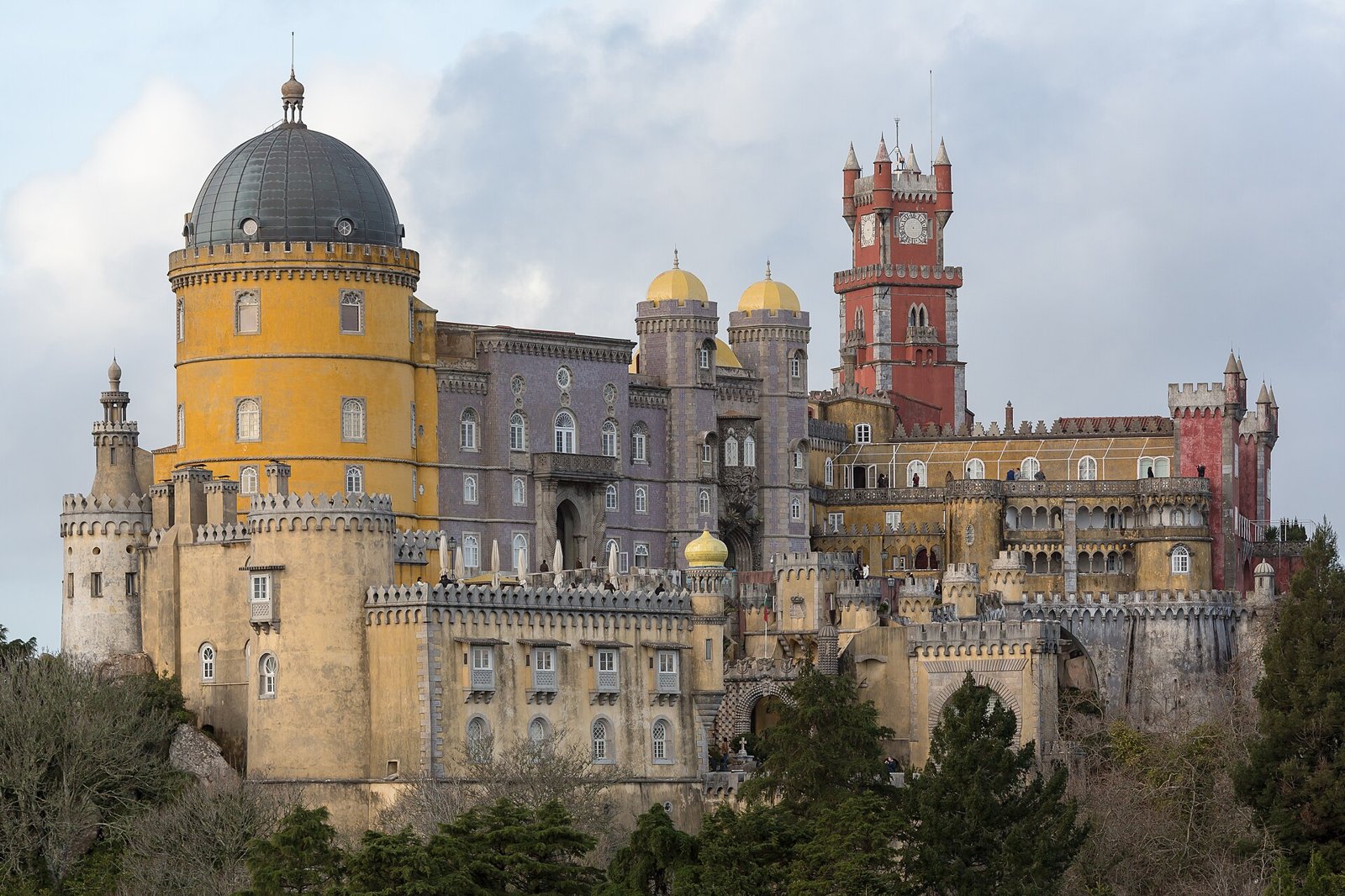
High in the hills above Sintra, near Lisbon, the Pena Palace is a riot of colour: red and yellow towers, Moorish-style domes and Manueline carvings. It was built from the 1840s for King Ferdinand II on the site of a ruined monastery, designed by the German-born Baron von Eschwege as a romantic summer residence. It is part of the Cultural Landscape of Sintra UNESCO World Heritage Site. Trains run from Lisbon to Sintra in under an hour; book timed tickets online and arrive early. On the next ridge, the Castle of the Moors (Castelo dos Mouros) was built by the Moors around the 10th century. It passed to the Christian kings after Afonso Henriques took Lisbon in 1147 and was restored in the 19th century by Ferdinand II, and its walls give sweeping views over Sintra and the coast. Both are managed by Parques de Sintra. In northern Portugal, Guimarães Castle, with origins in the 10th century, is linked with the birth of the Portuguese kingdom.
Castles in Central and Eastern Europe
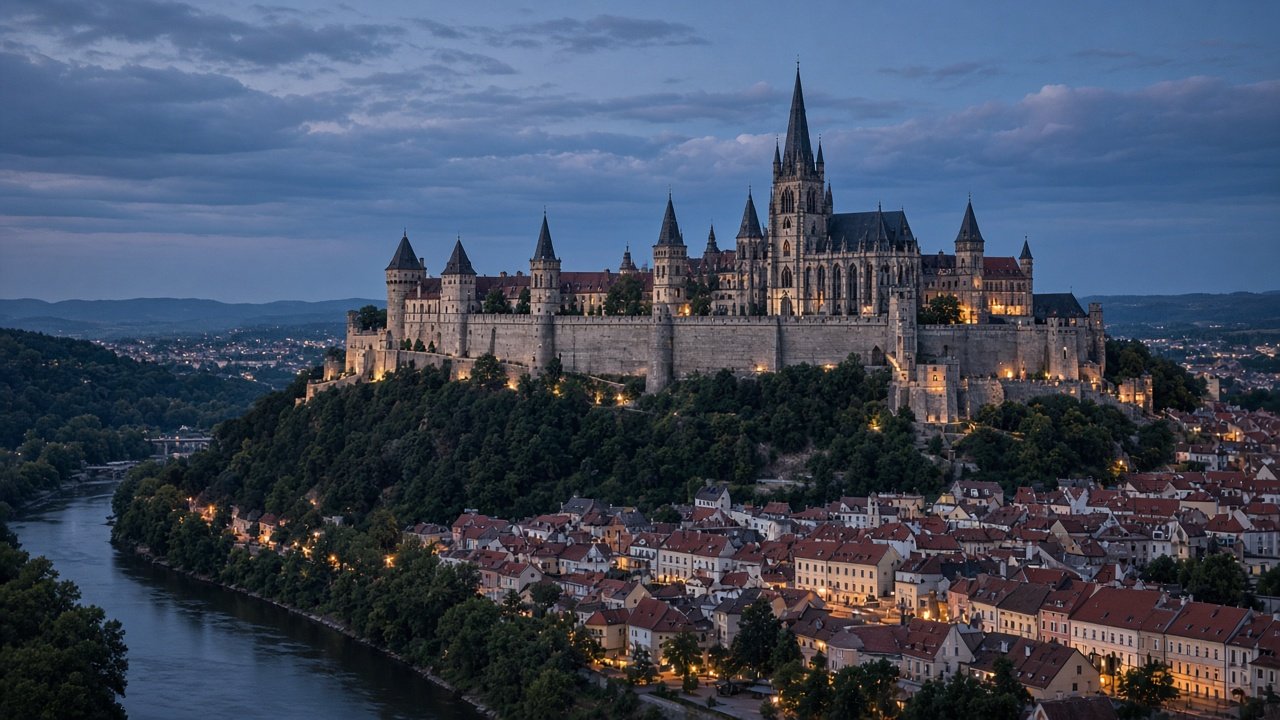
Prague Castle, founded around 880, is the largest ancient castle complex in the world according to Guinness World Records. Within its walls are St Vitus Cathedral, the Old Royal Palace, the Basilica of St George and the picturesque Golden Lane. Seen from the Charles Bridge at dusk, it is one of the most enchanting sights in Europe. The grounds are generally free; buy a ticket for the main buildings and arrive early.
In Poland, Malbork Castle, built by the Teutonic Knights from the late 13th century, is often cited as the largest castle in the world by land area and is a UNESCO World Heritage Site. In Slovakia, the ruins of Spiš Castle form one of the largest castle complexes in Central Europe. In Budapest, Buda Castle crowns Castle Hill above the Danube.
Romania draws visitors with Bran Castle, marketed as “Dracula’s Castle” although there is no firm evidence that Vlad the Impaler ever lived there, the Gothic Corvin Castle at Hunedoara, and the Neo-Renaissance Peleș Castle at Sinaia, built for King Carol I from 1873.
The Oldest Castles in Europe
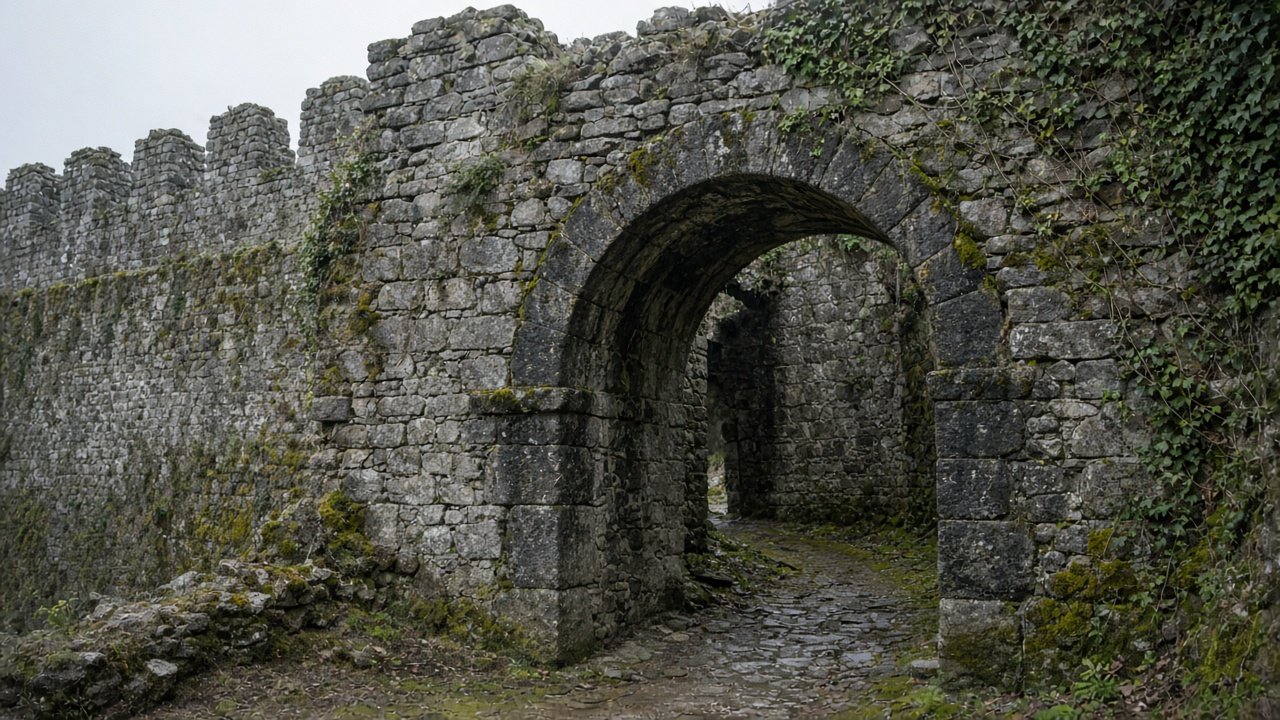
Which castle is the oldest depends on how you define a castle. Prague Castle was founded around 880. Guimarães Castle in Portugal has 10th-century origins. In France, the stone keep at Langeais is usually dated to around 1000 and is often counted among the earliest stone keeps in Europe. In Britain, Chepstow Castle in Wales was begun in 1067, within a year of the Norman Conquest, and Windsor and the Tower of London followed soon after.
Many famous “medieval-looking” castles are much younger than they appear. Neuschwanstein was begun in 1869, Pena Palace in the 1840s and Castell Coch in the 1870s, all products of the 19th-century Romantic fascination with the Middle Ages.
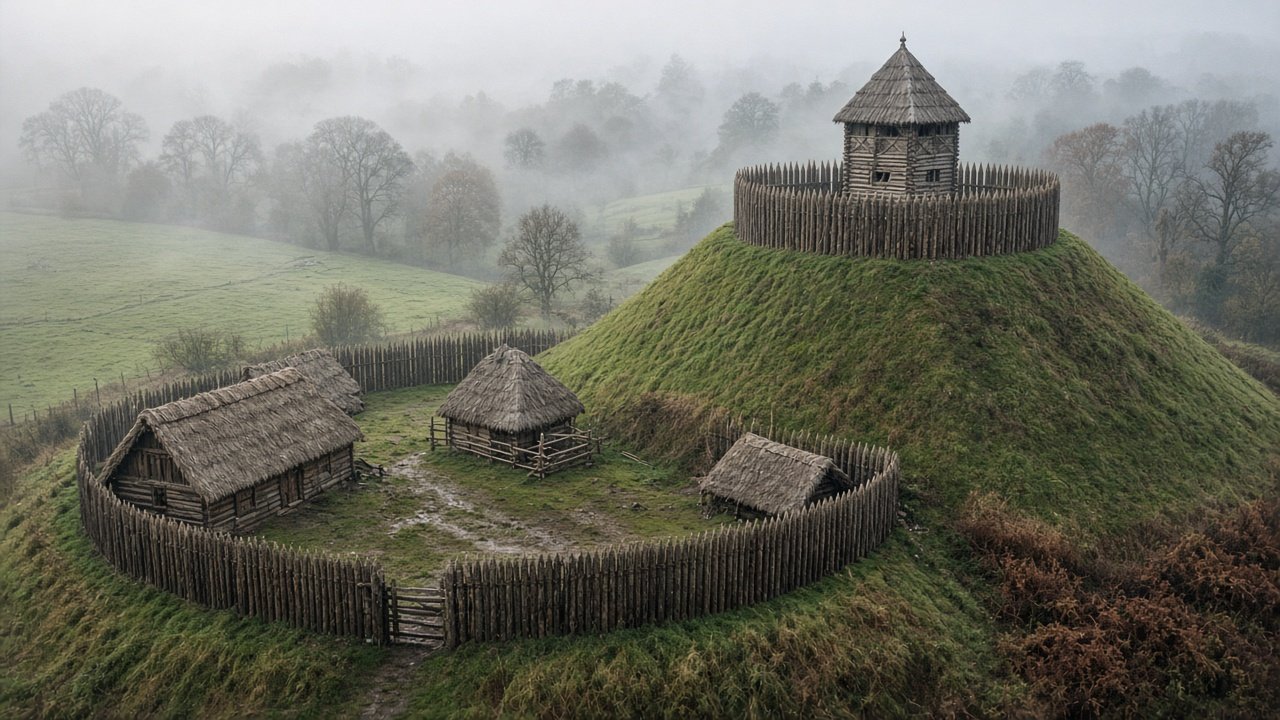
Types of European Castles Explained
Knowing a few basic castle types makes any visit more rewarding. Each architectural style reflects the weapons, wealth and fashions of its time:
- Motte-and-bailey: an earth mound (motte) topped by a timber tower, with a fenced courtyard (bailey) below. The Normans built hundreds of them quickly after 1066, and many were later rebuilt in stone.
- Stone keep: a massive central tower such as the White Tower in London or the keep at Dover, designed to be the last line of defence.
- Concentric castle: one ring of walls inside another, so attackers who broke through the outer wall were trapped under fire from the inner one. Beaumaris in Wales is a classic example.
- Tower house: a tall, compact stone tower built for a single family, common in Scotland and Ireland from the 14th to the 17th centuries.
- Palace castle and château: as gunpowder made walls less useful, castles became palaces built for comfort and display, like the Albrechtsburg in Meissen or the châteaux of the Loire.
- Romantic revival: 19th-century castles such as Neuschwanstein, Pena Palace and Castell Coch were built to look medieval rather than to fight wars.
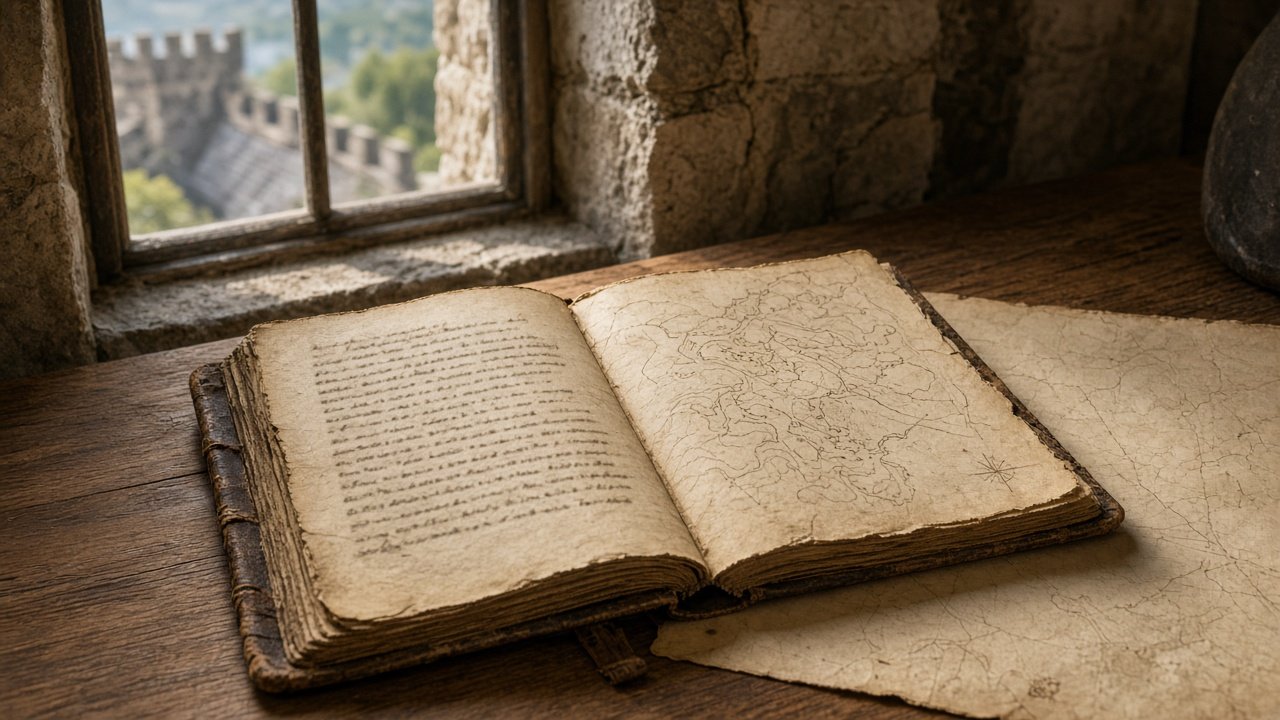
Quick Facts
| Castle | Country | Built | Why it stands out |
|---|---|---|---|
| Edinburgh Castle | Scotland | Chapel early 12th century | Volcanic rock above the city, Honours of Scotland |
| Eilean Donan | Scotland | 13th century; rebuilt 1912–32 | Island setting among the mountains |
| Windsor Castle | England | From c. 1070 | Oldest and largest occupied castle in the world |
| Leeds Castle | England | From 1119 | Lake setting |
| Caernarfon Castle | Wales | From 1283 | Edward I’s showpiece, UNESCO-listed |
| Warwick Castle | England | From 1068 | Norman origins, the Kingmaker’s castle |
| Caerphilly Castle | Wales | From 1268 | Largest castle in Wales, water defences |
| Cahir Castle | Ireland | Medieval, Butler stronghold | Island setting in the River Suir |
| Kilkenny Castle | Ireland | Early 13th century | Butler family seat for nearly 600 years |
| Neuschwanstein | Germany | From 1869 | Alpine fairy-tale design |
| Albrechtsburg Meissen | Germany | From 1471 | Late Gothic palace, porcelain history |
| Heidelberg Castle | Germany | 13th–17th centuries | Romantic red sandstone ruin |
| Mont Saint-Michel | France | Abbey from the 10th century | Fortified tidal island |
| Chambord | France | From 1519 | Renaissance showpiece, double-spiral staircase |
| Alcázar of Segovia | Spain | Medieval, restored after 1862 | Ship-like silhouette, royal history |
| Coca Castle | Spain | Mid-15th century | Mudéjar brickwork |
| Pena Palace | Portugal | From the 1840s | Colourful Romantic architecture |
| Prague Castle | Czech Republic | c. 880 | Largest ancient castle complex in the world |
| Malbork Castle | Poland | Late 13th century | Often cited as the largest castle by area |
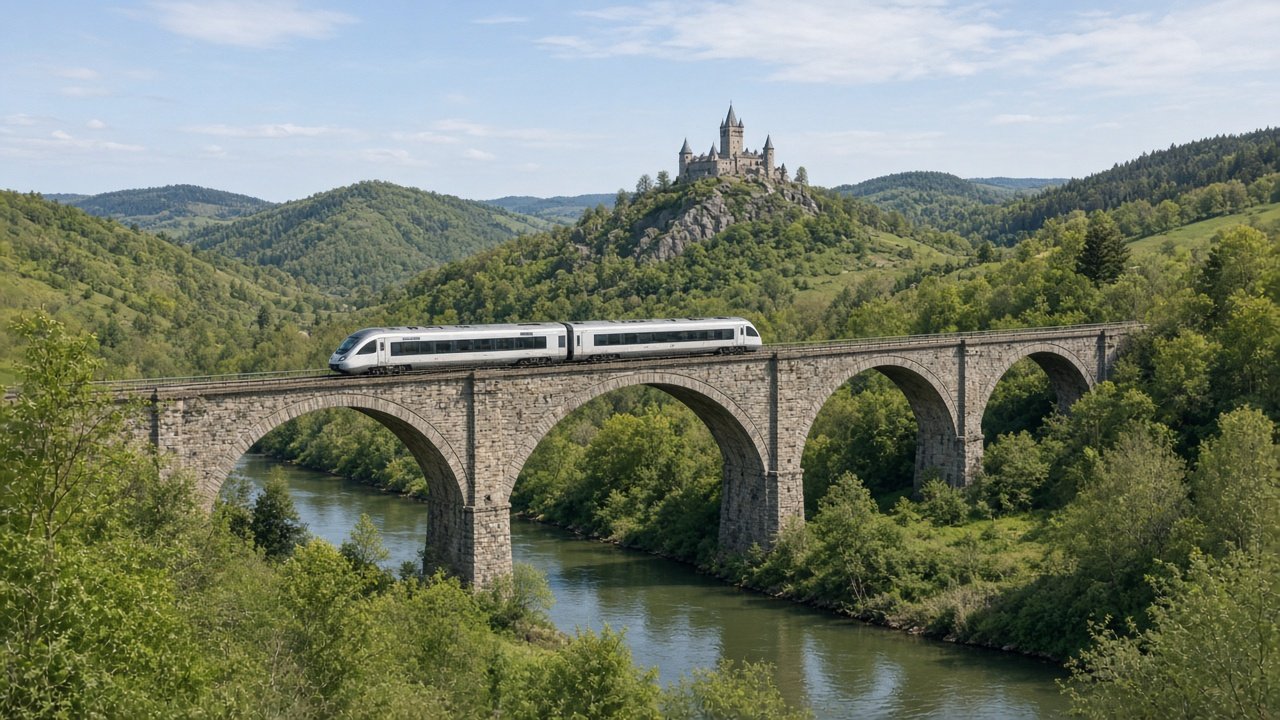
Tips for Planning a European Castle Trip
- Start with our travel guides: each of our country travel guides lists the castles worth a detour, with practical visiting notes.
- Pick a region: Europe is large. Combining Segovia and Sintra, Edinburgh and Stirling, or Meissen and Prague (about two hours apart) is far more relaxing than trying to see everything at once. Choose two or three favorite castles and build the trip around them, starting with your all-time favorite.
- Book the big names: Neuschwanstein, Versailles, Pena, Edinburgh Castle and the Alcázar are popular destinations that use timed tickets, which can sell out in peak season.
- Read up on one historical figure: knowing a little about Richard Neville at Warwick Castle, Isabella I at Segovia or Edward I in Wales brings the rooms and walls to life.
- Use trains: many castles are easy day trips by rail: Segovia from Madrid, Sintra from Lisbon, Versailles from Paris, Windsor from London, Meissen from Dresden.
- Consider heritage passes: bodies such as Historic Environment Scotland, English Heritage and Cadw sell memberships or passes that can save money if you visit several of their sites.
- Travel in shoulder season: spring and early autumn bring milder weather and smaller crowds, but some remote castles reduce their hours or close in winter.
- Wear good shoes: spiral stairs, cobbles and steep paths are part of the experience.
Frequently Asked Questions
What is the most beautiful castle in Europe?
Everyone has their own favorite castles, but Neuschwanstein, the Alcázar of Segovia, Pena Palace, Chenonceau and Eilean Donan are regularly named among the most beautiful castles in Europe. For many travelers, Eilean Donan’s island setting makes it an all-time favorite.
What is the largest castle in Europe?
Malbork Castle in Poland is often cited as the largest castle in the world by land area, while Guinness World Records lists Prague Castle as the largest ancient castle complex.
What is the oldest castle in Europe?
Prague Castle, founded around 880, is one of the oldest still standing, and Guimarães in Portugal and the keep at Langeais in France also date from the 10th or early 11th century. The answer depends on what you count as a castle.
Which country in Europe has the most castles?
No one has an exact count. Germany has many thousands of castles and ruins, and Wales is often said to have more castles per square mile than anywhere else in Europe.
Which castle inspired Disney?
Neuschwanstein is widely said to have inspired Sleeping Beauty Castle, and the Alcázar of Segovia is often mentioned as an influence on Cinderella Castle.
Is Frankenstein Castle connected to Mary Shelley?
It is a popular theory, but there is no firm evidence that Mary Shelley visited or knew of the castle when writing her novel.
Can you visit European castles year-round?
Most major sites, including Prague Castle, Edinburgh Castle, the Alcázar of Segovia, Pena Palace and Versailles, open year-round with seasonal hours. Eilean Donan and some remote castles have reduced winter opening, so check the official website or our travel guides before you go.