

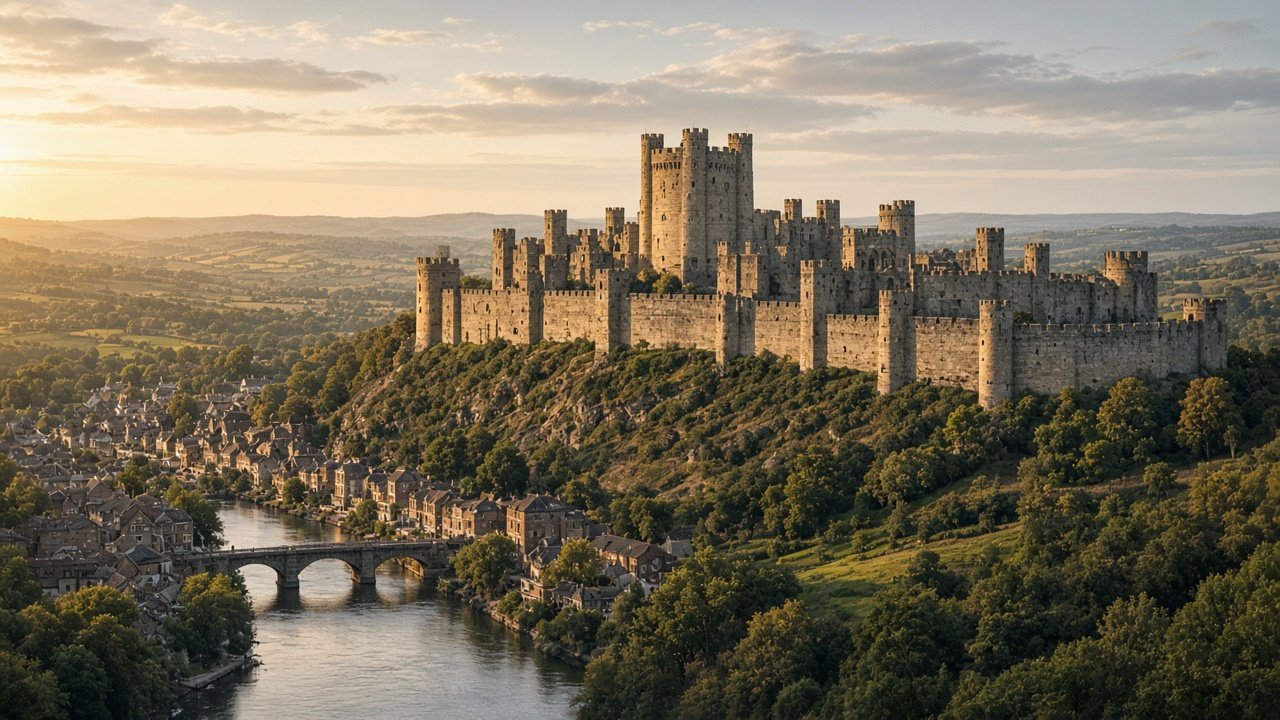

England’s great castles were built to impress as much as to defend. After the Norman Conquest of 1066, William the Conqueror and his barons raised castles across the country to control their new kingdom, and over the following centuries the most important of them grew into vast complexes of towers, walls, halls and palaces.
This guide is part of our country-by-country guide to castles in Europe. If you are heading north of the border too, our article on the stories behind Scotland’s medieval castles makes a good companion read.
This guide looks at five of the biggest and most impressive castles in England: Windsor, Dover, the Tower of London, Warwick and Bamburgh. For each one you will find a short history, what to look out for, and tips for planning your visit. We also explain why one castle often found on “biggest” lists, Bodiam, is famous for very different reasons.
How Do You Measure the “Biggest” Castle?
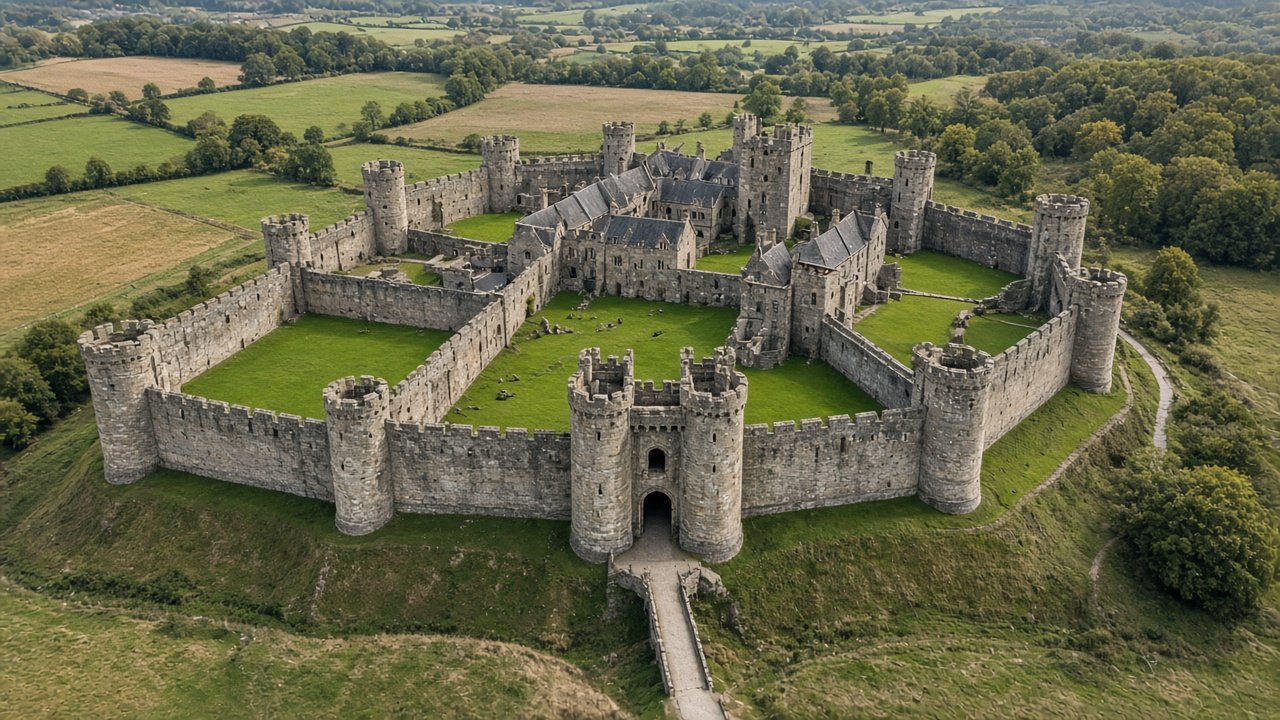
There is no single official ranking. Castles can be compared by the area inside their walls, the size of their keeps, or the scale of their buildings. Windsor is usually described as the largest occupied castle in the world, while Dover is often called the largest castle in England. The Tower of London and Warwick are among the largest medieval fortresses in the country, and Bamburgh’s walls enclose an entire rocky headland. Together they give a sense of just how ambitious English castle builders could be.
Windsor Castle
History
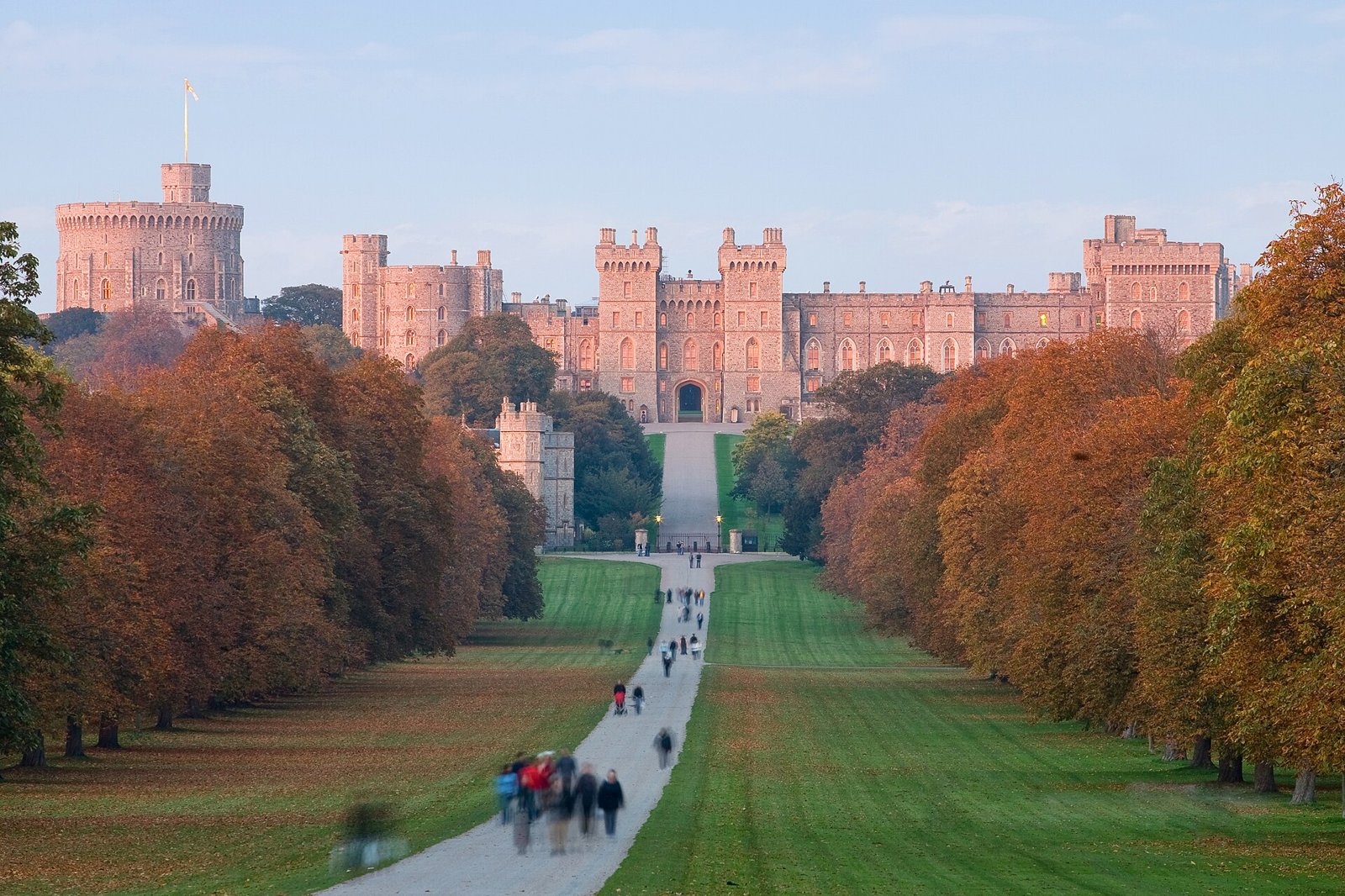
William the Conqueror founded Windsor Castle around 1070 on a chalk ridge above the River Thames, as part of a ring of fortresses around London. It has been home to English and British monarchs for more than 900 years, and the Royal Family describes it as the oldest and largest occupied castle in the world. Henry II rebuilt much of it in stone in the 12th century, Edward III transformed it into a grand Gothic palace in the 14th century, and George IV gave it much of its romantic skyline in the 1820s.
St George’s Chapel, begun in 1475 under Edward IV, is one of the finest examples of Perpendicular Gothic architecture in England and the burial place of many monarchs, including Henry VIII, Charles I and Queen Elizabeth II. In November 1992 a major fire damaged more than 100 rooms; the restoration was completed in 1997.
What to See
- The State Apartments, filled with works from the Royal Collection
- St George’s Chapel (closed to visitors on Sundays for worship)
- Queen Mary’s Dolls’ House, a miniature masterpiece built in the 1920s
- The Changing of the Guard, on scheduled days
- The Long Walk, stretching about 2.6 miles through Windsor Great Park
Visiting Tips
Windsor is about an hour from central London by train. The castle is managed by the Royal Collection Trust and is a working royal palace, so it can close at short notice for official events. Book tickets online and check opening days before you travel.
Dover Castle
History
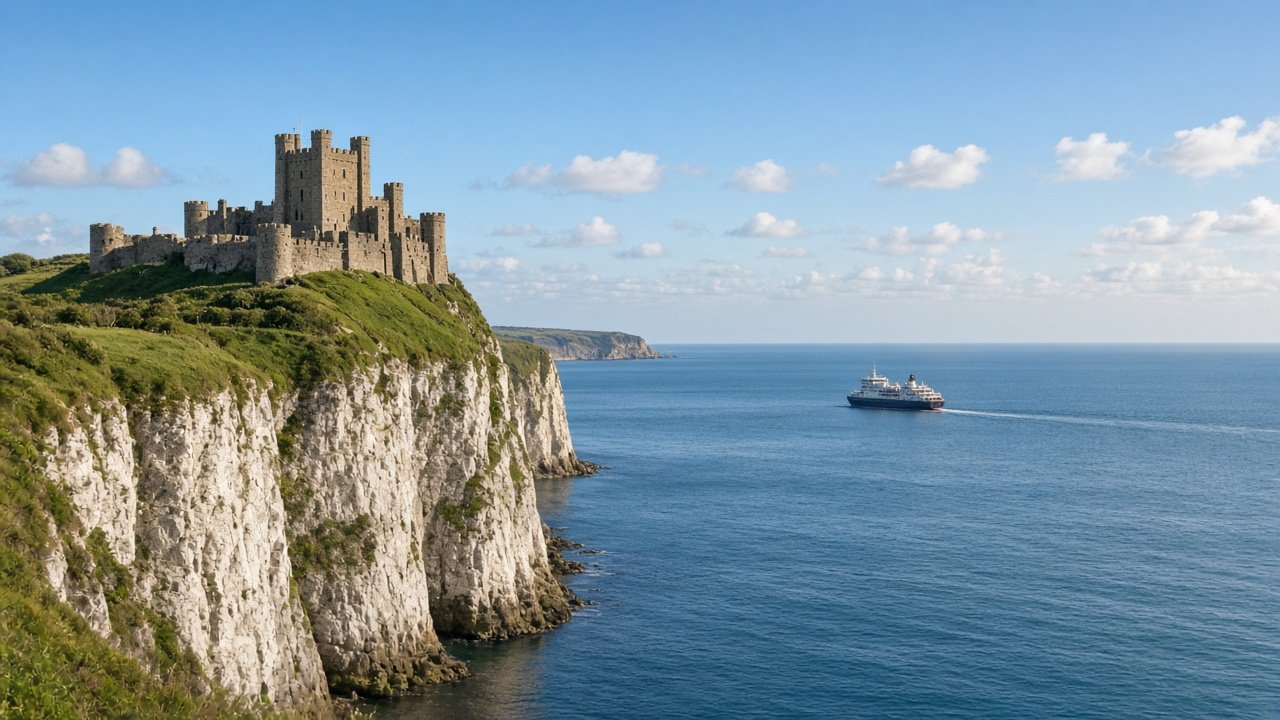
Standing on the White Cliffs above the shortest sea crossing to France, Dover Castle has long been known as the “Key to England”. The site includes an Iron Age hillfort, a Roman lighthouse and an Anglo-Saxon church. Henry II built the massive Great Tower in the 1180s, at enormous cost, surrounded by concentric rings of walls. In 1216–17 the castle withstood a long siege by Prince Louis of France.
Dover’s military life continued into the 20th century. Tunnels dug into the chalk cliffs, first during the Napoleonic Wars, were expanded during the Second World War, and it was from here in 1940 that Vice-Admiral Bertram Ramsay directed Operation Dynamo, the evacuation of Allied troops from Dunkirk.
What to See
Inside the Great Tower, the rooms are presented as they might have looked during Henry II’s reign. Below ground, the Secret Wartime Tunnels tell the story of Dunkirk and of the underground hospital. Don’t miss the Roman lighthouse, one of the tallest surviving Roman structures in Britain.
Visiting Tips
Managed by English Heritage. Dover is about an hour from London by high-speed train, and the castle is a steep walk or short bus/taxi ride from the station. Allow most of a day, as the site is huge.
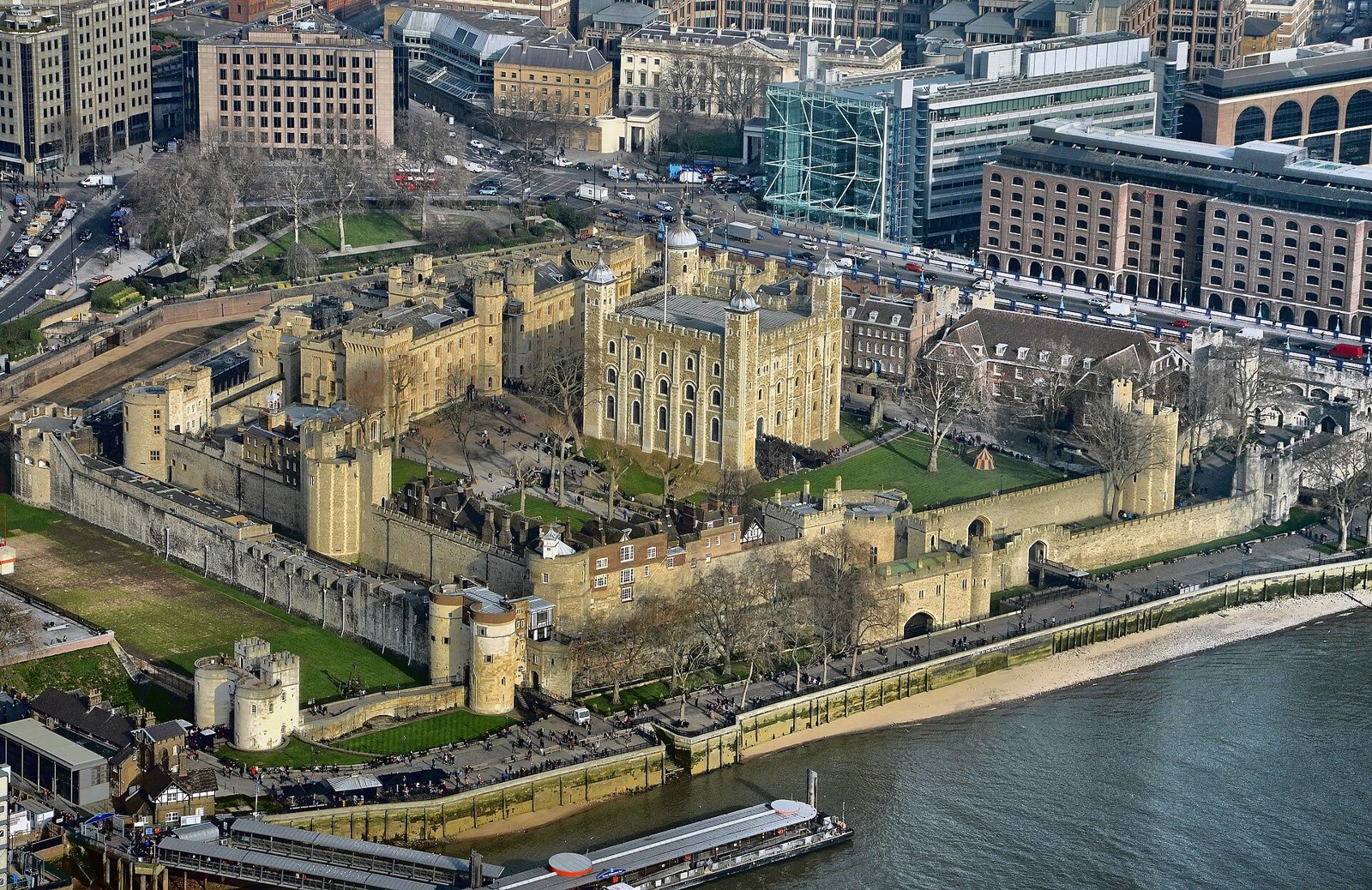
The Tower of London
History
William the Conqueror began the White Tower in the 1070s to dominate the City of London, and later kings surrounded it with two rings of defensive walls and a moat. Over the centuries the Tower has served as a royal palace, fortress, prison, place of execution, royal mint, armoury and home of the royal menagerie. Anne Boleyn, Catherine Howard and Lady Jane Grey were all executed within its walls. It became a UNESCO World Heritage Site in 1988.
What to See
- The Crown Jewels, including the Imperial State Crown and St Edward’s Crown
- The White Tower, home to the Royal Armouries’ historic collections
- Tours led by the Yeoman Warders, popularly known as “Beefeaters”
- The ravens, which, according to legend, must stay at the Tower or the kingdom will fall
- The medieval palace and the walk along the walls
Visiting Tips
Managed by Historic Royal Palaces. The nearest Underground station is Tower Hill. Go to the Crown Jewels first thing in the morning to avoid the longest queues, and allow at least three hours.
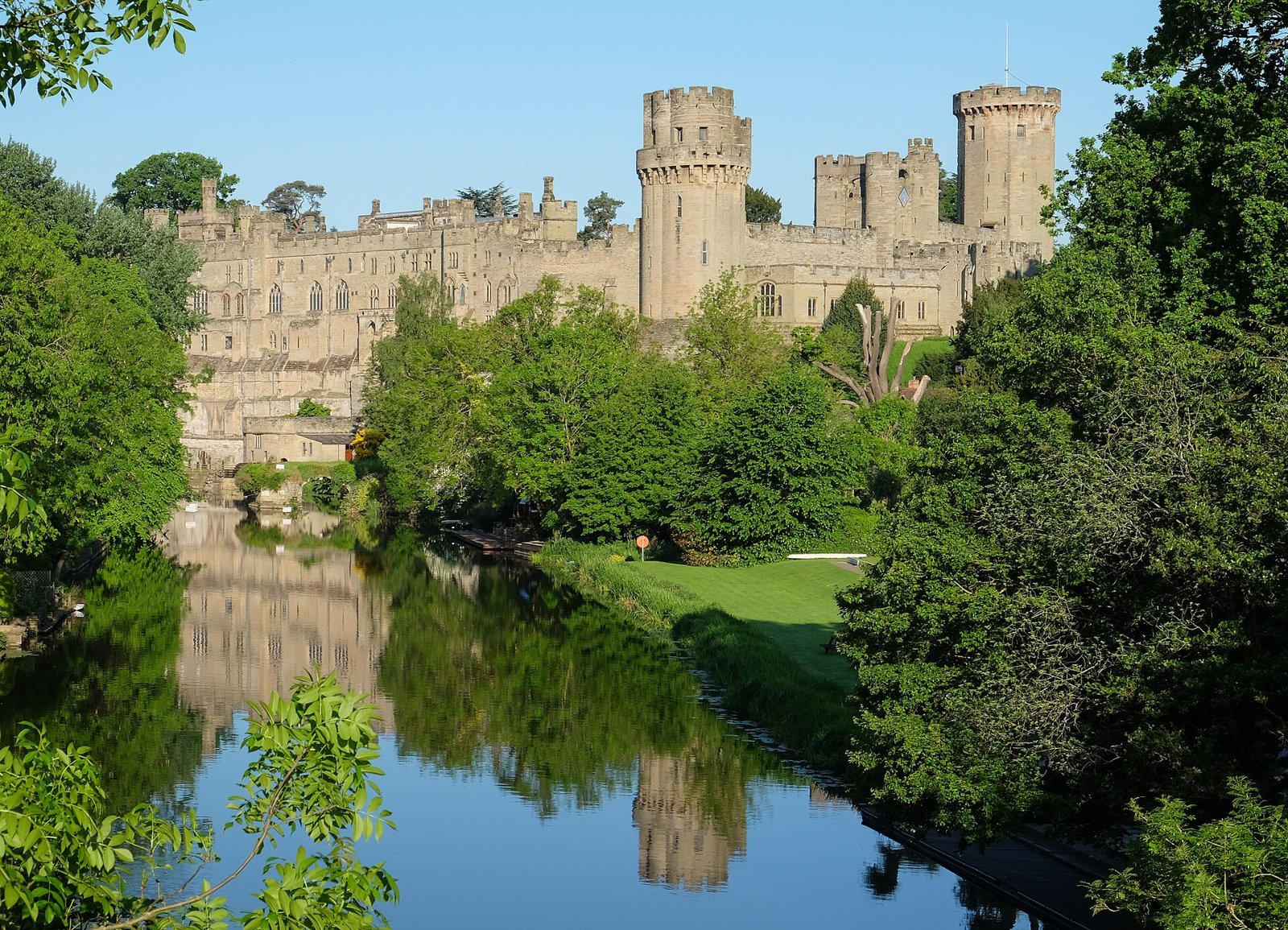
Warwick Castle
History
William the Conqueror built a wooden motte-and-bailey castle at Warwick in 1068, on a bend of the River Avon. It was rebuilt in stone in the 12th century, and in the 14th century the Beauchamp Earls of Warwick added the towering Caesar’s Tower and Guy’s Tower, which still dominate the skyline. Warwick’s most famous owner was Richard Neville, 16th Earl of Warwick, known as “the Kingmaker” for his role in the Wars of the Roses. In later centuries the castle was converted into a stately home.
What to See
Warwick is run as a major visitor attraction, with live shows, a working trebuchet, birds of prey displays and themed exhibitions. You can climb the ramparts and towers, explore the State Rooms, and walk in the gardens and parkland originally landscaped by Capability Brown.
Visiting Tips
Warwick is about 1 hour 30 minutes from London by train, and the castle is a short walk from Warwick station. Tickets are generally cheaper when booked online in advance. Combine your visit with Stratford-upon-Avon, Shakespeare’s birthplace, about 20 minutes away.
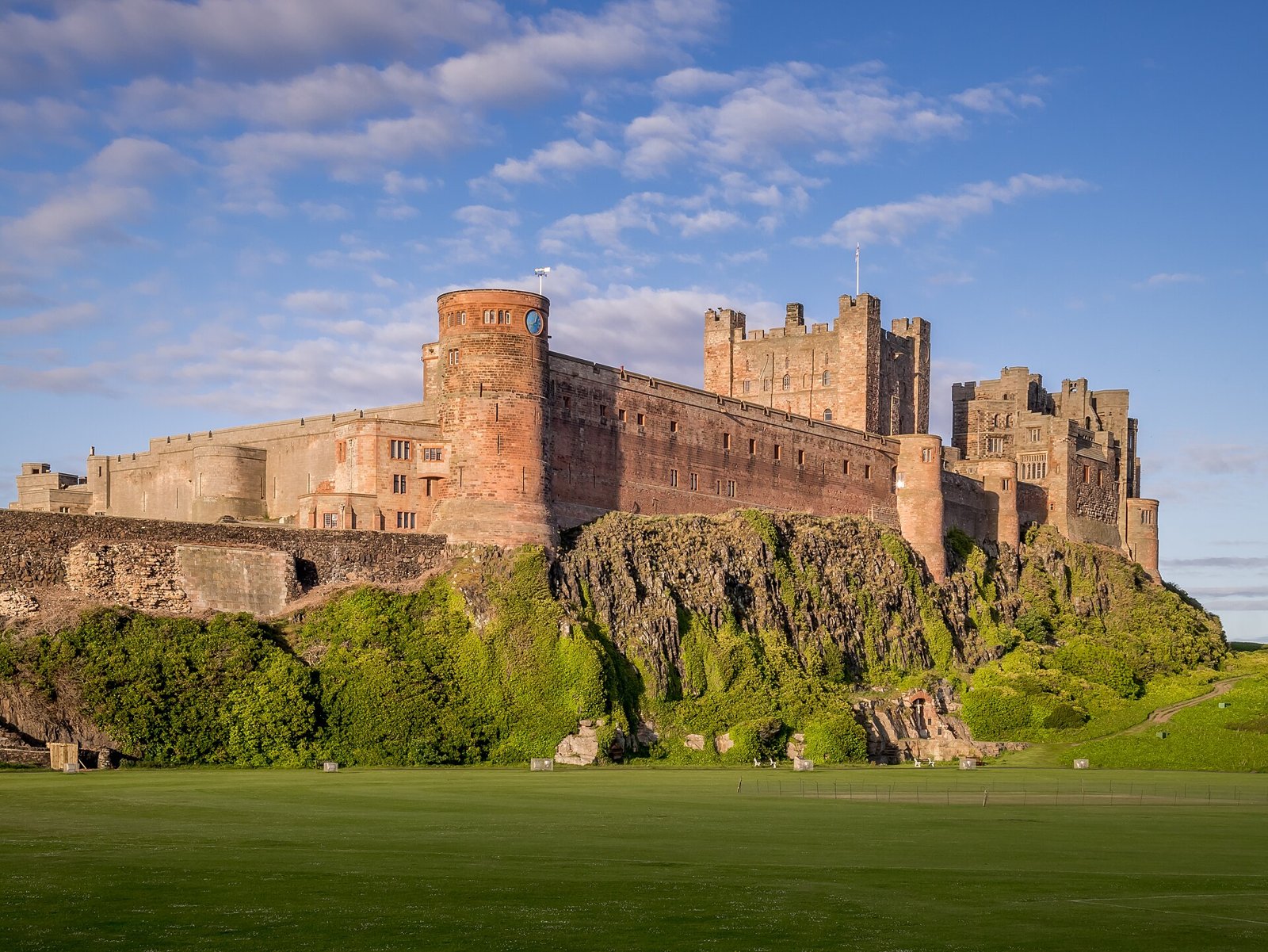
Bamburgh Castle
History
Bamburgh Castle sits on a dramatic outcrop of volcanic dolerite above the Northumberland coast. Long before the Normans, it was a royal centre of the Anglo-Saxon kingdom of Northumbria. The Norman castle that followed was a key border stronghold against the Scots. During the Wars of the Roses, in 1464, Bamburgh became the first English castle to fall to gunpowder artillery.
By the 18th century the castle was in ruins. It was restored in stages, and in the 1890s it was bought by the Victorian industrialist William Armstrong, 1st Baron Armstrong, who completed its restoration. The Armstrong family still own Bamburgh today.
What to See
Explore the restored state rooms, the King’s Hall, the Armstrong and Aviation Artefacts Museum, and the castle’s collections of arms and armour. The views along the coast towards Holy Island and the Farne Islands are spectacular, and the long sandy beach below is one of the finest in England.
Visiting Tips
Bamburgh is about an hour’s drive north of Newcastle. Public transport is limited, so a car is easiest. Combine your trip with Holy Island (check the causeway tide times carefully), Alnwick Castle or a boat trip to the Farne Islands.
Other Big English Castles Worth Knowing
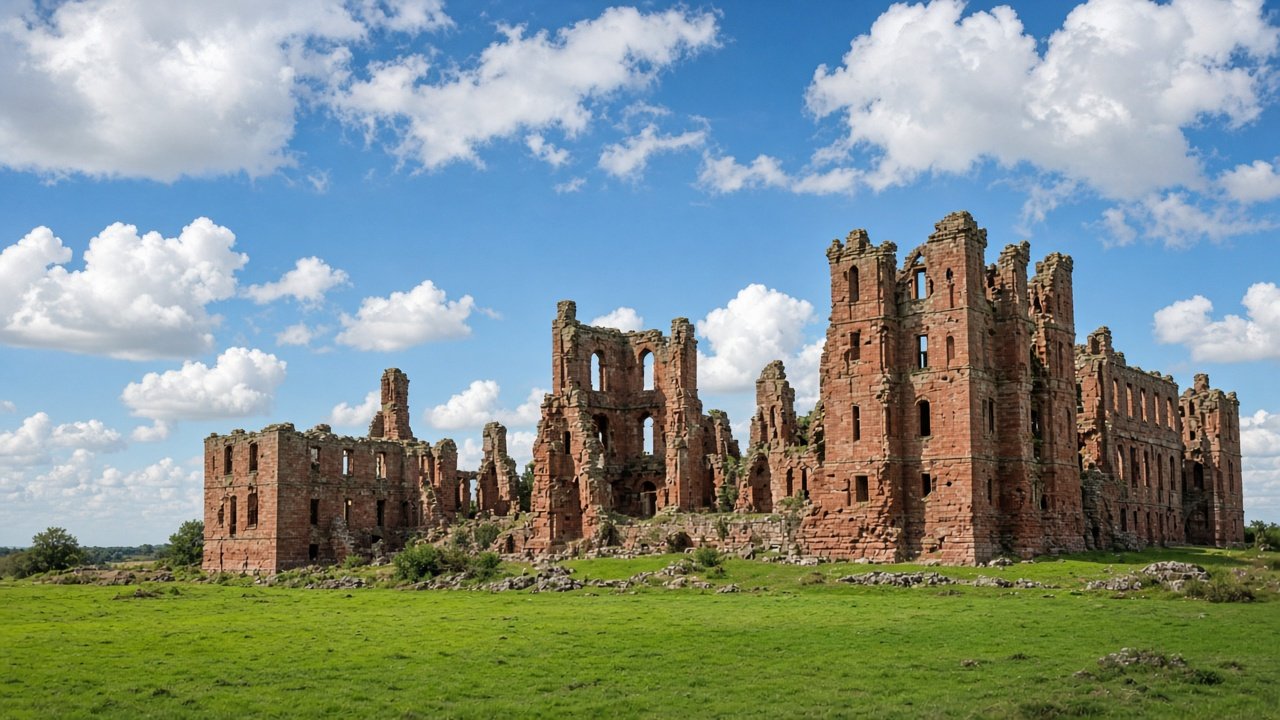
If these five leave you wanting more, a few other large castles deserve a place on your list. Kenilworth Castle in Warwickshire, now a vast red sandstone ruin cared for by English Heritage, was transformed by Robert Dudley, Earl of Leicester, to entertain Elizabeth I in 1575. Alnwick Castle in Northumberland, home of the Dukes of Northumberland, is one of the largest inhabited castles in England and famous as a filming location for the early Harry Potter films. Framlingham Castle in Suffolk has an impressive curtain wall with thirteen towers, and it was here that Mary Tudor gathered her supporters in 1553 before claiming the throne.
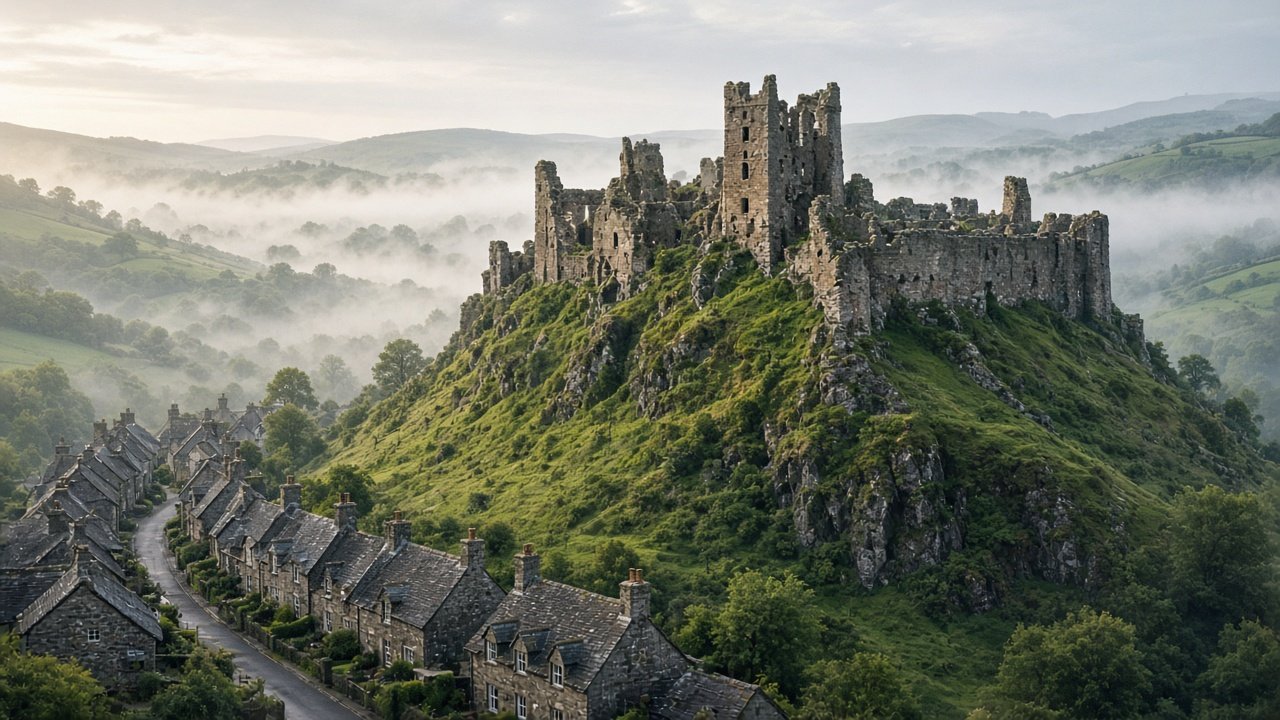
More Mighty English Castles: Arundel, Corfe and Dunstanburgh
Not every great English castle makes the “biggest” lists, but these three cover a huge amount of ground, either in stone or in history.
Arundel Castle, West Sussex
Arundel Castle was founded in the late 1060s by Roger de Montgomery, one of William the Conqueror’s most trusted followers, and it still has its Norman motte and shell keep. It has been the home of the Dukes of Norfolk and their ancestors for more than 850 years. Much of what you see today is the result of a huge Victorian rebuilding by the 15th Duke of Norfolk, which gave the castle its grand Gothic Revival interiors and library, while the 14th-century Fitzalan Chapel survives in the grounds. The gardens, including the formal Collector Earl’s Garden, are a highlight in summer.
Corfe Castle, Dorset
Corfe Castle guards a gap in the Purbeck Hills, and its broken towers are one of the most recognisable silhouettes in southern England. William the Conqueror built a castle here soon after 1066, and it was one of the earliest in England to be built partly in stone. During the English Civil War it was a Royalist stronghold, famously defended by Lady Mary Bankes. It fell in 1646 after one of the garrison betrayed it, and Parliament then ordered it to be slighted, or deliberately wrecked, so it could never be used again. Today it is cared for by the National Trust.
Dunstanburgh Castle, Northumberland
Dunstanburgh Castle was begun in 1313 by Thomas, Earl of Lancaster, a powerful rival of King Edward II, on a remote headland on the Northumberland coast. Its walls enclose one of the largest areas of any castle in northern England, and its huge gatehouse still dominates the site. The castle is reached only on foot, most often along the coastal path from the fishing village of Craster, about a mile and a half to the south. The ruins are owned by the National Trust and managed by English Heritage.
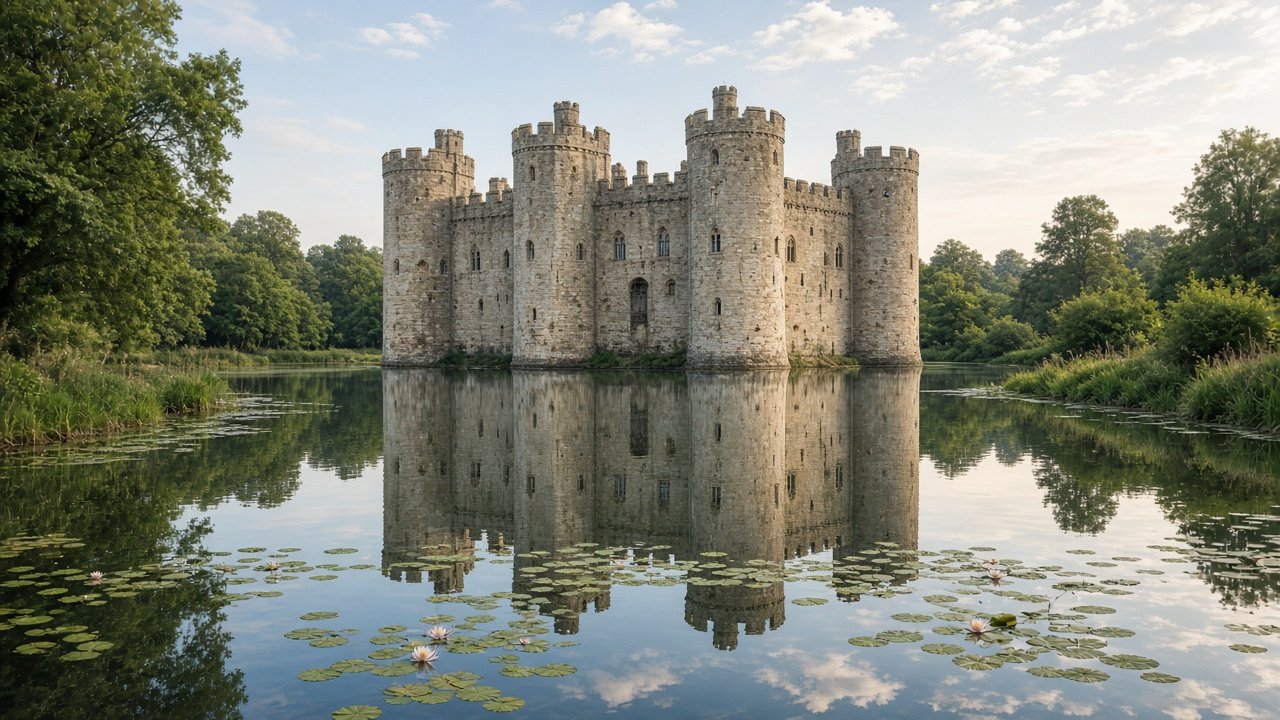
A Note on Bodiam Castle
Bodiam Castle in East Sussex often appears on lists of England’s great castles, but it is famous for its perfect picture-book appearance rather than its size. Built from 1385 by Sir Edward Dalyngrigge, it is a compact, moated castle with round corner towers that looks exactly like a child’s drawing of a castle. It is cared for by the National Trust and is well worth a visit if you are exploring Sussex or Kent.
Quick Facts
| Castle | Location | Founded | Claim to fame | Managed by |
|---|---|---|---|---|
| Windsor Castle | Berkshire | c. 1070 | Largest occupied castle in the world | Royal Collection Trust |
| Dover Castle | Kent | Great Tower 1180s (site much older) | “Key to England”; WWII tunnels | English Heritage |
| Tower of London | London | 1070s | Crown Jewels; UNESCO World Heritage Site | Historic Royal Palaces |
| Warwick Castle | Warwickshire | 1068 | Home of “the Kingmaker” | Privately operated attraction |
| Bamburgh Castle | Northumberland | Norman castle on an older royal site | First English castle to fall to artillery (1464) | Armstrong family |
Tips for Visiting England’s Big Castles
- Allow more time than you think: sites like Dover and Windsor can easily fill a whole day.
- Check memberships: English Heritage, the National Trust and Historic Royal Palaces all offer memberships that include free entry to their sites.
- Book online: many castles offer timed entry and online discounts, and it saves queueing.
- Go off-peak: weekdays outside school holidays are noticeably quieter.
Frequently Asked Questions
What is the biggest castle in England?
Dover Castle is often described as the largest castle in England, while Windsor Castle is the largest occupied castle in the world.
Can you go inside Windsor Castle?
Yes. The State Apartments and St George’s Chapel are open to visitors on most days, although the castle can close for royal events. Check before you go.
Which castle holds the Crown Jewels?
The Crown Jewels are kept at the Tower of London, in the Jewel House.
Why is Warwick Castle famous?
It is one of England’s best-preserved medieval castles, founded by William the Conqueror in 1068, and was the home of Richard Neville, “the Kingmaker”, during the Wars of the Roses.
Is Bamburgh Castle worth visiting?
Yes. Its clifftop setting, restored interiors and huge beach make it one of the most memorable castles in northern England.