

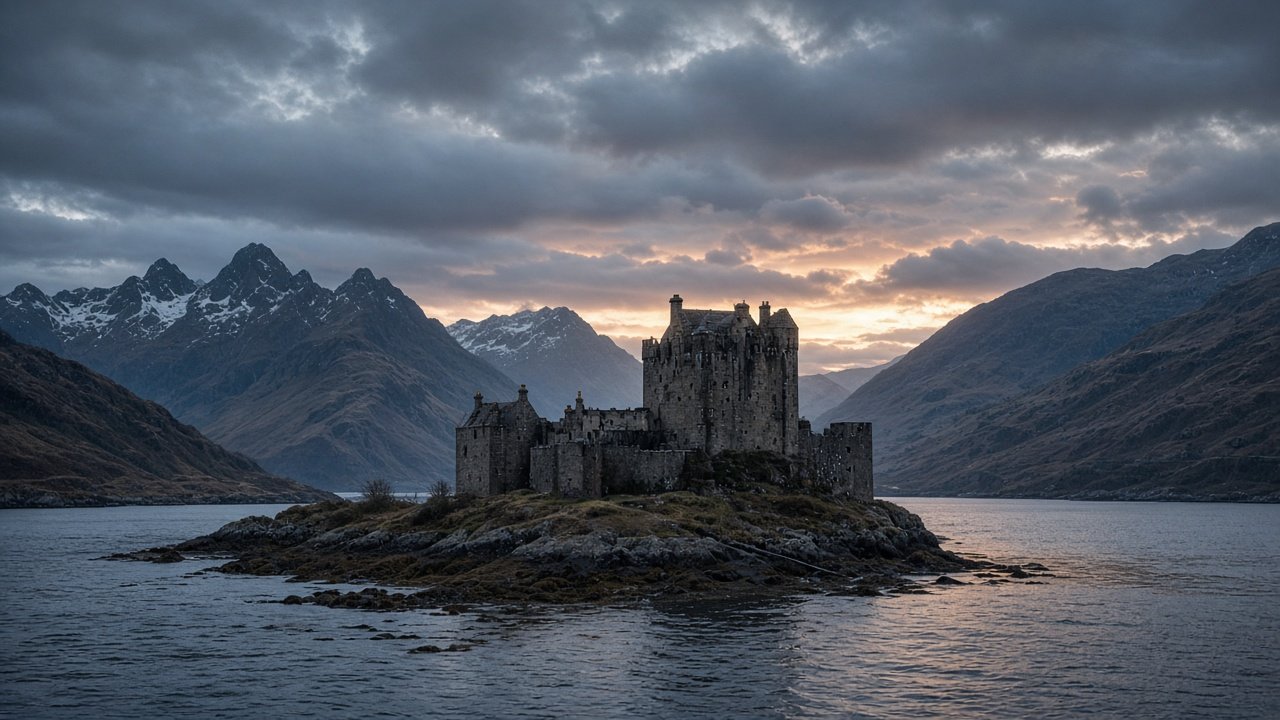

Every castle in Scotland has a date of construction and a list of owners, but what really brings these places to life are the stories: a dinner that ended in execution, a king who stabbed his guest, a fugitive hero betrayed on the shore of a Highland loch. Some of these tales are firmly documented; others have grown in the telling over the centuries.
These stories are part of our guide to castles in Europe. For the history, architecture and visiting details of Scotland’s five best-known fortresses, see our main guide to castles in Scotland.
This guide gathers the most fascinating stories behind more than twenty medieval castles in Scotland, separating recorded history from legend wherever possible, and adds practical notes so you can visit the places where it all happened, or even spend the night in one.
Edinburgh Castle: The Black Dinner and the Lang Siege
The Black Dinner (1440)
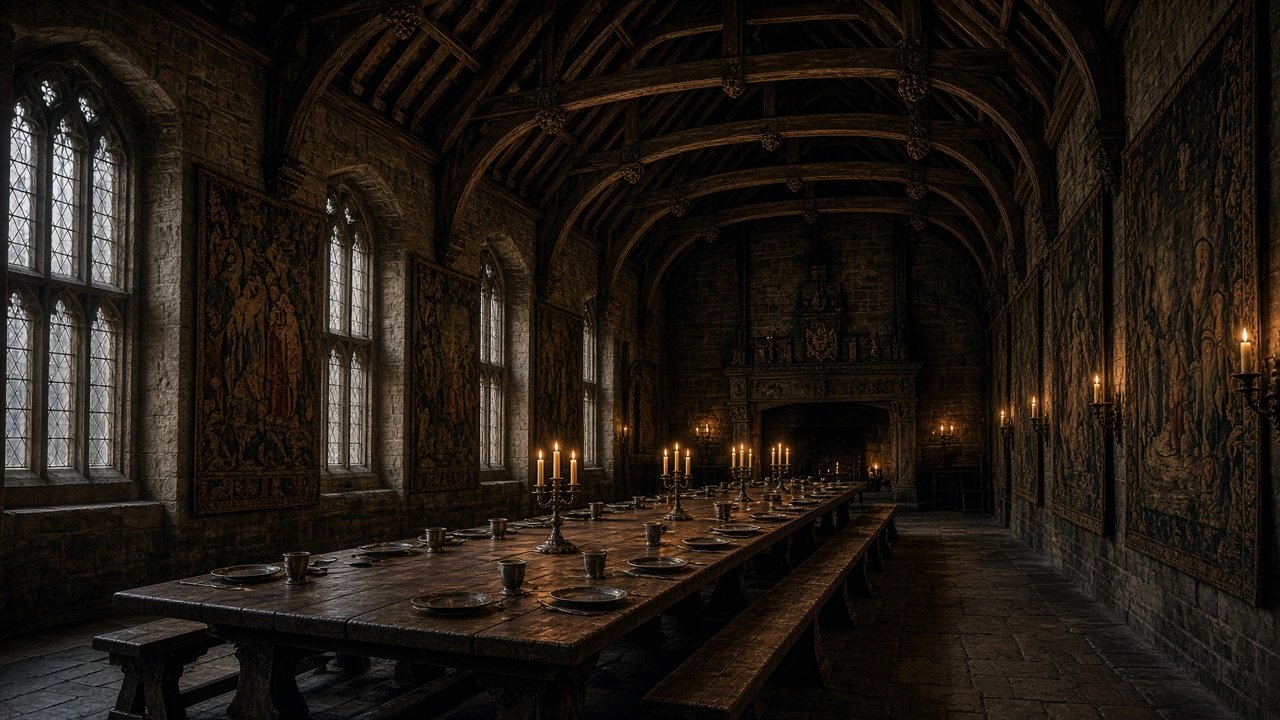
In November 1440 the young King James II was just ten years old, and real power lay with his guardians, Sir William Crichton and Sir Alexander Livingston. They feared the growing power of the Black Douglases, so they invited the teenage William, 6th Earl of Douglas, and his younger brother David to dine at Edinburgh Castle. After the meal the brothers were seized, given a hasty trial, and beheaded on Castle Hill.
Later tradition adds a chilling detail: a black bull’s head was supposedly placed on the table as a sign of death. Whether that is true or not, the “Black Dinner” became one of the most notorious episodes in Scottish history, and it is often cited as one of the real events that inspired the Red Wedding in George R. R. Martin’s A Song of Ice and Fire.
The Lang Siege (1571–1573)
After Mary, Queen of Scots was forced to abdicate in 1567, Edinburgh Castle became the last stronghold of her supporters. Under Sir William Kirkcaldy of Grange it held out for almost two years, until English artillery battered the defences and the garrison surrendered in May 1573. Kirkcaldy was hanged. The siege destroyed much of the medieval castle, including David’s Tower, and the Half Moon Battery you see today was built over its ruins. In total, research in 2014 identified 26 sieges in the castle’s history.
Visiting: Edinburgh Castle is run by Historic Environment Scotland and sits at the top of the Royal Mile. Book timed tickets in advance in busy months.
Stirling Castle: A King’s Dagger (1452)
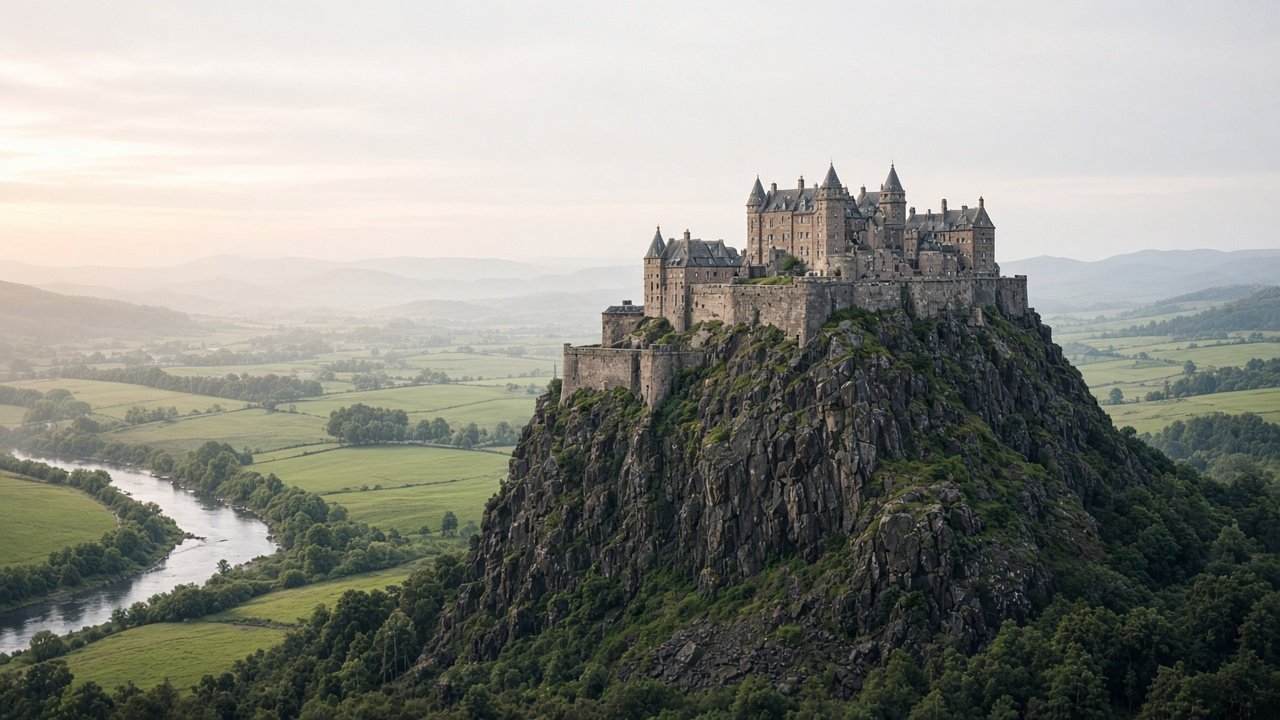
The feud between the Stewart kings and the Black Douglases did not end with the Black Dinner. In February 1452 James II, now an adult, invited William, 8th Earl of Douglas, to Stirling Castle under a promise of safe conduct. When Douglas refused to break his alliance with other powerful nobles, the king lost his temper and stabbed him. His courtiers finished the job, and the earl’s body was thrown from a window. A window in the castle is still known as the Douglas Window, and the garden below as the Douglas Garden.
Stirling was also the setting for happier royal moments. Mary Queen of Scots was crowned in the castle’s chapel in 1543, and her son James VI spent much of his childhood here. The castle stands above the battlefields of Stirling Bridge (1297) and Bannockburn (1314), two of the defining victories of the Wars of Independence.
Visiting: Stirling Castle is managed by Historic Environment Scotland; about an hour from Edinburgh or Glasgow by train, followed by a steep walk up to the castle.
Glamis Castle: Witchcraft, a Queen Mother and a Famous Play
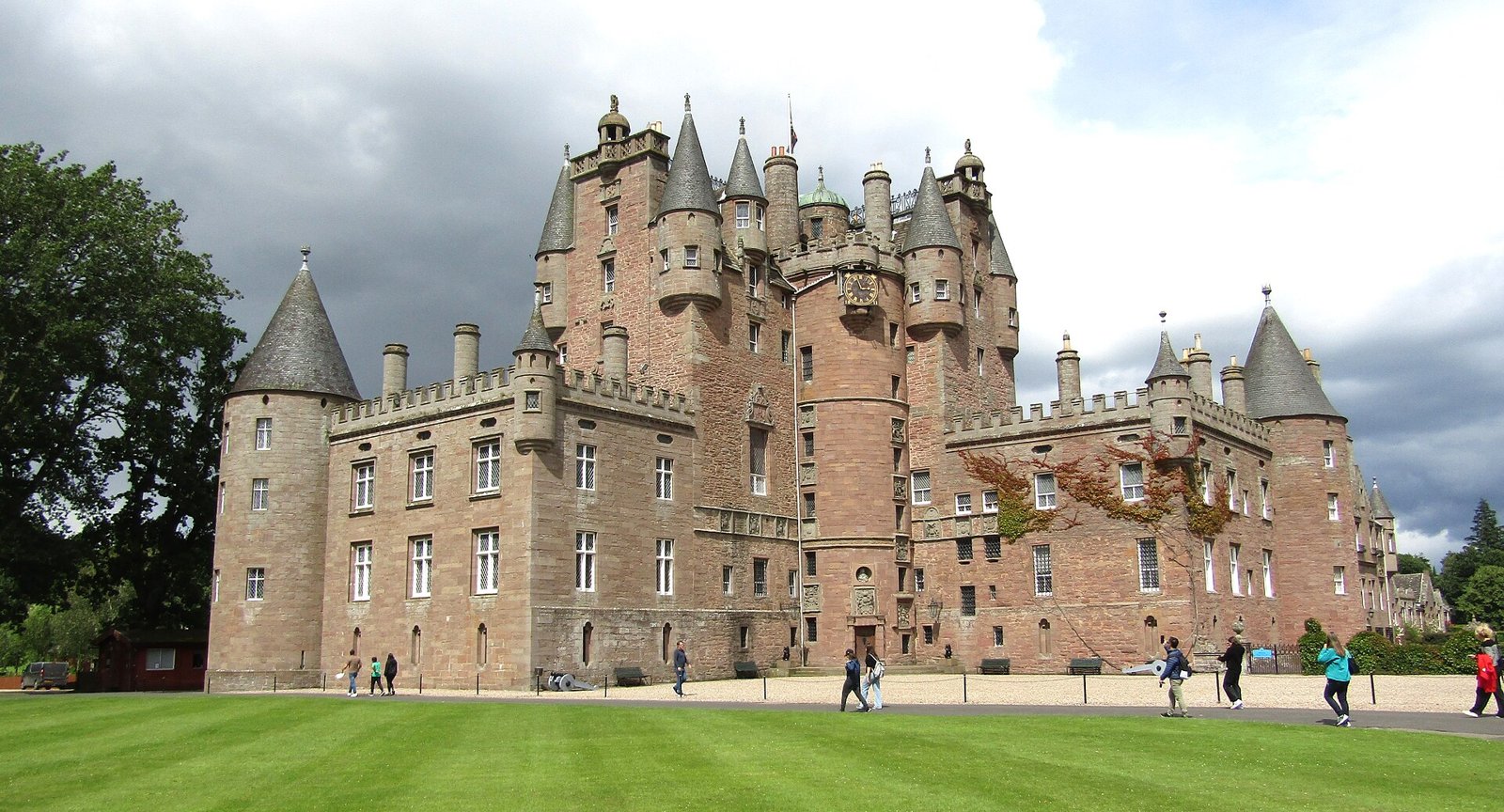
Glamis Castle in Angus has been the seat of the Lyon family, later Earls of Strathmore and Kinghorne, since 1372. Its darkest documented episode came in 1537, when Janet Douglas, Lady Glamis, was accused of witchcraft and of plotting to poison King James V. Historians generally believe the charges were driven by the king’s hatred of her Douglas family. She was burned at the stake on Edinburgh’s Castle Hill, and James seized Glamis for himself until his death.
Glamis is also wrapped in legends: tales of a secret chamber, of a “Grey Lady” said to be the ghost of Janet Douglas, and of mysterious card games with the devil. These stories are part of the castle’s charm, but they are folklore rather than recorded history.
The connection to Shakespeare’s Macbeth is literary too: Macbeth is hailed as “Thane of Glamis”, but the real Macbeth, who ruled Scotland from 1040 to 1057, has no known link to the present castle. The best-documented royal connection is far more recent: Glamis was the childhood home of Elizabeth Bowes-Lyon, the future Queen Mother, and Princess Margaret was born here in 1930.
Visiting: privately owned and open seasonally, mostly by guided tour; about 30 minutes north of Dundee.
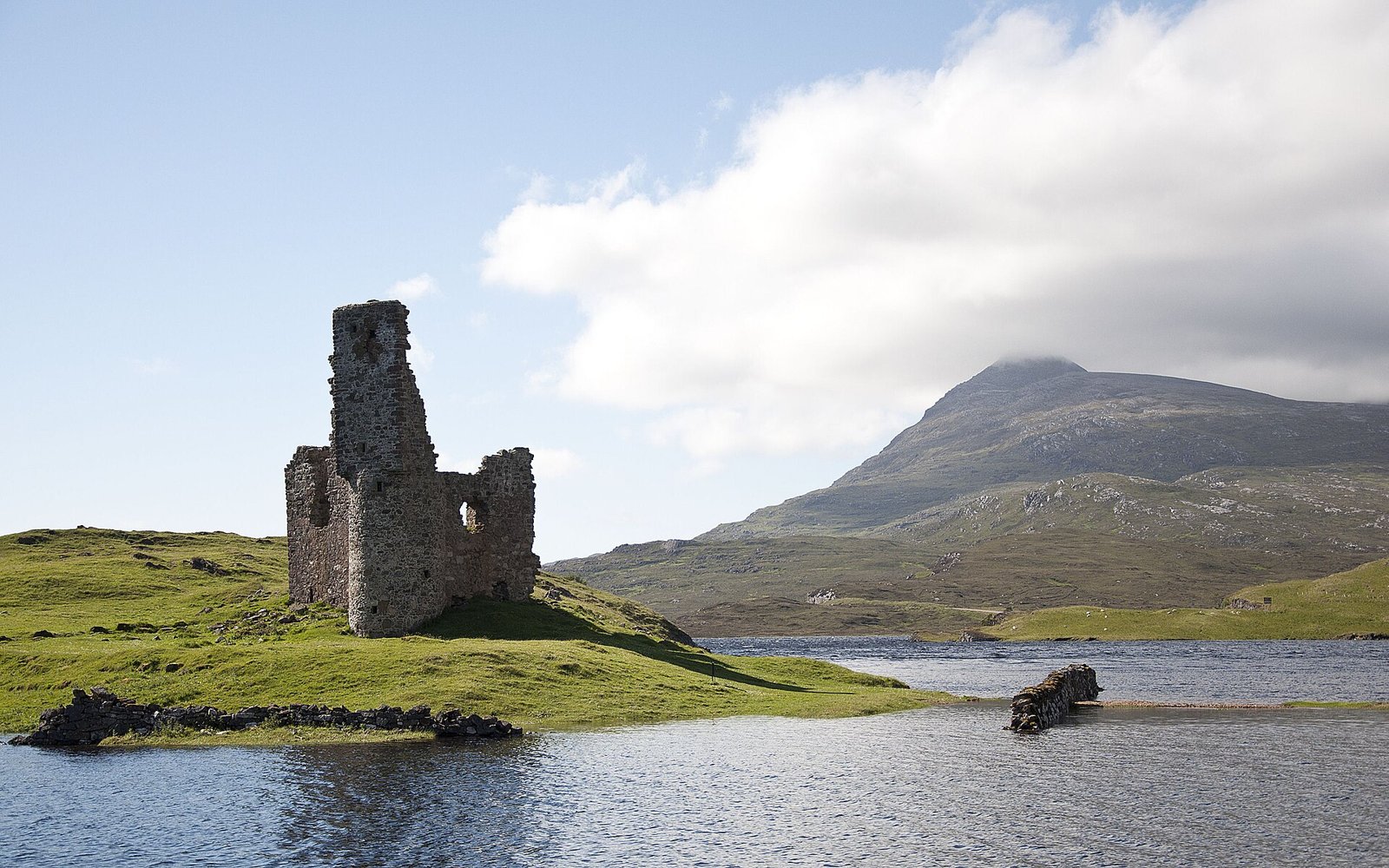
Ardvreck Castle: The Betrayal of Montrose (1650)
On a rocky promontory jutting into Loch Assynt in Sutherland stand the gaunt ruins of Ardvreck Castle. It was built around 1490 by the MacLeods of Assynt as a simple rectangular tower with a round stair tower, and it once rose to about four storeys.
Ardvreck’s place in history was sealed in 1650. James Graham, 1st Marquess of Montrose, the brilliant royalist commander, had been defeated at the Battle of Carbisdale and was on the run in the far north. He ended up in the hands of Neil MacLeod of Assynt, who handed him over to the Covenanter government. The exact circumstances are disputed: one version says MacLeod, a Covenanter supporter, simply arrested the exhausted fugitive; another says he offered shelter and then betrayed his guest for a large reward. Either way, Montrose was taken to Edinburgh and executed in May 1650.
The MacLeods did not hold Assynt for long afterwards. Clan Mackenzie captured Ardvreck in 1672, and in 1726 they built a more modern mansion nearby, Calda House. It burned down in 1737, and today both buildings stand as scheduled monuments in one of the most atmospheric landscapes in the Highlands.
Visiting: Ardvreck is beside the A837 near Inchnadamph, roughly an hour north of Ullapool and part of many North Coast 500 itineraries. The ruins are free to walk to from a small roadside parking area. The masonry is fragile, so admire it from the outside.
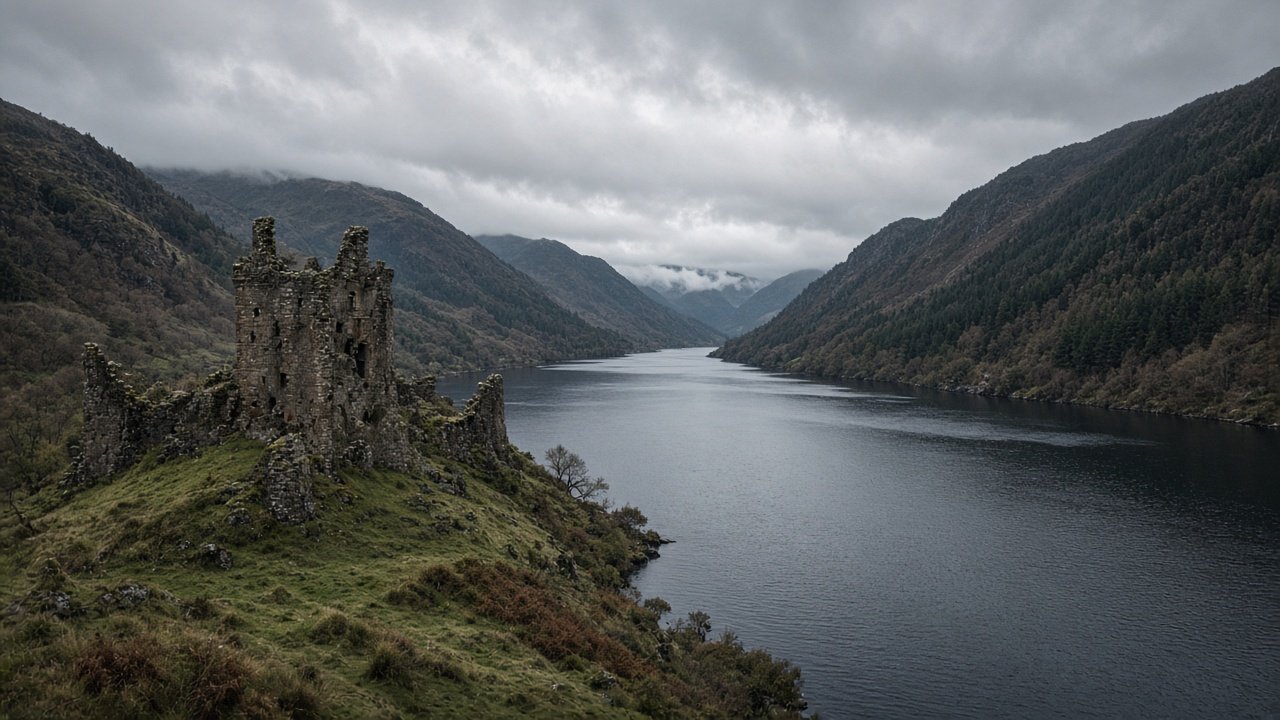
Urquhart Castle: Raiders on Loch Ness
Urquhart Castle guarded the Great Glen from its headland on Loch Ness. Its stories are of constant raiding: English forces under Edward I took it in 1296, and in the 15th and 16th centuries the MacDonald Lords of the Isles repeatedly seized it and plundered the surrounding lands. The Grant family, who received the castle in 1509, built the tall Grant Tower that dominates the ruins today.
The final chapter came after government troops left in 1692, when the gatehouse was blown up so that Jacobites could not use the castle. It was never repaired.
Visiting: about 30 minutes south-west of Inverness on the A82; one of the busiest Historic Environment Scotland sites, so book ahead in summer.
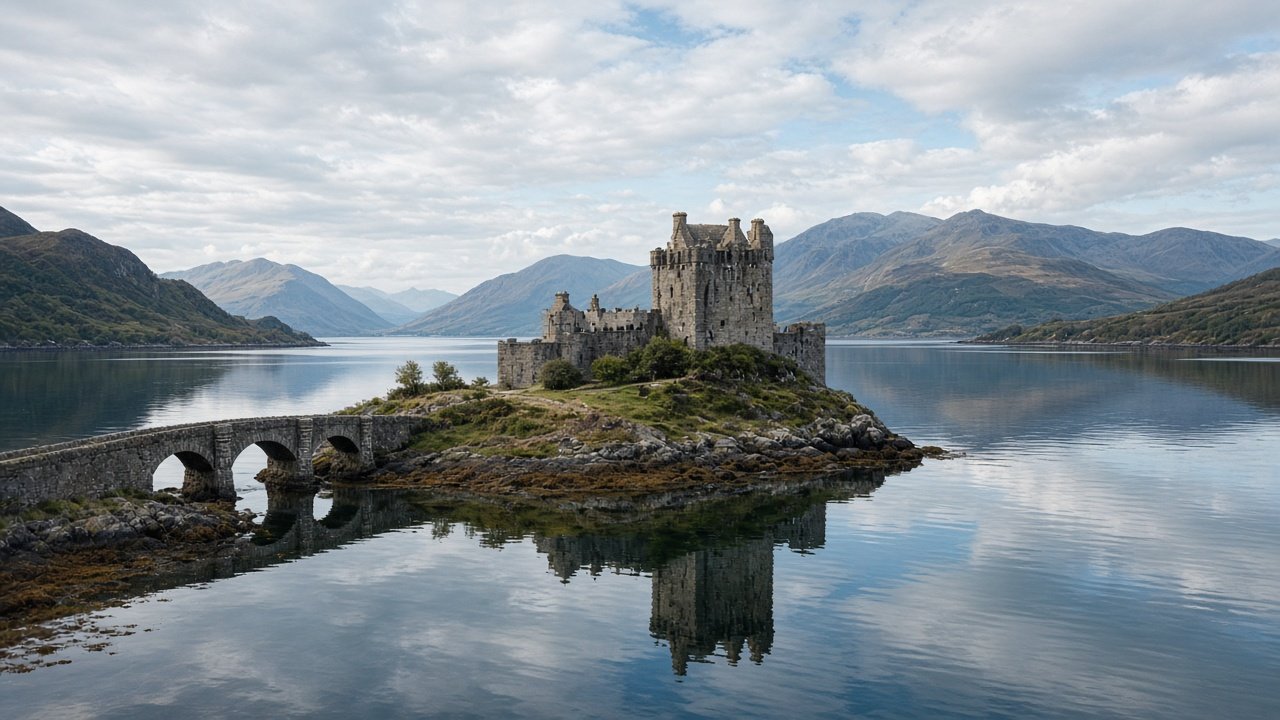
Eilean Donan Castle: Spanish Soldiers and Warships (1719)
Eilean Donan’s most dramatic story involves a little-known Jacobite rising in 1719, backed by Spain. A small garrison, including Spanish troops, occupied the island castle. In May 1719 Royal Navy frigates bombarded it, and after it was taken the castle was blown up with the Jacobites’ own store of gunpowder. The ruins lay abandoned until Lieutenant Colonel John MacRae-Gilstrap rebuilt the castle between 1912 and 1932.
Visiting: on the A87 road to Skye near Dornie; privately run by a charitable trust, with seasonal opening times.
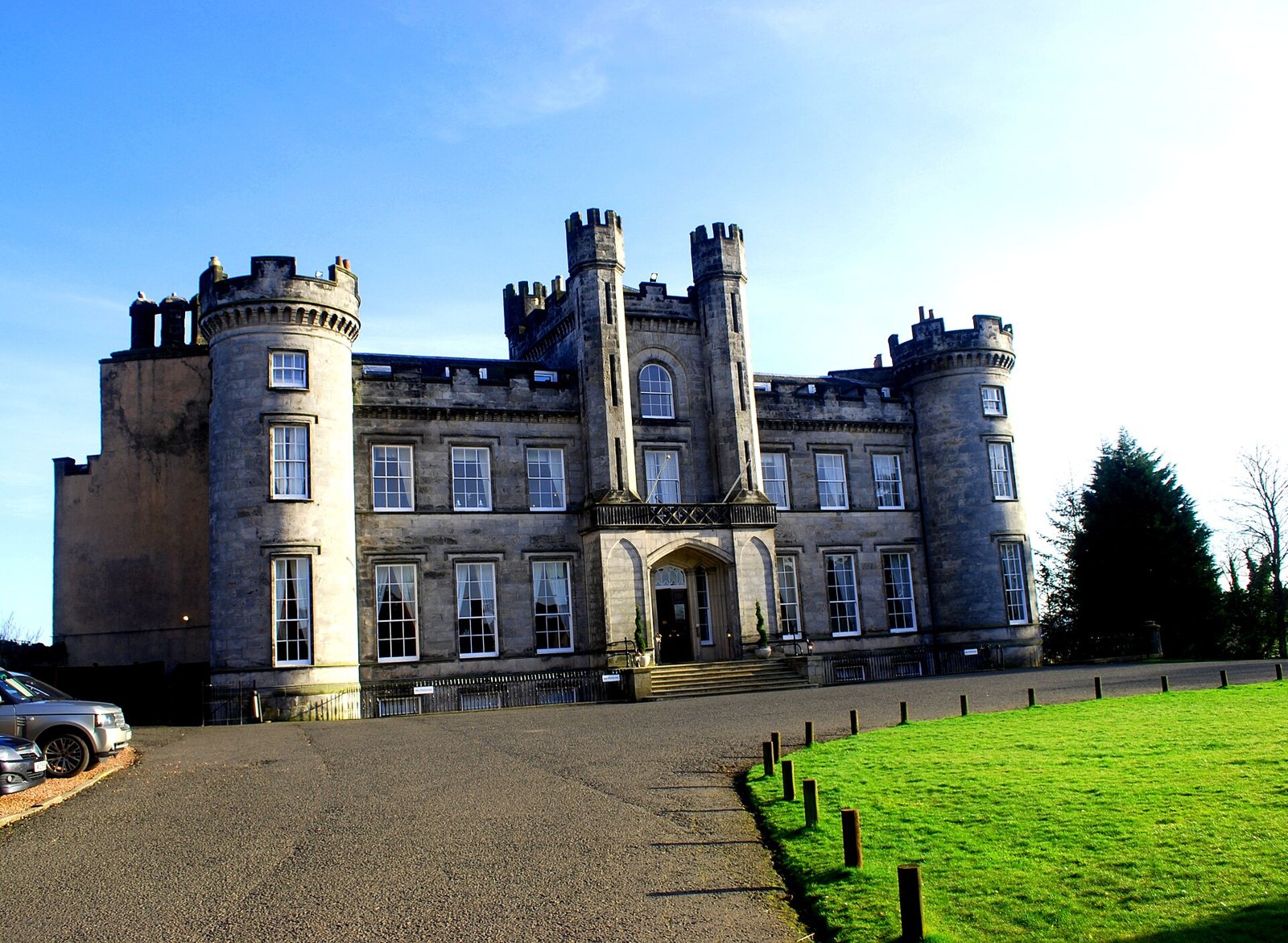
Airth Castle: A Wallace Legend
Airth Castle overlooks the River Forth near Falkirk. According to the 15th-century poet Blind Harry, in 1298 William Wallace attacked an earlier wooden fort on this site to rescue his uncle, a priest who was being held prisoner. Blind Harry wrote nearly 200 years after Wallace’s death and is not considered a reliable historian, so treat this as legend rather than fact.
The recorded history is just as interesting. A later castle here was damaged after King James III was defeated at the Battle of Sauchieburn in 1488, and the oldest surviving part, the south-west tower, dates from the rebuilding that followed. The owning Bruce family supported the Jacobites and had to sell after the failure of the 1715 rising. The castle is a Category A listed building.
Visiting note: Airth Castle operated as a hotel and spa until its operator ceased trading in 2023, and parts of the building were damaged by fire in September 2024. It is not currently open to visitors, so enjoy it from public roads only.
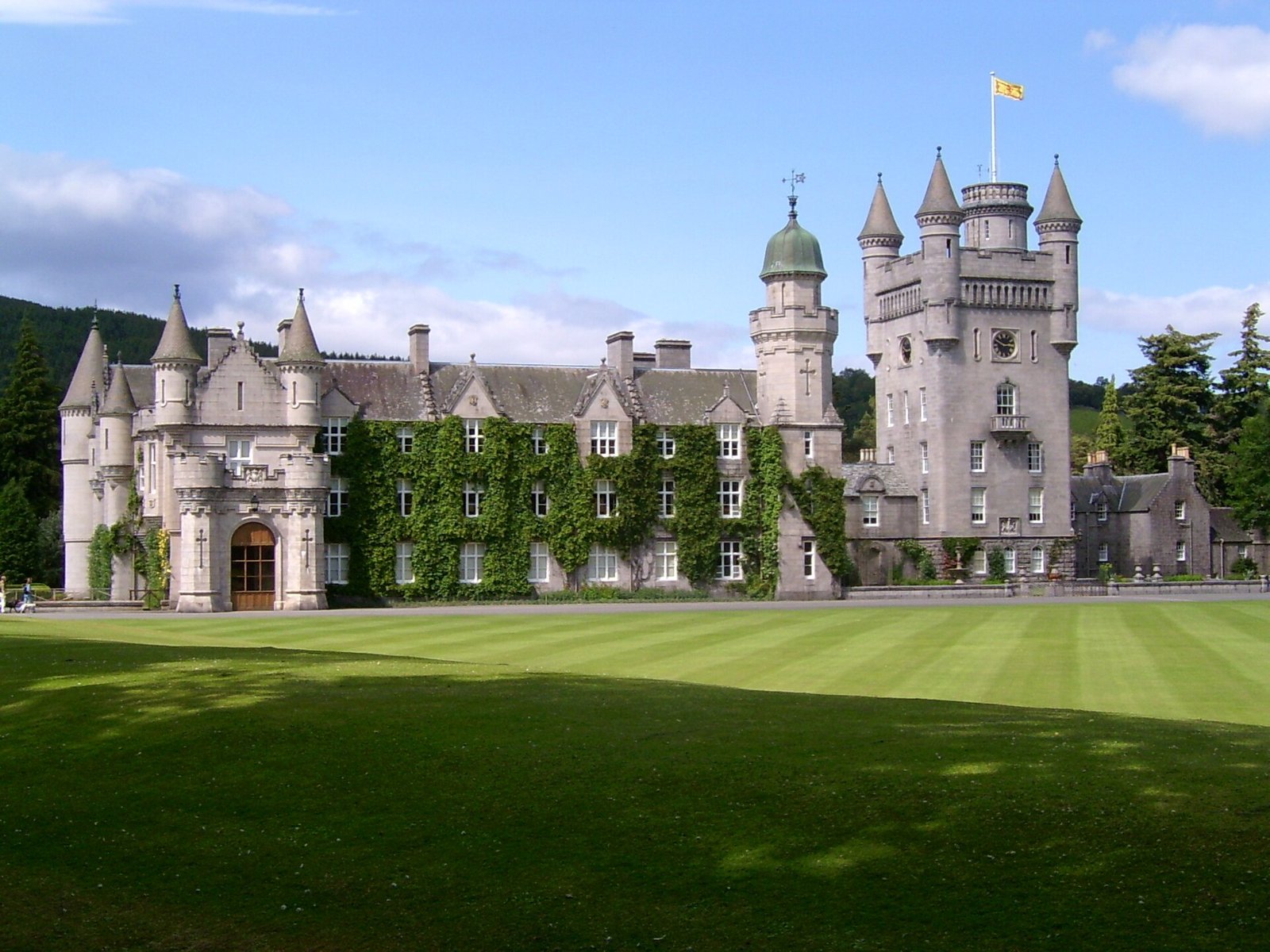
Balmoral Castle: A Victorian Story, Not a Medieval One
Balmoral often appears on lists of Scottish castles, but it is not medieval at all. Prince Albert bought the Balmoral estate in Royal Deeside in 1852, and the old tower house on the site was replaced by the present castle, designed by William Smith of Aberdeen in the Scottish Baronial style and completed in 1856. It remains a private residence of the British royal family, and Queen Elizabeth II died there in September 2022.
Balmoral’s story is really one of how the Victorians fell in love with the Highlands, inspiring a fashion for tartan, turrets and romantic castles that shaped how the world still imagines Scotland.
Visiting: the grounds, gardens and ballroom usually open to the public for part of the year, mostly in spring and early summer, and guided tours of some interior rooms have been offered in recent years. Check the official website for current dates.
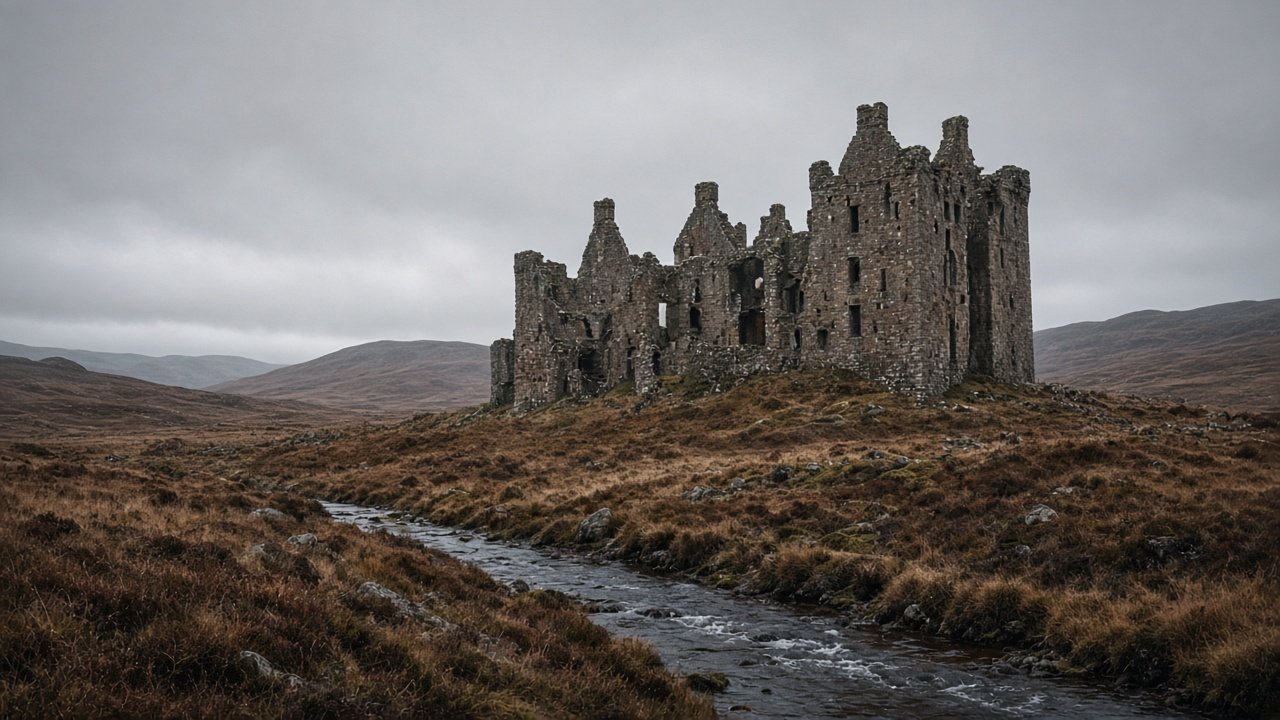
Border Castle Stories: Hermitage, Caerlaverock and Threave
For centuries the border between Scotland and England was a war zone, fought over by kings and raided by the reiving families of the Borders. The castles of the Scottish Borders and Dumfries and Galloway carry some of the most dramatic stories in the country.
Hermitage Castle: Mary, Queen of Scots’ Desperate Ride (1566)
Hermitage Castle stands in lonely moorland in Liddesdale, close to the English border, and its massive walls earned it a reputation as one of the grimmest fortresses in Scotland. In October 1566 James Hepburn, 4th Earl of Bothwell, the keeper of the castle, was badly wounded in a fight with Border reivers. Mary Queen of Scots, who was holding a court of justice at Jedburgh, rode across the hills to see him and returned the same day, a round trip of roughly 50 miles over rough country. Soon afterwards she fell so seriously ill at Jedburgh that her life was feared for. Within a year Mary had married Bothwell, a match that helped bring about her downfall. Hermitage is cared for by Historic Environment Scotland and opens in the summer season.
Caerlaverock Castle: The Triangular Fortress Besieged by Edward I (1300)
Near the Solway coast south of Dumfries, Caerlaverock Castle is famous for its unusual triangular plan, with a water-filled moat all around and a great twin-towered gatehouse at one corner. In July 1300 Edward I of England, the king known as Edward Longshanks, besieged it with a large army. The small garrison held out for a short time before surrendering, and the siege was celebrated in an Old French heraldic poem, Le Siège de Karlaverok, which describes the banners of the knights who took part. The castle changed hands several times in the wars that followed and was later rebuilt by the Maxwell family, who added an elegant Renaissance range inside the walls in the 1630s.
Threave Castle: The Black Douglases’ Island Stronghold
On an island in the River Dee in Galloway, Threave Castle was built in the later 14th century by Archibald the Grim, Lord of Galloway and one of the powerful “Black” Douglases. When King James II set out to break the power of the Douglas family, Threave was besieged in 1455 and eventually surrendered to the king. Visitors still reach the island by a short boat trip, ringing a bell on the jetty to call the ferryman, which makes it one of the most atmospheric castle visits in Scotland.
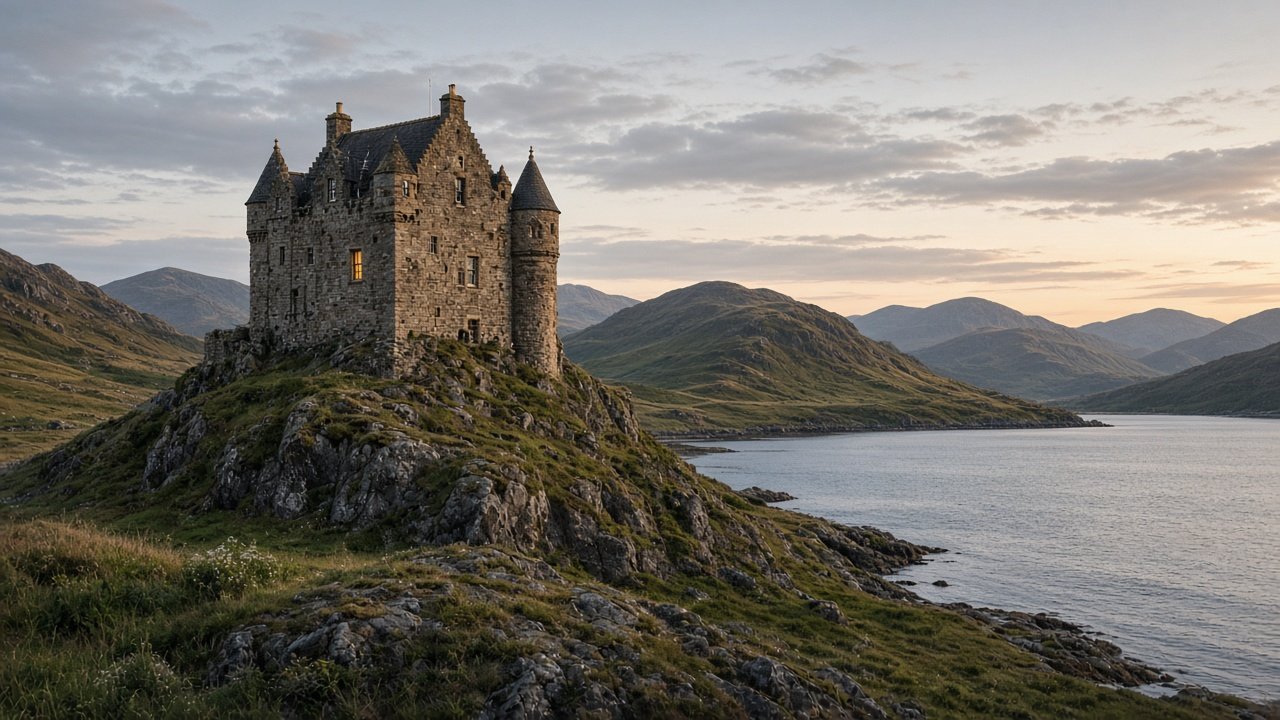
Medieval Castles in Scotland You Can Visit or Stay In
Scotland’s best-known fortresses are only the beginning. Across the country, smaller medieval castles in Scotland have been restored as museums, family homes and hotels, and several let you sleep behind walls that are hundreds of years old. These are some of the most interesting, with the stories that go with them.
Castle Fraser and Fyvie Castle, Aberdeenshire
Aberdeenshire is famous for its castles. Castle Fraser, near Kemnay, is one of the grandest tower houses in the country, built between 1575 and 1636 for Michael Fraser, 6th Laird, on a Z-plan with towers at opposite corners. Castle Fraser is cared for by the National Trust for Scotland, with a walled garden and woodland walks around it.
Further north, parts of Fyvie Castle date back to the 13th century, and it has one of Scotland’s best-known legends. Lilias Drummond, wife of Alexander Seton, Lord Fyvie, died in 1601, and her husband remarried within months. According to the story, on the wedding night the couple heard sighing outside their window, and in the morning Lilias’s name was found carved into the stone window sill, where letters can still be seen. It is a legend rather than recorded history, but it has made Fyvie one of the most famous “haunted” castles in Scotland.
Brodie Castle, Moray
Near Forres, Brodie Castle was home to the Lairds of Brodie for centuries. The present Z-plan tower house dates mainly from 1567. In 1824 the architect William Burn began a large east wing, later completed by James Wylson in the 1840s, and inside are fine plaster ceilings, paintings and a large library. In spring the grounds are famous for daffodils, many of them varieties bred by Ian Brodie, the 24th Brodie of Brodie, in the early 20th century. Brodie Castle is now run by the National Trust for Scotland.
Inverlochy Castle and Fort William
There are two Inverlochy Castles, and it is worth knowing the difference. The original is a medieval ruin beside the River Lochy, just outside Fort William: a square courtyard castle with round corner towers, built around 1280 by the powerful Comyn family. Two battles of Inverlochy were fought nearby, in 1431 and 1645, the second a famous victory for the royalist Marquess of Montrose over the Campbells. The ruin is cared for by Historic Environment Scotland and is free to visit.
A short distance away stands the Victorian mansion now known as the Inverlochy Castle Hotel. It was built in 1863 for Lord Abinger, and Queen Victoria stayed there in 1873. Today it is a luxury hotel at the foot of Ben Nevis, so if you are booking a stay near Fort William, check which Inverlochy Castle you mean.
Mingary Castle, Ardnamurchan
On the remote Ardnamurchan peninsula, just east of Kilchoan on the west coast, Mingary Castle stands on a rocky promontory overlooking the Sound of Mull. Its curtain walls date from the 13th century, and for centuries it was the seat of the MacIains of Ardnamurchan. King James IV stayed at Mingary in 1495, and the castle survived sieges and an attack by a ship from the Spanish Armada in 1588. After about 150 years as a crumbling ruin, Mingary Castle was restored between 2013 and 2016 with help from Historic Scotland, and it reopened in 2021 as a restaurant with rooms. Its suites have four-poster beds and views out to sea, making Mingary one of the most unusual places to stay on Scotland’s west coast.
Kilmartin Castle and Barcaldine Castle, Argyll
In Kilmartin Glen, one of Scotland’s richest prehistoric landscapes, Kilmartin Castle is a small Z-plan tower house built around 1550 for John Carswell, Rector of Kilmartin. Carswell later became Bishop of the Isles, and his Gaelic translation of the Book of Common Order, printed in 1567, was the first book printed in Scottish Gaelic. Kilmartin Castle later passed to the Campbells and stood roofless for around 200 years before being restored, and today it is a self-catering castle that sleeps a small group.
North of Oban, on the shore of Loch Creran on the west coast, Barcaldine Castle was built between 1601 and 1609 by Sir Duncan Campbell of Glenorchy, better known as Black Duncan Campbell or “Black Duncan of the Castles” for the many strongholds he built. Barcaldine was later abandoned and fell into ruin, then was restored between 1897 and 1911. It now operates as a bed and breakfast, so you can stay in the castle that Black Duncan built.
Dornoch Castle, Sutherland
In the small cathedral town of Dornoch, Dornoch Castle began life as the palace of the Bishops of Caithness, probably in the late 15th century. In 1557 the bishop handed it to his relative the Earl of Sutherland, and in 1570, during a feud between the Murrays and the Mackays, the town and cathedral were burned and the castle was besieged for about a month. Dornoch Castle later served as a courthouse and jail, and it has been a hotel since 1947. Today the Dornoch Castle Hotel stands opposite the cathedral and is a comfortable base for exploring the far north.
Thirlestane Castle, Scottish Borders
At Lauder in the Borders, Thirlestane Castle has been the home of the Maitland family since 1590 and is the ancestral seat of Clan Maitland. John Maitland, Lord Chancellor of Scotland under James VI, built the central tower house overlooking the Leader Water. His grandson, another John Maitland, became the first and only Duke of Lauderdale and in the 1670s commissioned Sir William Bruce to remodel Thirlestane Castle, adding the grand staircase and richly plastered state rooms. Thirlestane Castle opens to visitors in summer, and for anyone with Clan Maitland roots it is a place of real family history.
Dalhousie Castle, Midlothian
South of Edinburgh near Bonnyrigg, Dalhousie Castle was the seat of the Ramsay family. Its foundations date from the 13th century, and the castle’s own history records that Edward I, the English king known as Edward Longshanks, spent a night here before defeating William Wallace at the Battle of Falkirk in 1298. In 1400 Sir Alexander Ramsay held Dalhousie Castle against a six-month siege by King Henry IV of England. It has been a hotel since the 1980s; see the official Dalhousie Castle website for stays.
Outlander Castles: Doune Castle and Midhope Castle
Fans of Outlander, the television series based on Diana Gabaldon’s novels, often add two castles to a Scottish trip. Doune Castle near Stirling, a late 14th-century courtyard castle built for Robert Stewart, Duke of Albany, played Castle Leoch, home of the MacKenzie clan. Midhope Castle, a tower house on the Hopetoun estate near South Queensferry, was used for the exterior of Lallybroch, Jamie Fraser’s family home in the series. Midhope is derelict inside, so visitors see the courtyard and exterior only, with access included in a Hopetoun ticket. Jamie Fraser is fictional, but both castles are real places with their own long histories.
Menstrie Castle, Clackmannanshire
At the foot of the Ochil Hills, Menstrie Castle was the birthplace, around 1567, of William Alexander, later 1st Earl of Stirling. A poet and courtier, he received a charter from James VI in 1621 to found the colony of Nova Scotia, and the scheme of Nova Scotia baronetcies followed in 1625. The restored castle includes a commemoration room celebrating the Nova Scotia link, and it opens on a limited basis, so check before you go.
Castle Hotels: Tulloch Castle and Fonab Castle
If you want a castle stay with full hotel service, two Highland options are worth knowing. Tulloch Castle, on the edge of Dingwall in Ross-shire, is built around a 16th-century tower. It belonged to the Bains until 1762 and then to the Davidsons, and it is now a hotel with its own “Green Lady” ghost story. Fonab Castle in Pitlochry is not medieval: it was built in 1892 in the Scots Baronial style for Lieutenant Colonel George Glas Sandeman of the port family, and it reopened as a luxury hotel in 2013 on the shore of Loch Faskally.
Tip: many castle hotels and castle rentals in Scotland are small, so book well ahead for summer, and check whether rooms are in the historic tower or a later wing if staying in the old part of the castle matters to you.
Quick Facts
| Castle | Region | Key story | Date | Can you visit? |
|---|---|---|---|---|
| Edinburgh Castle | Edinburgh | Black Dinner; Lang Siege | 1440; 1571–73 | Yes (Historic Environment Scotland) |
| Stirling Castle | Stirling | James II kills the Earl of Douglas | 1452 | Yes (Historic Environment Scotland) |
| Glamis Castle | Angus | Lady Glamis burned for witchcraft | 1537 | Yes, seasonally (private) |
| Ardvreck Castle | Sutherland | Montrose handed to the Covenanters | 1650 | Yes, free ruin |
| Urquhart Castle | Loch Ness | Blown up to deny it to Jacobites | 1692 | Yes (Historic Environment Scotland) |
| Eilean Donan Castle | Western Highlands | Bombarded by the Royal Navy | 1719 | Yes, seasonally (private trust) |
| Airth Castle | Falkirk | Wallace rescue legend | 1298 (legend) | No, closed since 2023 |
| Balmoral Castle | Royal Deeside | Victoria and Albert’s Highland home | Completed 1856 | Grounds, seasonally |
| Mingary Castle | Ardnamurchan, west coast | MacIain seat, restored from ruin | 13th century; restored 2013–16 | Yes, as a restaurant with rooms |
| Thirlestane Castle | Scottish Borders | Built by John Maitland, Chancellor to James VI | 1590; remodelled 1670s | Yes, seasonally |
| Dalhousie Castle | Midlothian | Edward I stayed before Falkirk; siege by Henry IV | 1298; 1400 | Yes, as a hotel |
| Barcaldine Castle | Argyll | Built by Black Duncan Campbell | 1601–09 | Yes, as a B&B |
How to Tell History From Legend
Scottish castle stories often blend documented events with later embellishment. A few tips help when you visit:
- Check the source: royal accounts, charters and contemporary chronicles carry more weight than poems written centuries later, such as Blind Harry’s Wallace.
- Look for dates: the more precise the date and names, the more likely an event is recorded rather than imagined.
- Enjoy the folklore anyway: ghost stories and legends are part of Scotland’s cultural heritage, even if they are not history in the strict sense.
Frequently Asked Questions
What was the Black Dinner?
In 1440 the young 6th Earl of Douglas and his brother were invited to dine with the child-king James II at Edinburgh Castle, then seized and beheaded on the orders of the king’s guardians.
Who was betrayed at Ardvreck Castle?
The royalist commander James Graham, 1st Marquess of Montrose, was handed over to the Covenanters at Ardvreck in 1650 by the MacLeod laird of Assynt. He was executed in Edinburgh soon afterwards.
Is Glamis Castle really connected to Macbeth?
Only through Shakespeare. The play calls Macbeth “Thane of Glamis”, but the historical king has no known connection to the castle.
Is Balmoral Castle medieval?
No. The current castle was completed in 1856 for Queen Victoria and Prince Albert, replacing an older tower house on the estate.
Can you stay in a medieval castle in Scotland?
Yes. Mingary Castle, Barcaldine Castle, the Dornoch Castle Hotel, Dalhousie Castle and Kilmartin Castle all offer overnight stays, some with four-poster beds and original stone walls.
Which Inverlochy Castle is medieval?
The 13th-century Comyn castle beside the River Lochy near Fort William is the medieval ruin. The Inverlochy Castle Hotel nearby is a Victorian mansion built in 1863.
Can you visit Airth Castle?
Not at present. The hotel that operated there closed in 2023, and parts of the building were damaged by fire in 2024.