

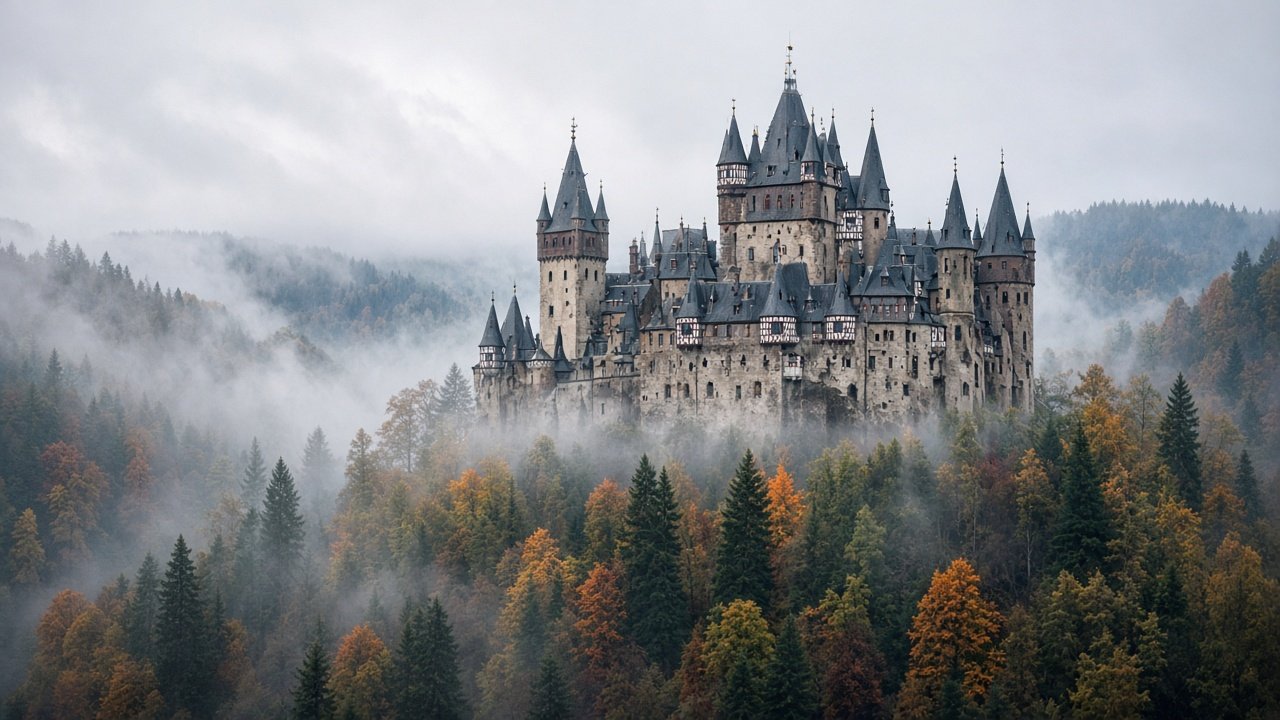

Germany is often said to have more than 20,000 castles, palaces and castle ruins, a legacy of the Holy Roman Empire, when hundreds of princes, bishops, counts and knights each ruled their own small territories and needed strongholds to defend them. Some of these castles survived intact for centuries; others were destroyed in wars and rebuilt as romantic monuments in the 19th century.
This guide is part of our guide to castles in Europe. If you want to know which German castles are genuinely among the oldest, see our guide to the oldest castles in Europe.
This guide looks at five castles that together tell the story of medieval Germany: a castle owned by the same family for more than 850 years, the fortress where Martin Luther translated the Bible, the largest castle ruin on the Rhine, the most famous ruin in Germany, and a hilltop castle that is the ancestral seat of Prussia’s kings.
Burg Eltz
History
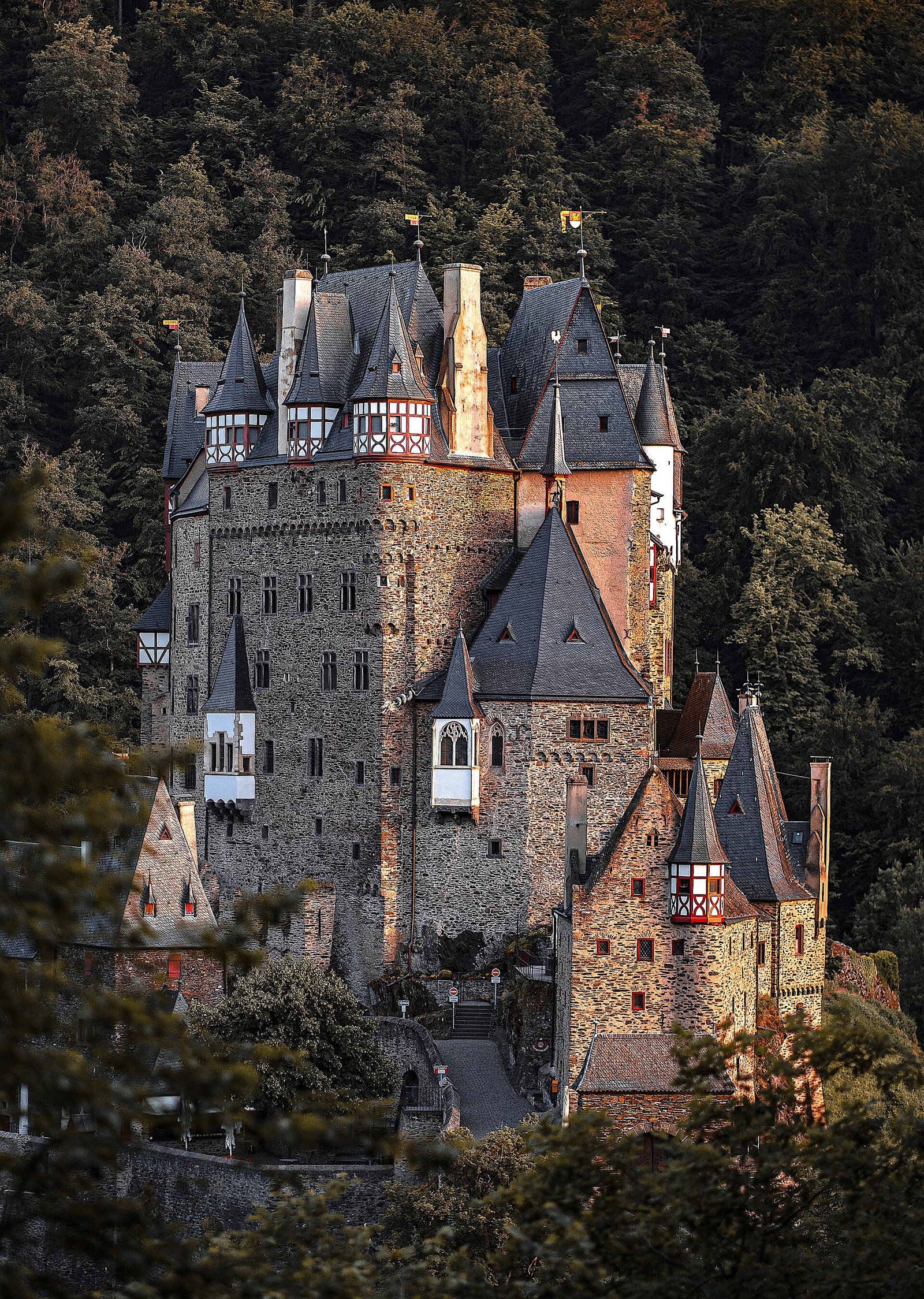
Burg Eltz stands on a rocky outcrop in a deep, wooded side valley of the Moselle river, between Koblenz and Trier. It was first mentioned in 1157 and has been owned by the same family, the Counts of Eltz, ever since, making it one of the few major German castles never to have been sold. It was also never destroyed: it survived the wars that ruined so many castles in the Rhineland, partly thanks to its secluded location and partly to skilful diplomacy.
Over the centuries, different branches of the family built their own living quarters around a central courtyard. The result is a fairy-tale cluster of towers, half-timbered upper storeys and steep roofs, built between the 12th and 17th centuries. The castle was so iconic that it appeared on the German 500 Deutsche Mark banknote.
What to See
Guided tours take you through rooms that still contain original furniture, medieval wall paintings and weapons. The treasury holds an outstanding collection of gold and silver work, jewellery and armour.
Visiting Tips
Eltz is open seasonally, usually from spring to autumn. From the visitor car park it is a walk of around 15 minutes (a shuttle bus runs as well), or you can hike up through the forest from the village of Moselkern, which has a railway station. Arrive early to avoid queues for tours.
The Wartburg
History
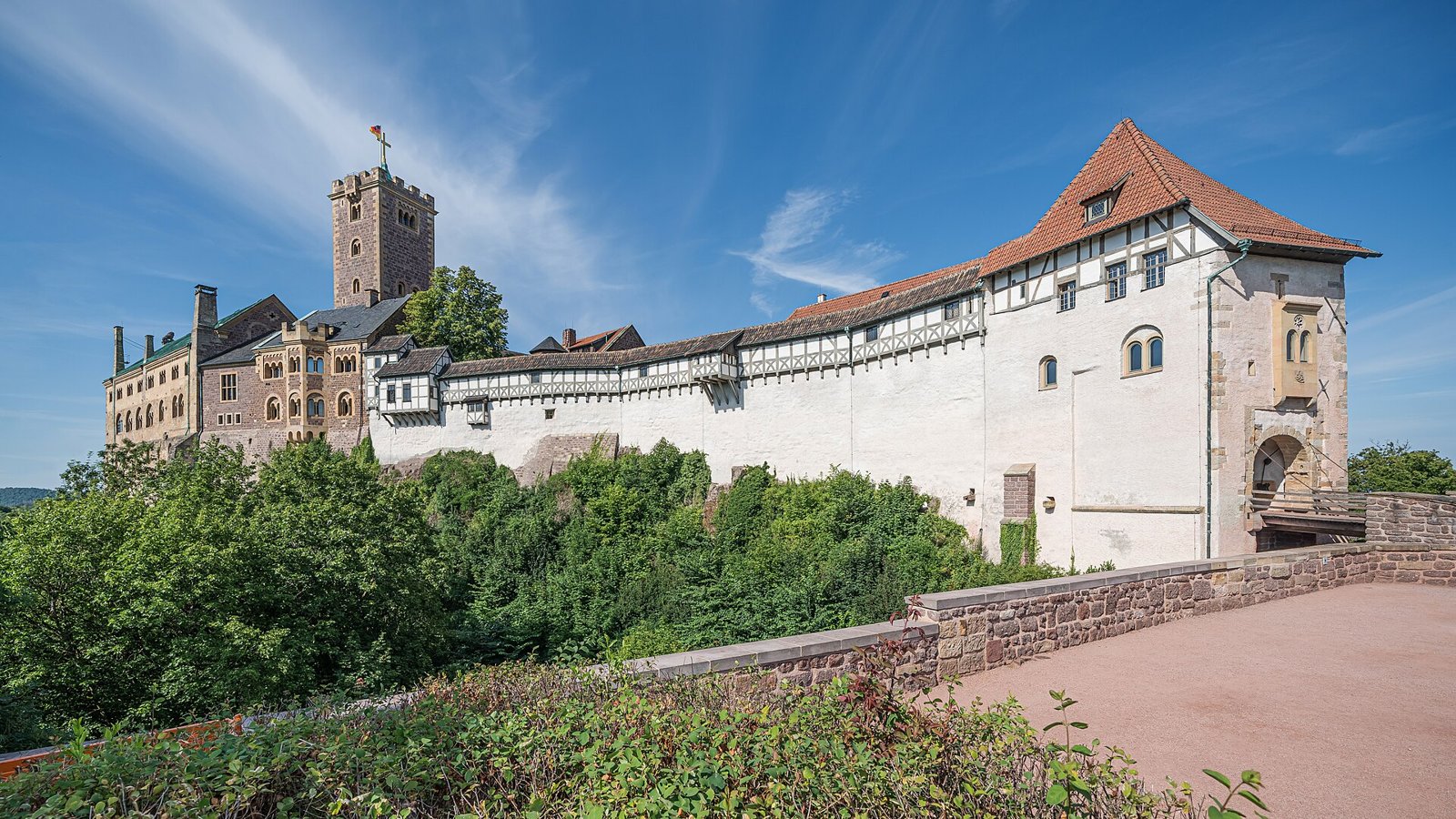
The Wartburg towers above the town of Eisenach in Thuringia. According to tradition it was founded in 1067 by Ludwig der Springer, a count whose descendants became the powerful Landgraves of Thuringia. Its Romanesque palace (Palas), built in the 12th century, is one of the best-preserved secular buildings of its era north of the Alps.
The Wartburg is woven into German history and culture. In the 13th century it was home to St Elisabeth of Hungary, celebrated for her charity. In 1521–22 Martin Luther hid here under the protection of Elector Frederick the Wise, disguised as a knight called “Junker Jörg”. During about ten months at the castle, he translated the New Testament from Greek into German, a landmark in the development of the German language. In 1817 hundreds of students gathered here for the Wartburg Festival, an early milestone in the movement for German unity. The castle became a UNESCO World Heritage Site in 1999.
What to See
Tours cover the Romanesque Palas, the richly decorated 19th-century Hall of the Minstrels and Festival Hall, the Elisabeth Gallery and the simple room known as the Luther Room, where he worked on his translation.
Visiting Tips
Eisenach is on the main rail line between Frankfurt and Erfurt/Leipzig. From town, it is a steep walk up to the castle, or a shuttle bus. The Wartburg is open year-round.
Burg Rheinfels
History
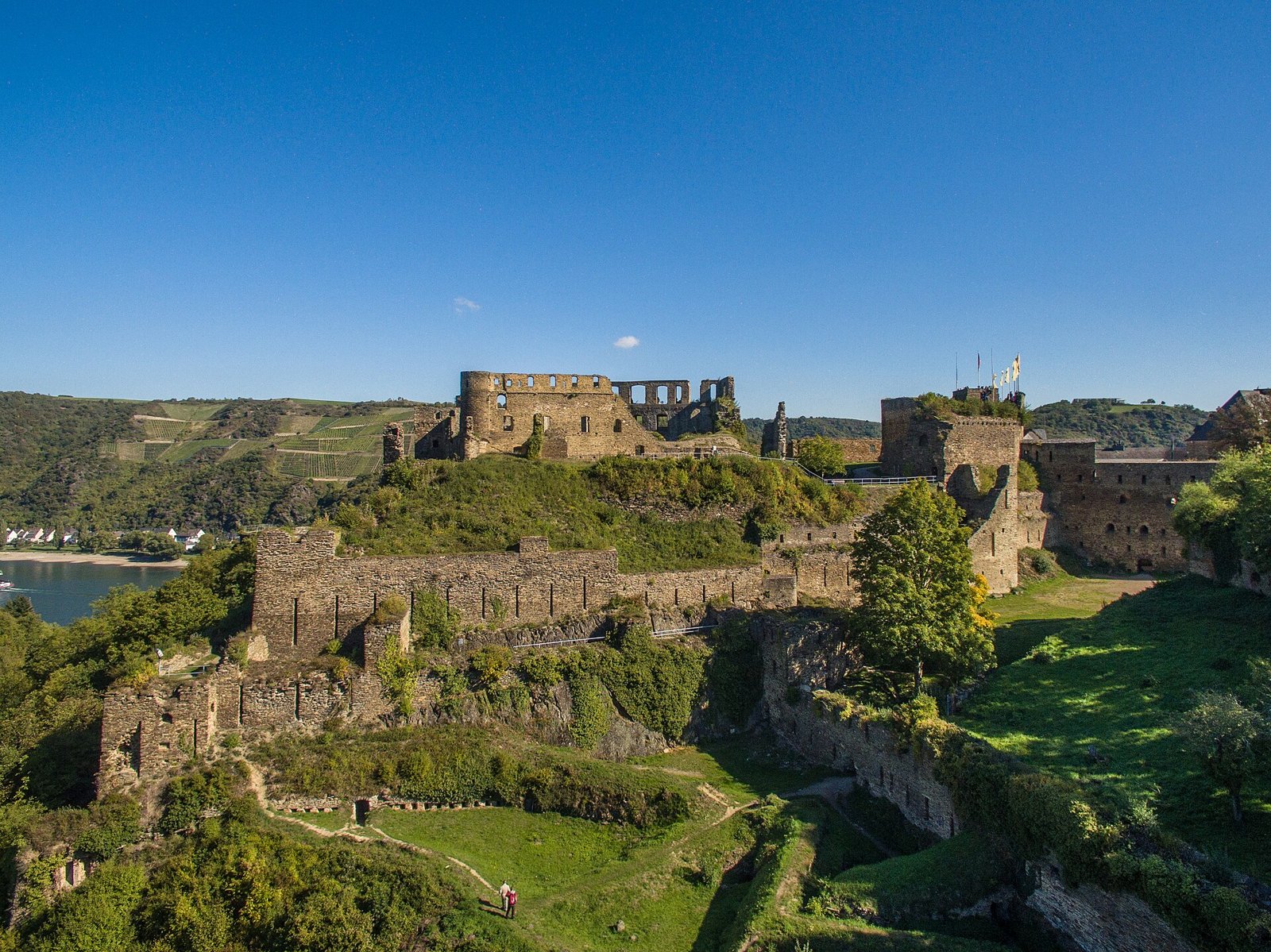
Rheinfels stands above the town of St. Goar in the Middle Rhine Valley. It was founded in 1245 by Count Diether V of Katzenelnbogen, whose family grew rich on Rhine tolls. The castle was steadily expanded into a huge fortress, and in 1692 it withstood a major siege by French troops. In 1797, however, French revolutionary forces captured it and blew it up. What survives is the largest castle ruin on the Rhine.
What to See
Explore the remains of the great halls and towers, climb for views over the Rhine and Burg Katz on the opposite bank, and, with a torch, venture into the network of underground tunnels and mine galleries that the defenders dug to counter enemy siege works.
Visiting Tips
St. Goar is served by trains and Rhine cruise boats. The castle is a steep walk up from the town. It is part of the Upper Middle Rhine Valley UNESCO World Heritage Site.
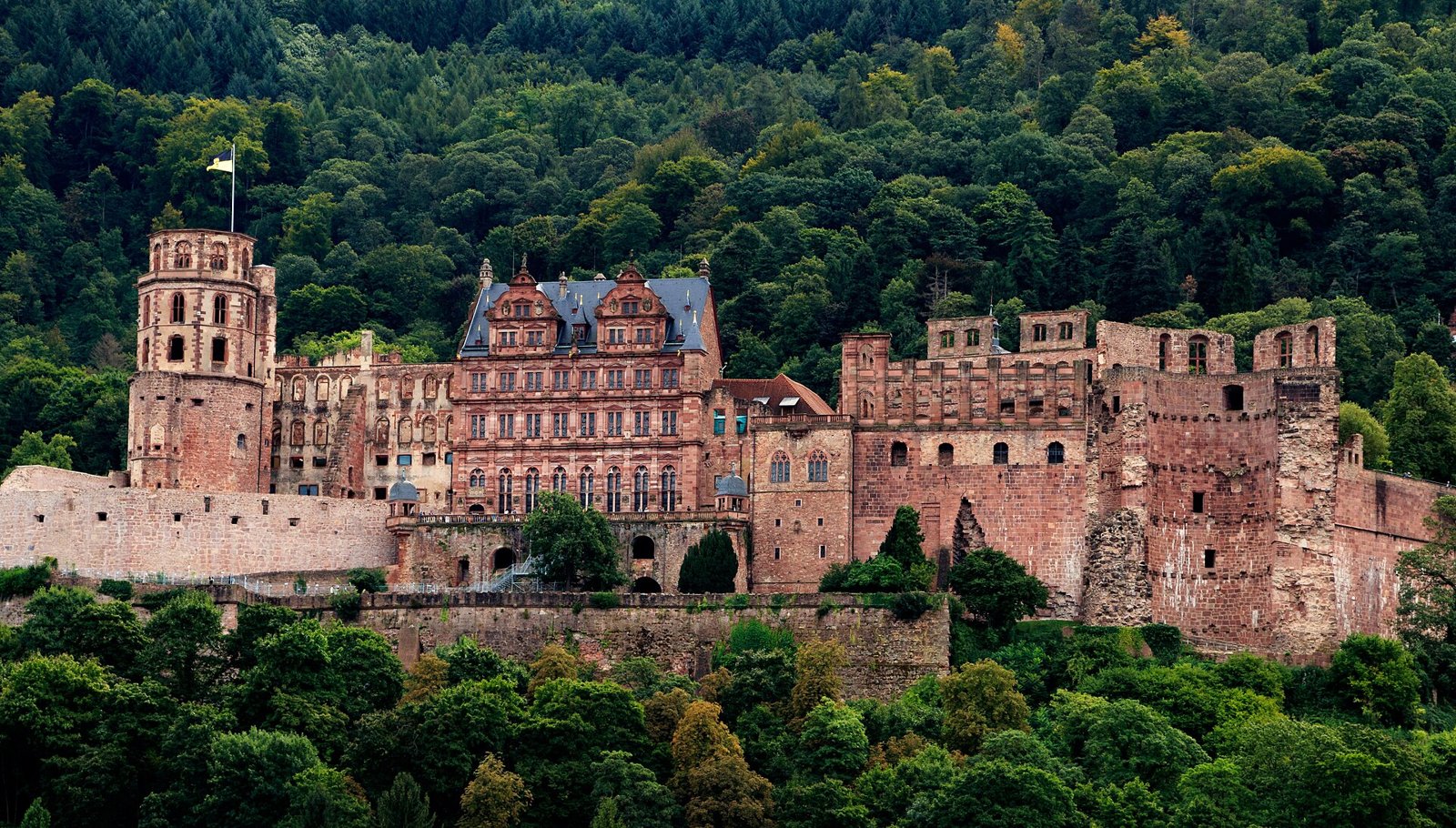
Heidelberg Castle
History
Heidelberg Castle rises above the old town and the Neckar river in Baden-Württemberg. From the 13th century it was the residence of the Counts Palatine of the Rhine, who later became Prince Electors of the Holy Roman Empire. In the 16th and early 17th centuries they turned it into a magnificent Renaissance palace, adding the richly sculpted Ottheinrich Building and Friedrich Building.
The castle was badly damaged during the Thirty Years’ War and then deliberately destroyed by French troops in 1689 and 1693 during the Nine Years’ War. In 1764 lightning struck and burned parts that had been rebuilt. Rather than restoring it fully, later generations embraced it as a romantic ruin, and it became a symbol of German Romanticism, admired by writers and painters including Goethe and J. M. W. Turner.
What to See
Highlights include the Renaissance façades, the Great Tun, an enormous wine barrel built in 1751 with a capacity of around 220,000 litres, the German Pharmacy Museum, and the gardens with views over the city.
Visiting Tips
Take the funicular railway (Bergbahn) from the old town, or walk up the steep path. The castle courtyard and terraces are lovely at sunset, and guided tours are needed to see some of the interiors.

Hohenzollern Castle
History
Burg Hohenzollern crowns a steep, isolated mountain near Hechingen in the Swabian Jura. It is the ancestral seat of the Hohenzollern dynasty, which went on to rule Brandenburg, become Kings of Prussia and, from 1871 to 1918, German Emperors.
Three castles have stood on the summit. The first, documented in the 13th century, was destroyed in 1423 after a long siege by an alliance of Swabian cities. A second, larger castle was built from 1454 but fell into decay. The castle you see today was built between 1850 and 1867 for King Frederick William IV of Prussia, designed by the architect Friedrich August Stüler in the Gothic Revival style. So while it looks medieval, it is really a 19th-century monument to the family’s medieval roots. It is still owned by the Hohenzollern family.
What to See
Tours include the Count’s Hall, the library and royal apartments. The treasury displays the Prussian royal crown and other heirlooms. The walls offer panoramic views over the Swabian Jura.
Visiting Tips
Hohenzollern is about an hour south of Stuttgart. From the car park you can walk up or take a shuttle bus. It is especially photogenic in autumn and on misty mornings, when the castle seems to float above the clouds.

More Castles in Germany Worth the Trip
Germany’s castle list is almost endless, but these four add variety to any itinerary, from a Moselle landmark to the longest castle complex in the world.
Reichsburg Cochem
The Reichsburg rises on a hill above the town of Cochem on the Moselle. A castle stood here by about 1100, and it later belonged to the archbishops of Trier, who used it to collect tolls from river traffic. French troops destroyed it in 1689 during the Nine Years’ War. In 1868 the Berlin businessman Louis Ravené bought the ruins and rebuilt the castle in a romantic Neo-Gothic style, which is what visitors tour today. The castle has been owned by the town of Cochem since 1978 and is shown on guided tours.
Lichtenstein Castle
Lichtenstein Castle clings to a cliff edge in the Swabian Alb south of Stuttgart. It was built in 1840–42 for Count Wilhelm of Württemberg, later Duke of Urach, who was inspired by Wilhelm Hauff’s popular historical novel Lichtenstein (1826). Like Neuschwanstein, it is a 19th-century Romantic dream of the Middle Ages rather than a medieval fortress, but its setting is breathtaking.
Burghausen Castle
Burghausen Castle in Bavaria stretches along a narrow ridge above the River Salzach on the border with Austria. With six courtyards running for more than a kilometre, it is listed by Guinness World Records as the longest castle complex in the world. It was a residence of the dukes of Lower Bavaria in the 15th century, and today visitors can walk its full length, visiting museums along the way.
Nuremberg Imperial Castle
The Kaiserburg towers over the old town of Nuremberg on a sandstone ridge. Between the 11th and 16th centuries it was one of the most important residences of the Holy Roman emperors, and almost every emperor of the period stayed there. The castle was badly damaged in the Second World War and restored afterwards; highlights include the double chapel, the deep well and the view from the Sinwell Tower. The castle is cared for by the Bavarian Palace Administration.
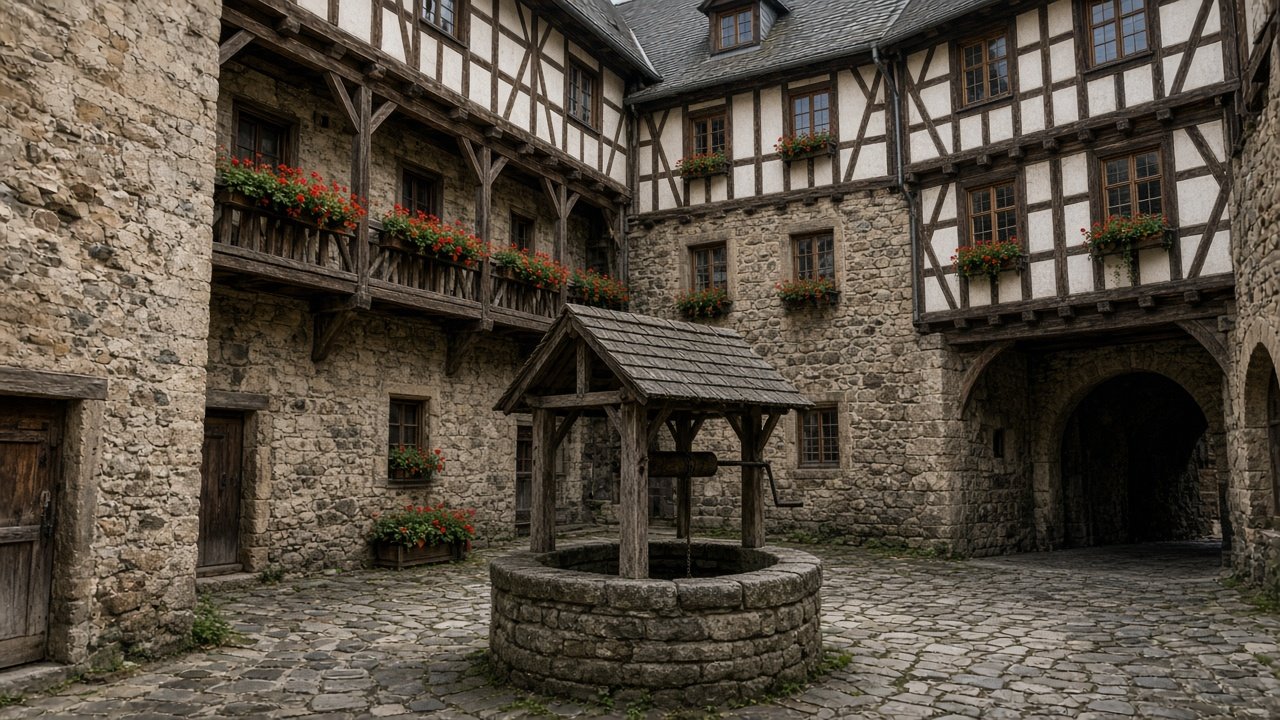
Quick Facts
| Castle | State | First built | Known for | Condition |
|---|---|---|---|---|
| Burg Eltz | Rhineland-Palatinate | First mentioned 1157 | Same family for 850+ years | Intact, never destroyed |
| Wartburg | Thuringia | Founded c. 1067 (tradition) | Luther’s Bible translation; UNESCO | Intact, restored |
| Burg Rheinfels | Rhineland-Palatinate | 1245 | Largest castle ruin on the Rhine | Ruin |
| Heidelberg Castle | Baden-Württemberg | 13th century | Renaissance ruin, Great Tun | Partial ruin |
| Hohenzollern Castle | Baden-Württemberg | 13th century site; rebuilt 1850–67 | Prussian royal ancestral seat | Intact (19th-century) |

Understanding German Castles: Burg vs Schloss
When planning a trip, it helps to know two German words. A Burg is a fortified castle built mainly for defence, usually in the Middle Ages, often on a hilltop. A Schloss is usually a palace or stately residence built for comfort and display, often from the Renaissance onwards. Some places, like Heidelberg, combine both. Neuschwanstein, for example, is called a Schloss despite its castle-like appearance, because it was built as a royal residence in the 19th century.
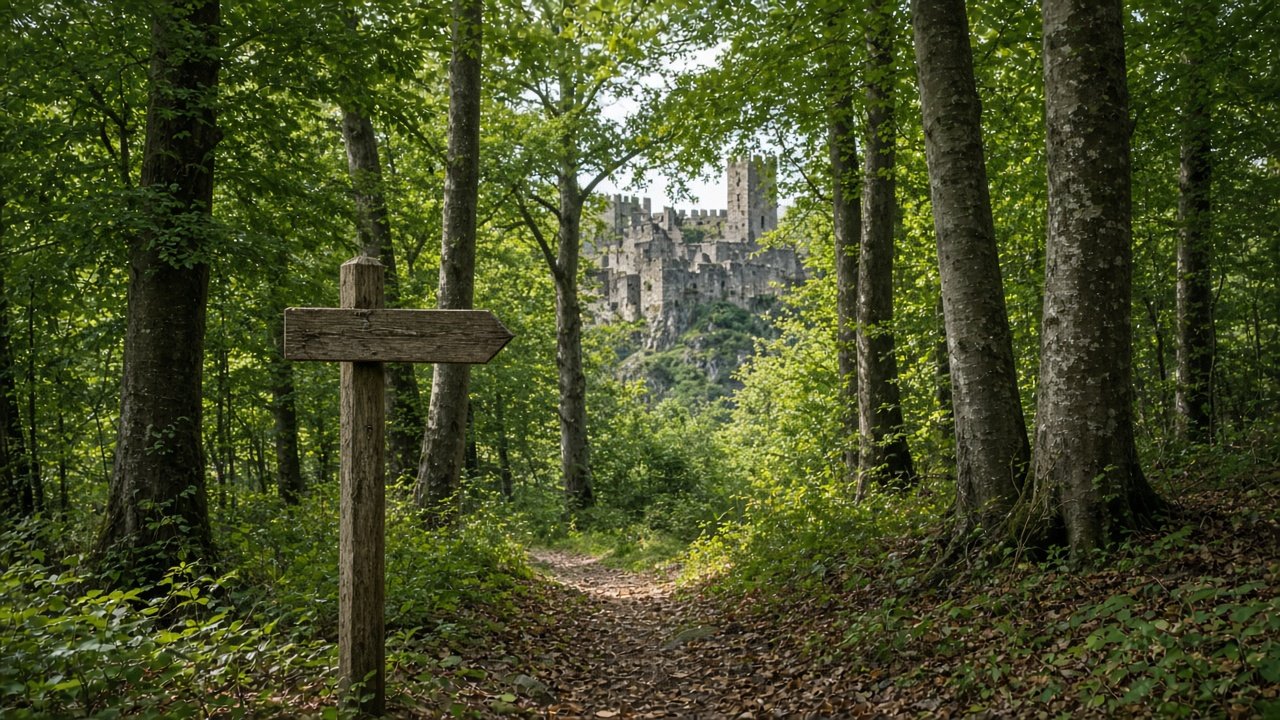
Tips for Visiting Castles in Germany
- Use the trains: Germany’s rail network reaches most castle towns, and regional day tickets can be good value.
- Join a guided tour: many castle interiors can only be seen on guided tours, some of which are in German with written translations. Check language options.
- Visit in shoulder season: May, June, September and early October offer pleasant weather with fewer crowds.
- Check seasonal opening: some castles, like Burg Eltz, close in winter.

Frequently Asked Questions
What is the oldest castle in Germany?
There is no single agreed answer, as many castles have been rebuilt. The Wartburg (traditionally founded in 1067) and Burg Eltz (first mentioned in 1157) are among the best-known castles with medieval origins that still stand today.
Which German castle has never been destroyed?
Burg Eltz survived centuries of war without being destroyed and has remained in the same family since the 12th century.
Is Hohenzollern Castle medieval?
The site is medieval, but the current castle was built between 1850 and 1867 in Gothic Revival style.
What did Martin Luther do at the Wartburg?
While in hiding in 1521–22, he translated the New Testament from Greek into German.
Why is Heidelberg Castle a ruin?
It was destroyed by French troops in 1689 and 1693 and later struck by lightning in 1764. It was never fully rebuilt and became a celebrated romantic ruin.
What is the longest castle in the world?
Burghausen Castle in Bavaria, which runs for more than a kilometre along a ridge above the River Salzach, is listed by Guinness World Records as the longest castle complex in the world.
Is Lichtenstein Castle medieval?
No. A medieval castle once stood nearby, but the present Lichtenstein Castle was built in 1840–42 in a romantic style inspired by Wilhelm Hauff’s novel Lichtenstein.
Which German castle has stayed in one family the longest?
Burg Eltz is famous for having belonged to the same family, the Counts of Eltz, for more than 850 years.
When is the best time to visit castles in Germany?
Late spring to early autumn is best. Many castles, including Burg Eltz, open only for a season that runs roughly from spring to early November, while big-city castles and palaces usually open year-round with shorter winter hours.