

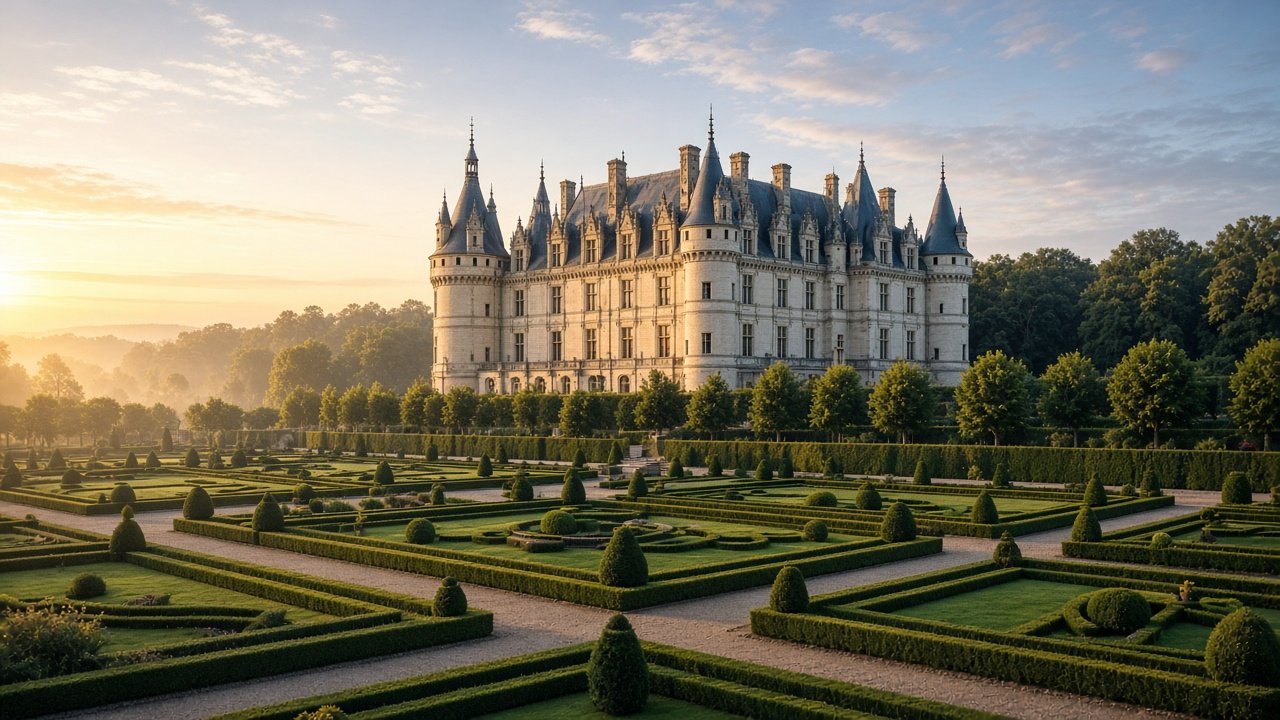

France has an astonishing number of châteaux, a word that covers everything from grim medieval fortresses to elegant Renaissance palaces. Some of the finest lie in a broad arc across northern France, from the royal river valley of the Loire, through the grand estates around Paris, to the rugged fortresses of Brittany and Normandy.
This guide is part of our guide to castles in Europe. For the early stone keep at Langeais, one of the oldest in France, see our guide to the oldest castles in Europe.
This guide follows that route, covering seven of the best castles in France, with the history behind each one, what to see and practical tips for planning your visit.
The Loire Valley
In the 15th and 16th centuries the French court spent much of its time in the Loire Valley, and kings, queens and courtiers built extraordinary châteaux along its rivers. The valley between Sully-sur-Loire and Chalonnes was inscribed as a UNESCO World Heritage Site in 2000.
Château de Chenonceau
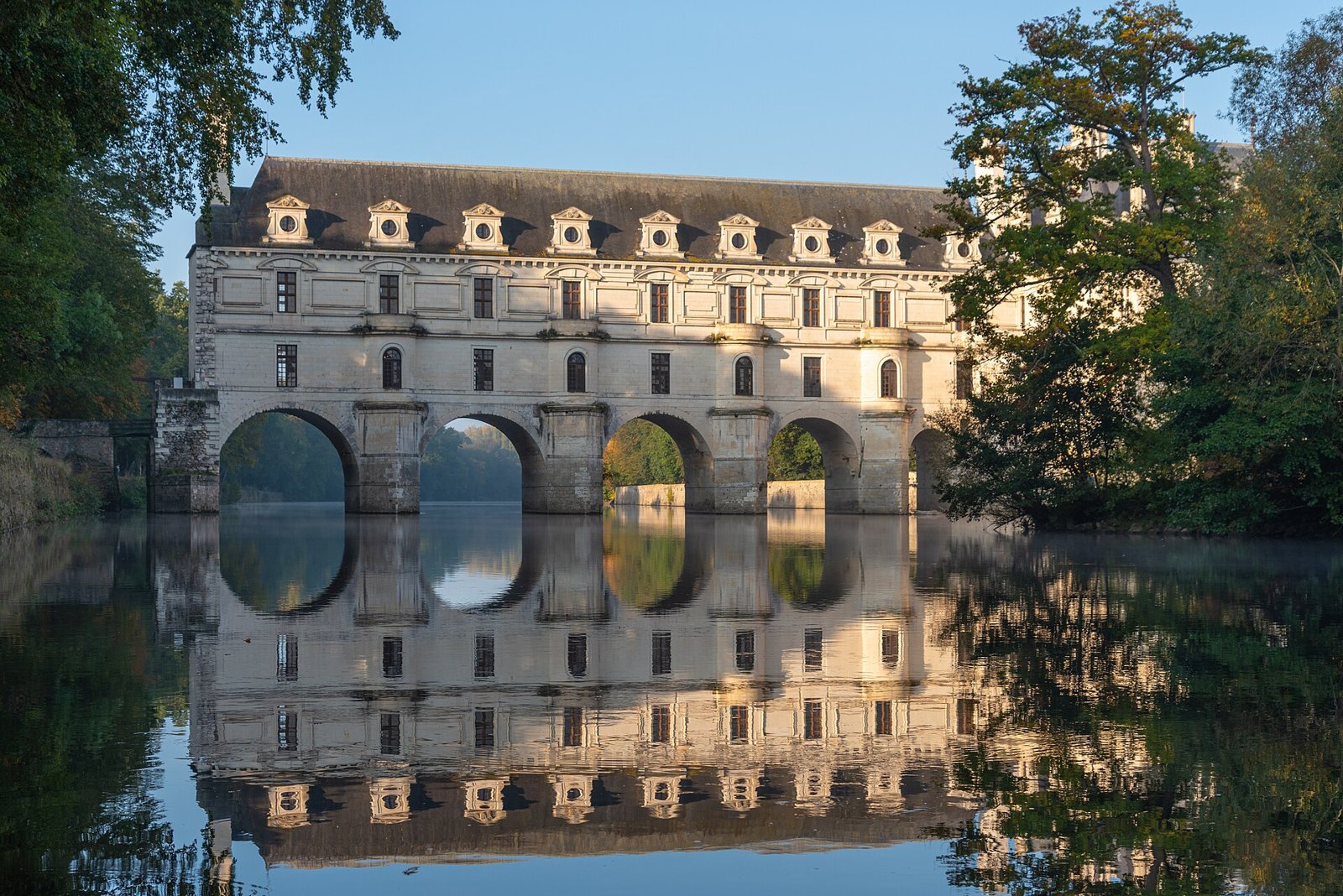
Chenonceau, gracefully spanning the river Cher, is perhaps the most romantic château in France. It was built between 1514 and 1522 by Thomas Bohier and his wife Katherine Briçonnet, who supervised much of the work. It is often called the “Château des Dames” because of the influential women who shaped it.
King Henry II gave Chenonceau to his mistress, Diane de Poitiers, who built a bridge across the river and laid out formal gardens. When Henry died in 1559, his widow, Catherine de’ Medici, forced Diane to leave and added the elegant two-storey gallery on top of the bridge. Much later, during the First World War, the gallery served as a hospital, and during the Second World War the Cher marked the line between occupied and unoccupied France, making the château a crossing point for people escaping the occupied zone.
Visiting: Chenonceau is about 30 minutes by train or car from Tours. Visit early in the morning or late in the afternoon, and allow time for the gardens of Diane and Catherine and the maze.
Château de Chambord

Chambord is the largest château in the Loire Valley and one of the most recognisable buildings of the French Renaissance. King Francis I began it in 1519 as a hunting lodge on a truly royal scale, with hundreds of rooms and a skyline crowded with chimneys, turrets and lanterns. At its heart is a famous double-helix staircase, in which two people can climb at the same time without meeting; it is often linked to designs by Leonardo da Vinci, who was in Francis I’s service at Amboise until his death in 1519.
The château stands in a vast walled park, one of the largest enclosed parks in Europe. Visiting: Chambord is about 20 minutes from Blois by car or shuttle in season. Climb to the rooftop terraces for a close look at the extraordinary roofline, and consider renting a bike or boat in the park.
Château d’Amboise
Perched above the Loire, the Royal Château of Amboise was a favourite residence of French kings in the late 15th and early 16th centuries. Charles VIII was born here and died here in 1498, reportedly after striking his head on a low doorway. Francis I spent part of his youth at Amboise and invited Leonardo da Vinci to France; Leonardo lived his last years at the nearby manor of Clos Lucé and is believed to be buried in the château’s Chapel of Saint-Hubert.
Visiting: Amboise is a short train ride from Tours. Combine the château with Clos Lucé, which displays models of Leonardo’s inventions.
Around Paris
Château de Vaux-le-Vicomte
About an hour south-east of Paris, Vaux-le-Vicomte is one of the masterpieces of 17th-century French architecture. It was built between 1658 and 1661 for Nicolas Fouquet, Louis XIV’s superintendent of finances, by the architect Louis Le Vau, the painter Charles Le Brun and the garden designer André Le Nôtre. On 17 August 1661 Fouquet held a dazzling party in honour of the young king. Rather than impressing Louis, the extravagance aroused his suspicion, and within weeks Fouquet was arrested; he spent the rest of his life in prison. Louis then hired the same team to create Versailles.
Visiting: Vaux-le-Vicomte is privately owned and open seasonally. In summer, special candlelit evenings recreate the atmosphere of Fouquet’s famous fête. A shuttle connects with trains at Verneuil-l’Étang on days it operates.
A note on Versailles
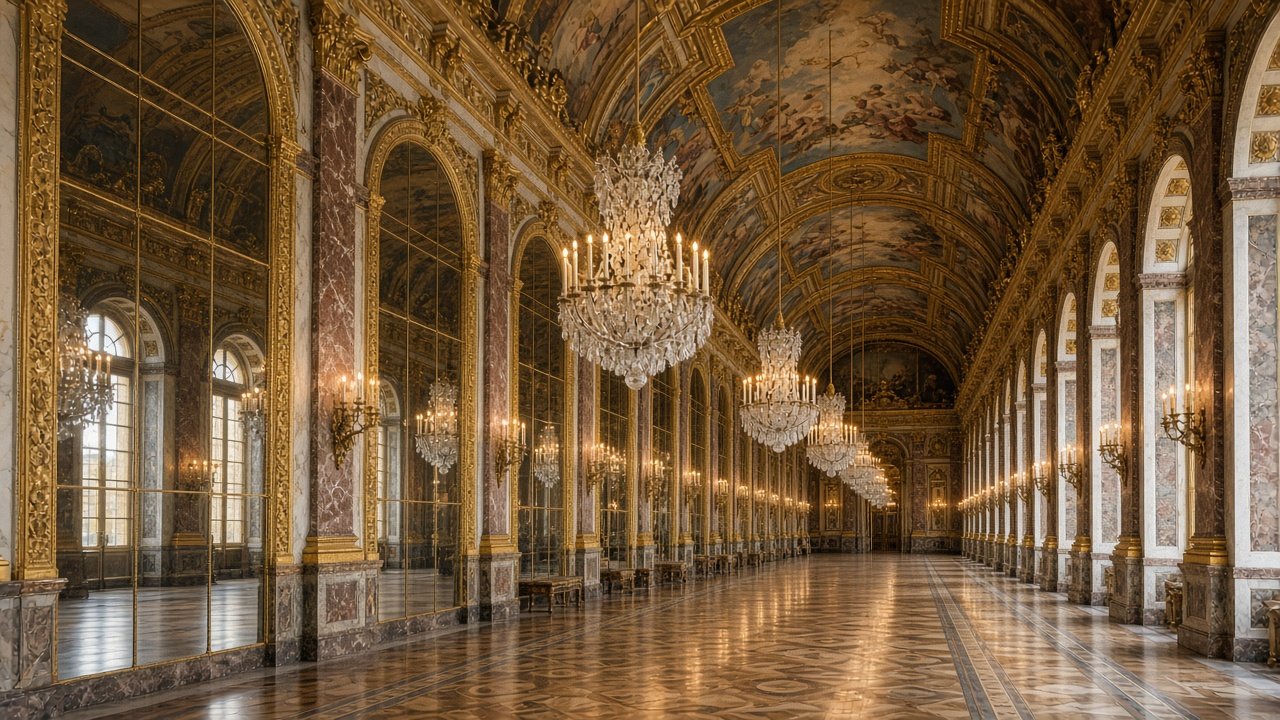
Versailles, the palace Louis XIV created after Vaux, is the most famous château in France and a UNESCO World Heritage Site. It is easily reached from central Paris by train. Book timed tickets well ahead, and leave time for the gardens and the Trianon estate.
Brittany
Château de Josselin
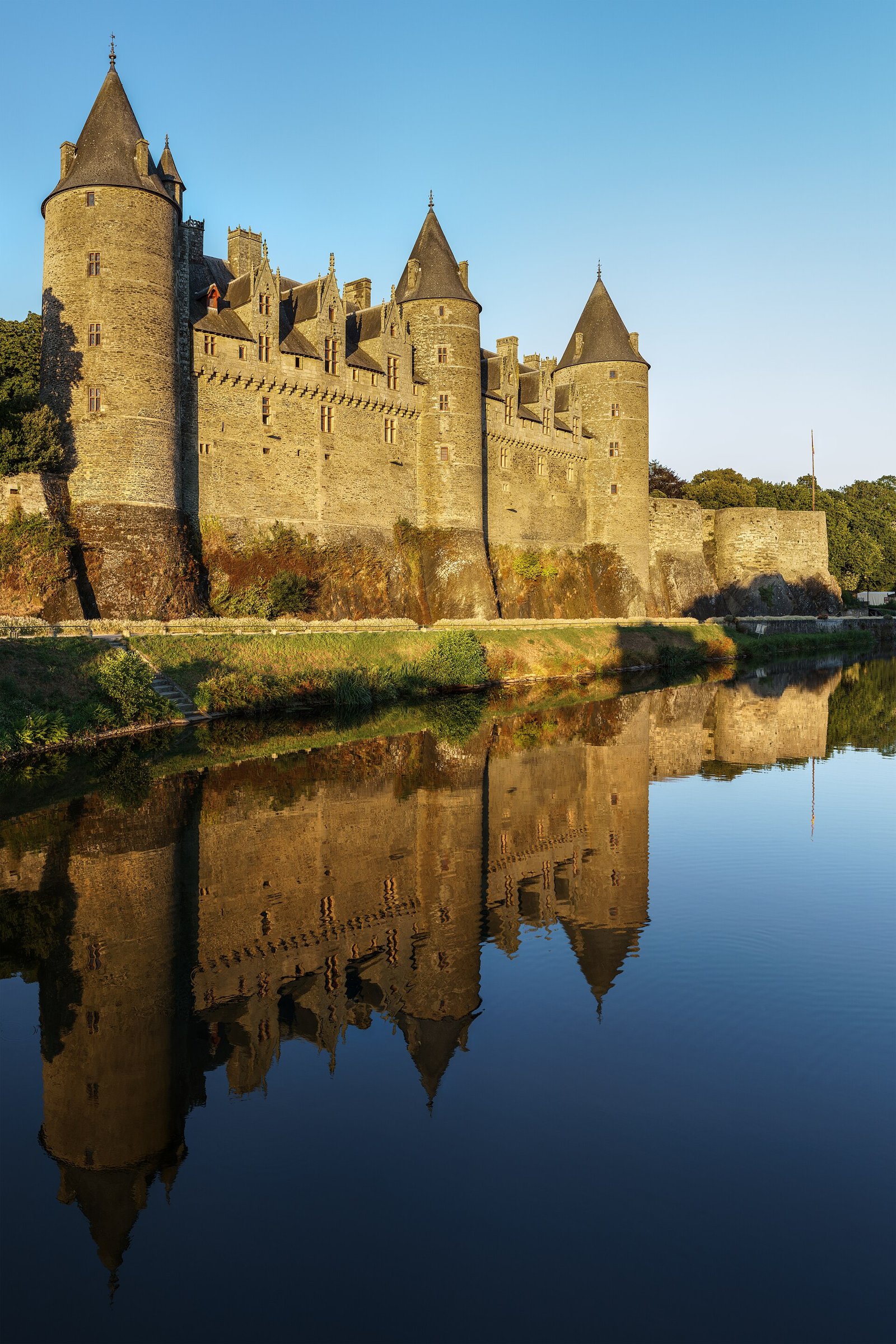
In the heart of Brittany, the Château de Josselin presents two faces. From the river Oust, three massive round towers rise straight out of the rock, looking every inch a medieval fortress. Inside the courtyard, the façade is a delicate showpiece of Flamboyant Gothic stone carving, added around 1500. The castle was rebuilt in the late 14th century by Olivier de Clisson, Constable of France, and passed to the powerful Rohan family in the 15th century. Remarkably, the Rohans still live there today.
Visiting: Josselin is open seasonally for guided tours, and the medieval town around it, with its half-timbered houses and basilica, is lovely to wander. It is about an hour from Rennes by car.
Normandy
Château Gaillard
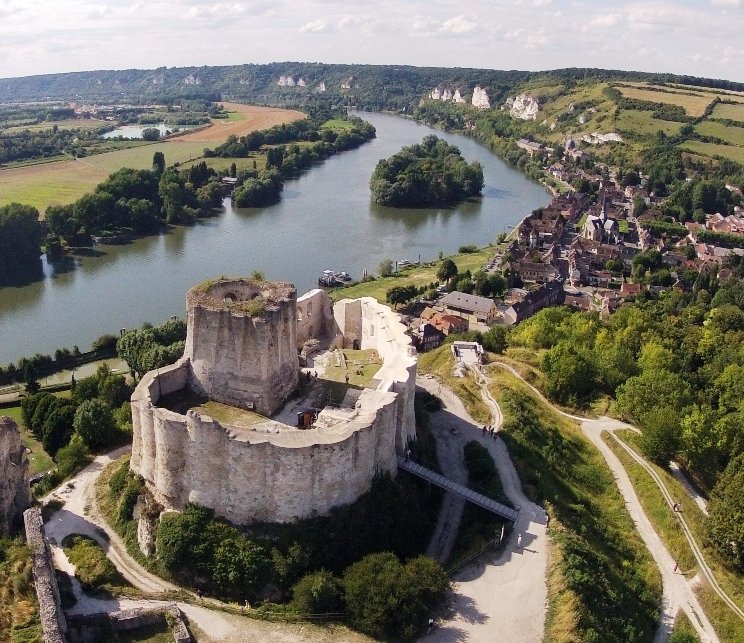
High on a chalk cliff above the Seine at Les Andelys stand the ruins of Château Gaillard, built in an astonishing two years, from 1196 to 1198, by Richard the Lionheart. As King of England and Duke of Normandy, Richard built it to protect Normandy against the French king, Philip II. After Richard’s death, Philip besieged the castle, and it fell in March 1204, opening the way for the French conquest of Normandy. Its innovative concentric defences and the dramatic views over the river make it one of the most evocative castle ruins in France.
Visiting: Les Andelys is about 1 hour 30 minutes from Paris by car. The castle grounds are open seasonally; the climb up from the town is steep but rewarding.
Château de Falaise
The Château de Falaise, south of Caen, is famous as the birthplace of William the Conqueror around 1028. The great keep that dominates the town today was built in the 12th century by William’s son, Henry I of England, and the tall round Talbot Tower was added in the 13th century. A modern restoration has added contemporary elements to protect the ruins, and the interiors use multimedia to tell William’s story.
Visiting: Falaise is about 40 minutes from Caen. Combine it with the Bayeux Tapestry, which tells the story of William’s conquest of England in 1066.
Bonus: Mont-Saint-Michel
Strictly speaking it is a fortified abbey rather than a castle, but no trip through Normandy is complete without Mont-Saint-Michel. The rocky tidal island on the border with Brittany has been a place of pilgrimage since the 8th century, and its Gothic abbey crowns a village enclosed by medieval ramparts. During the Hundred Years’ War its defences held out against repeated English attacks. Together with its bay, it is a UNESCO World Heritage Site. Visitors park on the mainland and cross by shuttle bus or on foot along the bridge, and it is worth staying late to see the island lit up after the day crowds have gone.
Bonus: Château de Villandry
Back in the Loire, Villandry, completed around 1536, is best known not for its château but for its gardens. Its terraced Renaissance-style gardens, including a vast ornamental kitchen garden planted with vegetables in geometric patterns, are among the most famous in France and change with the seasons.

More French Châteaux Worth a Detour
If you have extra days, these three châteaux fill in the story of French castles, from Renaissance elegance to a medieval fortress reimagined in the 19th century.
Azay-le-Rideau, Loire Valley
Azay-le-Rideau stands on an island in the River Indre, its white walls reflected in the water. It was built between 1518 and 1527 for Gilles Berthelot, a wealthy royal financier, and his wife Philippa Lesbahy, who oversaw much of the work. When Berthelot fell from favour, the château was confiscated by King Francis I. It is one of the finest early French Renaissance châteaux and is managed by the Centre des monuments nationaux.
Château de Fontainebleau, near Paris
About an hour south-east of Paris, Fontainebleau was a residence of French rulers for some eight centuries, from the medieval kings to Napoleon III. Francis I transformed it in the 16th century, bringing in Italian artists whose work created the “School of Fontainebleau”. In 1814 Napoleon said farewell to his Old Guard in the courtyard in front of the famous horseshoe staircase before leaving for exile on Elba; it is now known as the Cour des Adieux. The palace and park have been a UNESCO World Heritage Site since 1981.
Château de Pierrefonds, Picardy
Pierrefonds, near Compiègne, looks like the perfect medieval fortress, but what you see is largely a 19th-century creation. The original castle was built around 1400 for Louis, Duke of Orléans, and later dismantled in the 17th century. From 1857 Emperor Napoleon III commissioned the architect Eugène Viollet-le-Duc to rebuild it as an imperial residence, and his romantic reconstruction has since appeared in many films and television series.

Quick Facts
| Château | Region | Built | Famous for |
|---|---|---|---|
| Chenonceau | Loire Valley | 1514–1522 | Gallery over the Cher, “Château des Dames” |
| Chambord | Loire Valley | Begun 1519 | Double-helix staircase, roofline |
| Amboise | Loire Valley | Mainly late 15th–16th century | Royal residence, Leonardo da Vinci’s tomb |
| Vaux-le-Vicomte | Île-de-France | 1658–1661 | Inspired Versailles |
| Josselin | Brittany | Late 14th century; façade c. 1500 | Rohan family home |
| Château Gaillard | Normandy | 1196–1198 | Richard the Lionheart |
| Falaise | Normandy | 12th-century keep | Birthplace of William the Conqueror |
Suggested Itinerary
Start in Normandy with Château Gaillard and Falaise, combined with Bayeux and the D-Day beaches. Drive south-west into Brittany for Josselin, then east along the Loire to Amboise, Chenonceau and Chambord. Finish near Paris with Vaux-le-Vicomte and Versailles. Allow at least a week, and ideally ten days, to enjoy it at a relaxed pace.

Tips for Visiting French Châteaux
- Base yourself well: Tours, Amboise and Blois are excellent bases for the Loire; Caen or Bayeux for Normandy.
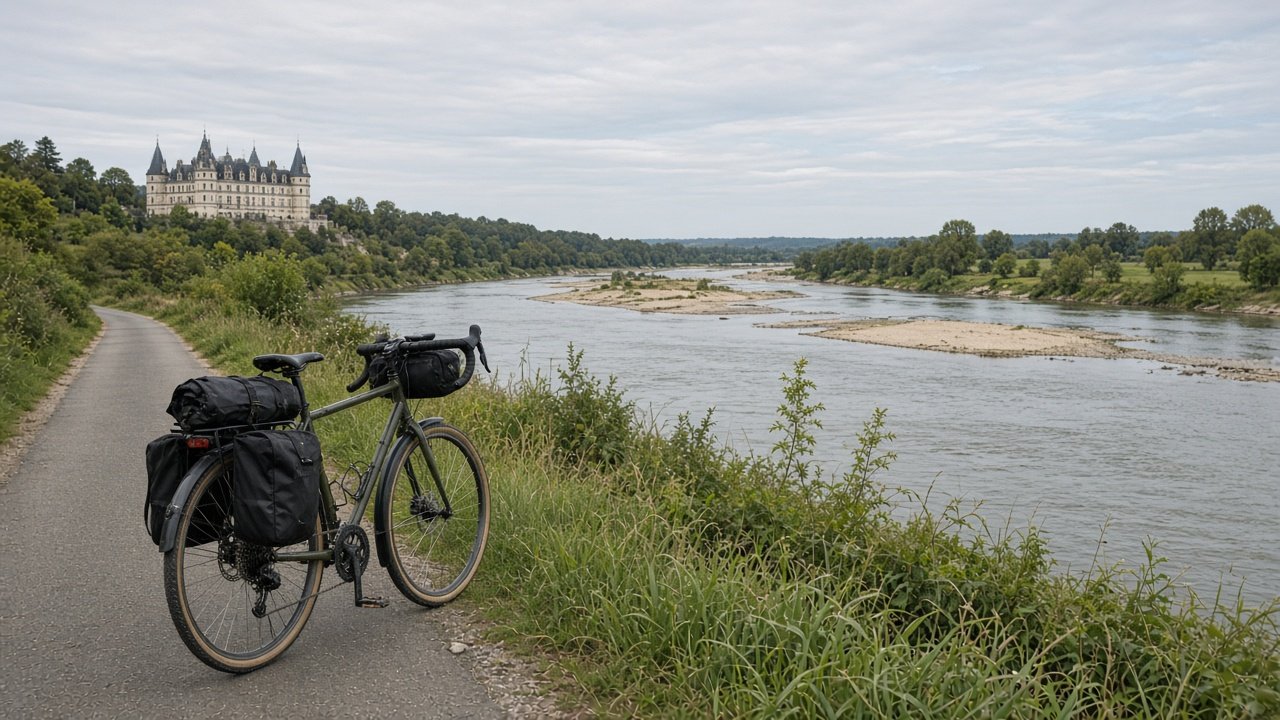
- Rent a bike: the Loire à Vélo cycle route links many châteaux on mostly flat, well-marked paths.
- Book ahead in summer: Chenonceau, Chambord and Versailles get very busy in July and August.
- Look for evening events: several châteaux run summer light shows or candlelit evenings.

Frequently Asked Questions
What is the most beautiful château in France?
Chenonceau is often called the most beautiful thanks to its setting over the Cher, while Chambord is the most spectacular in scale.
How many châteaux are there in the Loire Valley?
There are hundreds of châteaux of all sizes in the Loire Valley, with several dozen major ones open to visitors.
Where is Leonardo da Vinci buried?
He is believed to be buried in the Chapel of Saint-Hubert at the Château d’Amboise.
Are there castles in Normandy?
Yes. Château Gaillard, built by Richard the Lionheart, and the Château de Falaise, birthplace of William the Conqueror, are two of the most important.
Why did Louis XIV arrest Nicolas Fouquet?
Fouquet’s lavish château and party at Vaux-le-Vicomte in 1661 raised suspicions that he had enriched himself from royal finances. He was arrested weeks later and imprisoned for life.
Is Pierrefonds a real medieval castle?
Partly. A castle was built here around 1400 for Louis, Duke of Orléans, but it was dismantled in the 17th century. What you see today is mainly Viollet-le-Duc’s 19th-century reconstruction for Napoleon III.
Which French château was home to the most rulers?
Fontainebleau was used by French rulers for around eight centuries, from medieval kings to Napoleon III, and is sometimes called the “house of the centuries” for that reason.
Can you visit the Loire châteaux without a car?
Yes. Trains link Tours and Blois with Paris, and from those towns you can reach several châteaux by local train, shuttle bus, organised tour or bicycle along the Loire à Vélo cycle route.