

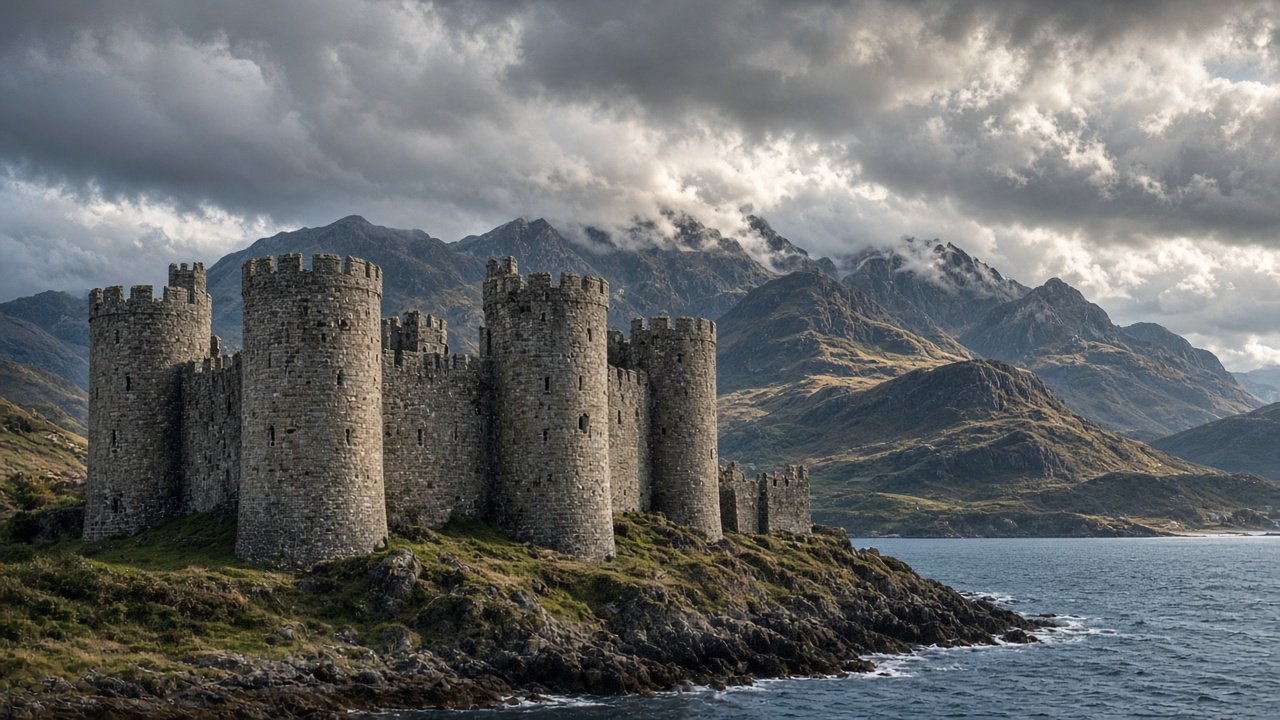

Wales is often said to have more castles per square mile than almost anywhere else in Europe, with around 600 castle sites across a relatively small country. They tell the story of a long struggle: Welsh princes defending their lands, Norman lords pushing west, and Edward I’s great campaign of conquest in the late 13th century, which left behind some of the finest medieval fortresses in the world. Later centuries added Tudor history, Civil War sieges and, in the Victorian age, fantasy castles built for pleasure.
This guide is part of our guide to castles in Europe. For the great Norman and royal castles across the border, see our guide to the biggest castles in England.
This guide covers five great castles you should not miss in Wales, from north to south, followed by a few more worth adding to your itinerary.
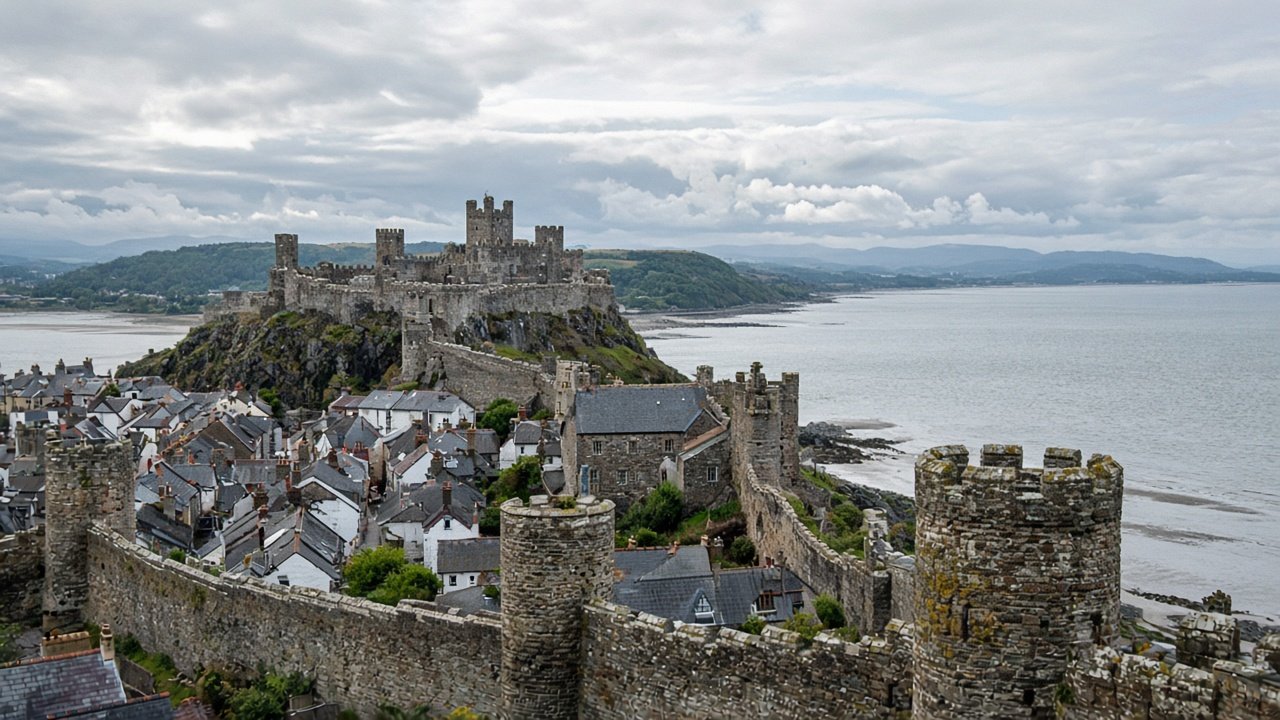
Edward I and the “Iron Ring”
Several of the castles in this guide belong to one of the most ambitious building programmes of the Middle Ages. After wars against the Welsh princes in 1277 and 1282–83, King Edward I of England built or rebuilt a chain of fortresses around Snowdonia, the heartland of Welsh resistance, often called the “Iron Ring”. The first wave, after 1277, included Flint, Rhuddlan, Builth and Aberystwyth. After 1283 came Conwy, Caernarfon and Harlech, and after a Welsh revolt in 1294–95, Beaumaris on Anglesey. Many were built alongside fortified towns settled by English colonists, and several could be supplied from the sea, so they could hold out even if surrounded on land. The cost was enormous, and the scale of these castles still astonishes visitors more than seven centuries later.
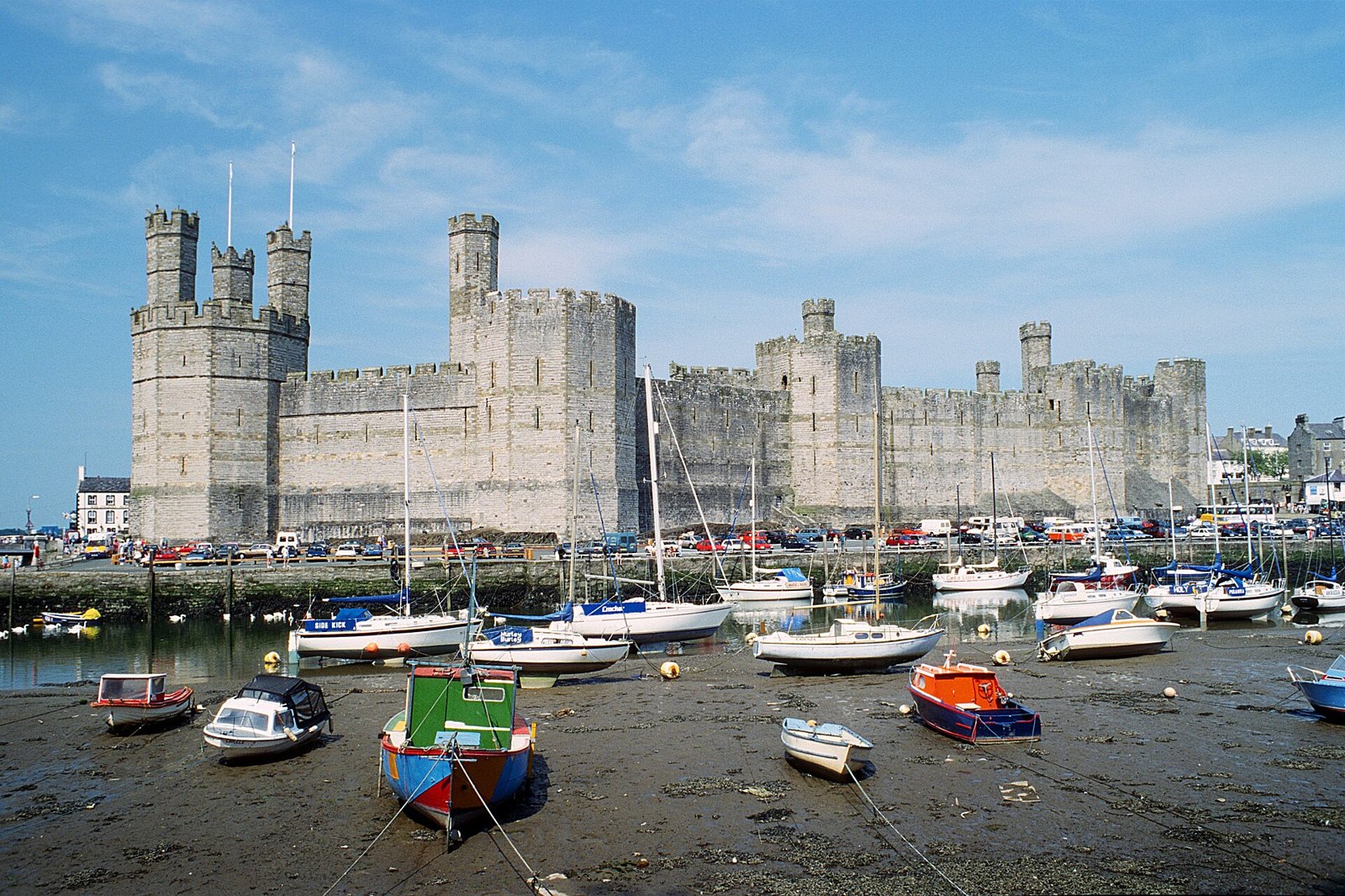
Caernarfon Castle
History
Caernarfon Castle, on the Menai Strait in north-west Wales, is the most imposing of Edward I’s castles. Construction began in 1283, after the defeat of the last native Prince of Wales, Llywelyn ap Gruffudd. Edward wanted Caernarfon to be a royal palace and a statement of power, and its polygonal towers and bands of coloured stone are thought to echo the walls of Constantinople, linking his rule to imperial Rome.
In 1284 Edward’s son, the future Edward II, was born at Caernarfon, and in 1301 he became the first English Prince of Wales. In the 20th century the castle hosted the investitures of two Princes of Wales, in 1911 and 1969. It is part of the “Castles and Town Walls of King Edward in Gwynedd” UNESCO World Heritage Site.
Visiting
Cared for by Cadw. Climb the Eagle Tower for views over the town and the strait, and visit the Royal Welch Fusiliers Museum inside the castle. Caernarfon is easily reached by bus from Bangor, which has a railway station.
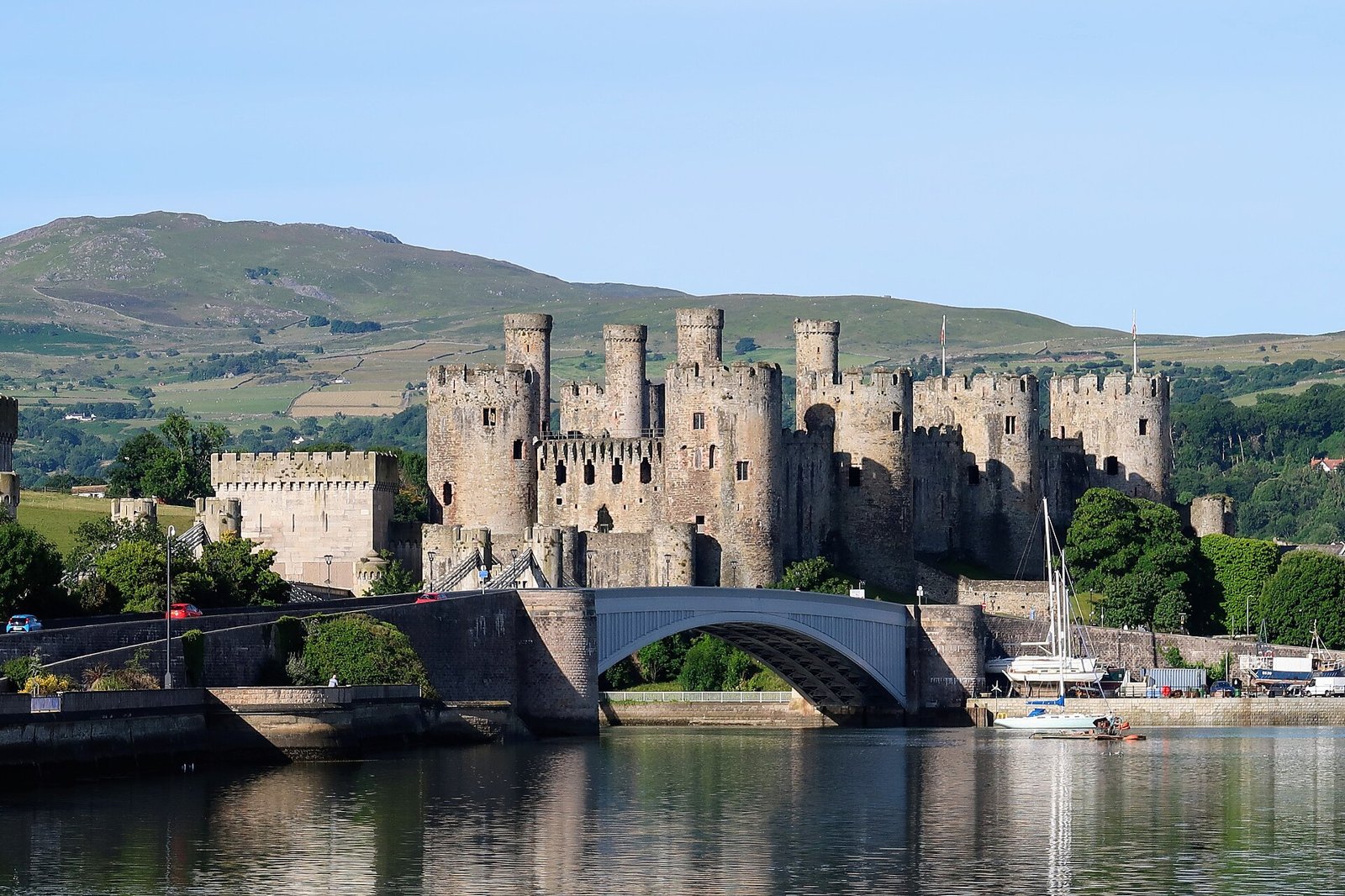
Conwy Castle
History
Conwy Castle was built between 1283 and 1287 by Edward I’s master mason, James of St George, along with almost a mile of town walls that still encircle the old town. With its eight massive round towers on a rocky ridge above the estuary, it is one of the finest surviving examples of medieval military architecture in Europe. In 1294–95, during the Welsh revolt led by Madog ap Llywelyn, Edward I himself was besieged here for a time.
Visiting
Cared for by Cadw and part of the same UNESCO site as Caernarfon. Walk the battlements and the town walls for spectacular views, and visit Plas Mawr, an Elizabethan town house, and Aberconwy House nearby. Conwy has a railway station on the North Wales coast line.
Pembroke Castle
History
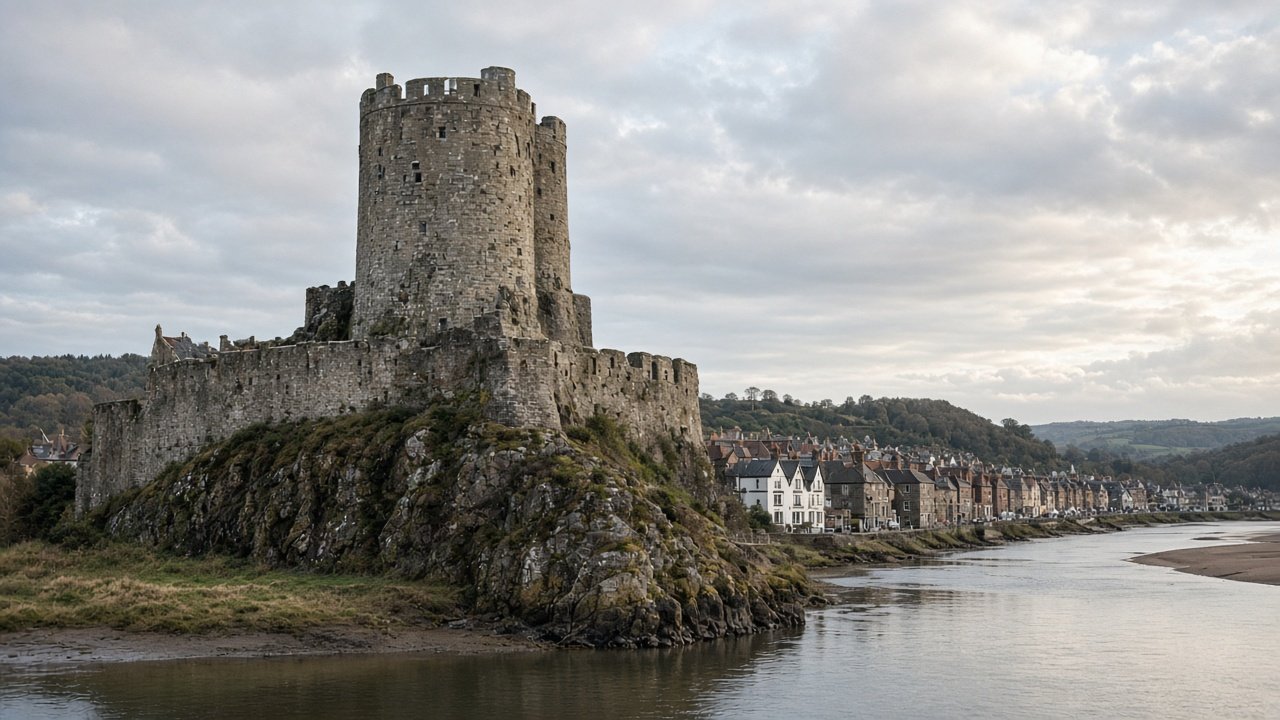
Pembroke Castle in south-west Wales stands on a rocky promontory almost surrounded by water. It was founded by the Normans in the late 11th century, and around 1200 the great knight William Marshal built its enormous round keep, one of the largest in Britain. Pembroke’s greatest claim to fame is that Henry Tudor, the future Henry VII and founder of the Tudor dynasty, was born here in 1457. During the English Civil War, the castle was besieged by Oliver Cromwell in 1648 and later partly demolished.
Visiting
Pembroke Castle is privately run by a trust. Climb the great keep, explore the towers, and descend into the Wogan Cavern, a large natural cave beneath the castle. Pembroke has a railway station, and the Pembrokeshire Coast National Park is close by.
Carreg Cennen Castle
History
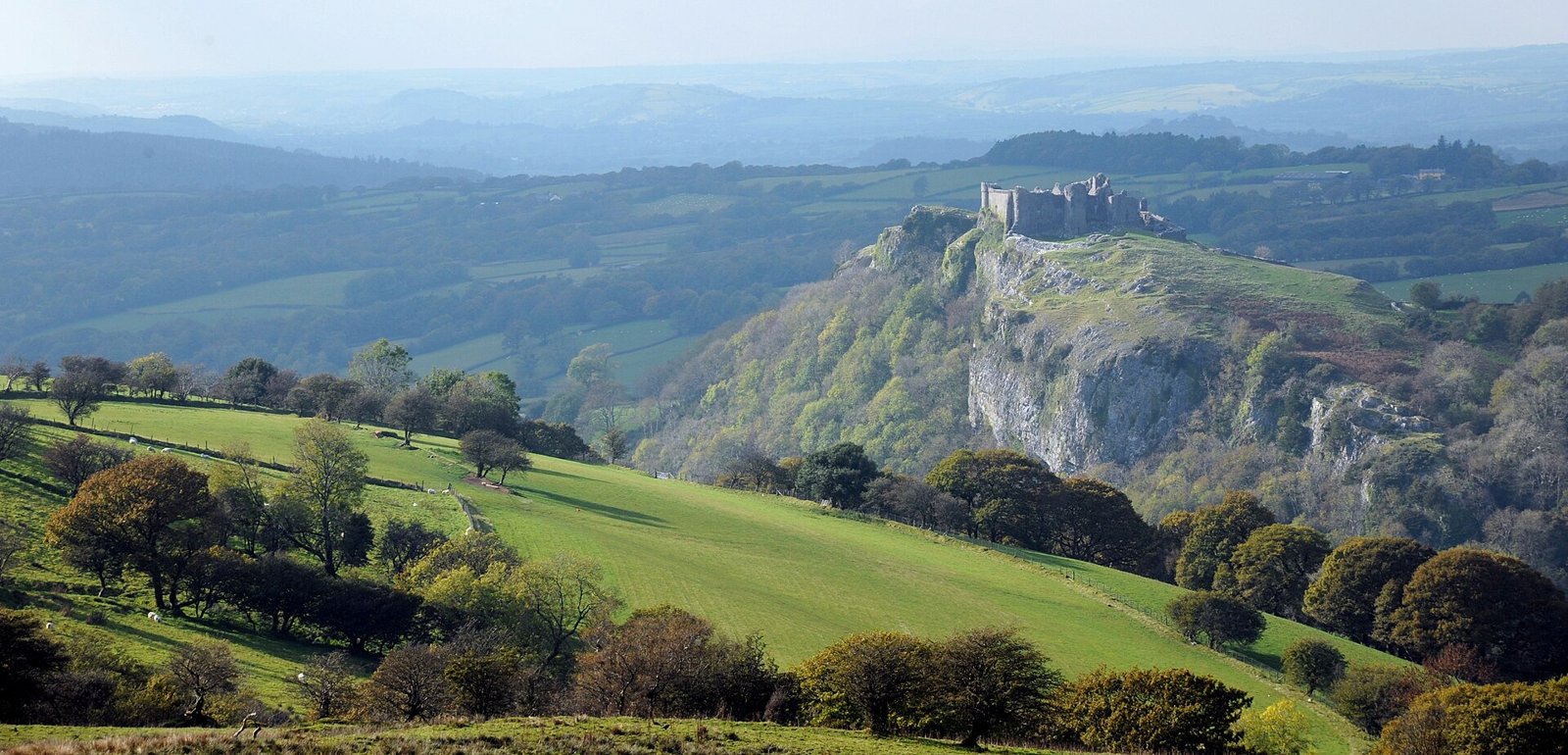
On top of a sheer limestone crag above the River Cennen, near Llandeilo in Carmarthenshire, Carreg Cennen is perhaps the most dramatically sited castle in Wales. A Welsh stronghold stood here in the time of the princes of Deheubarth, but the ruins you see today date mainly from the late 13th century, after the English conquest. The castle was attacked by the forces of Owain Glyndŵr during his rebellion in the early 1400s, and in 1462, during the Wars of the Roses, it was deliberately wrecked so that it could no longer be used.
Visiting
Carreg Cennen is in the care of Cadw and run by the local farm on whose land it sits. One of the highlights is a narrow passage cut along the cliff, leading to a natural cave beneath the castle; bring a torch. The walk up from the farm is steep but short. It is on the western edge of the Bannau Brycheiniog (Brecon Beacons) National Park.
Castell Coch
History
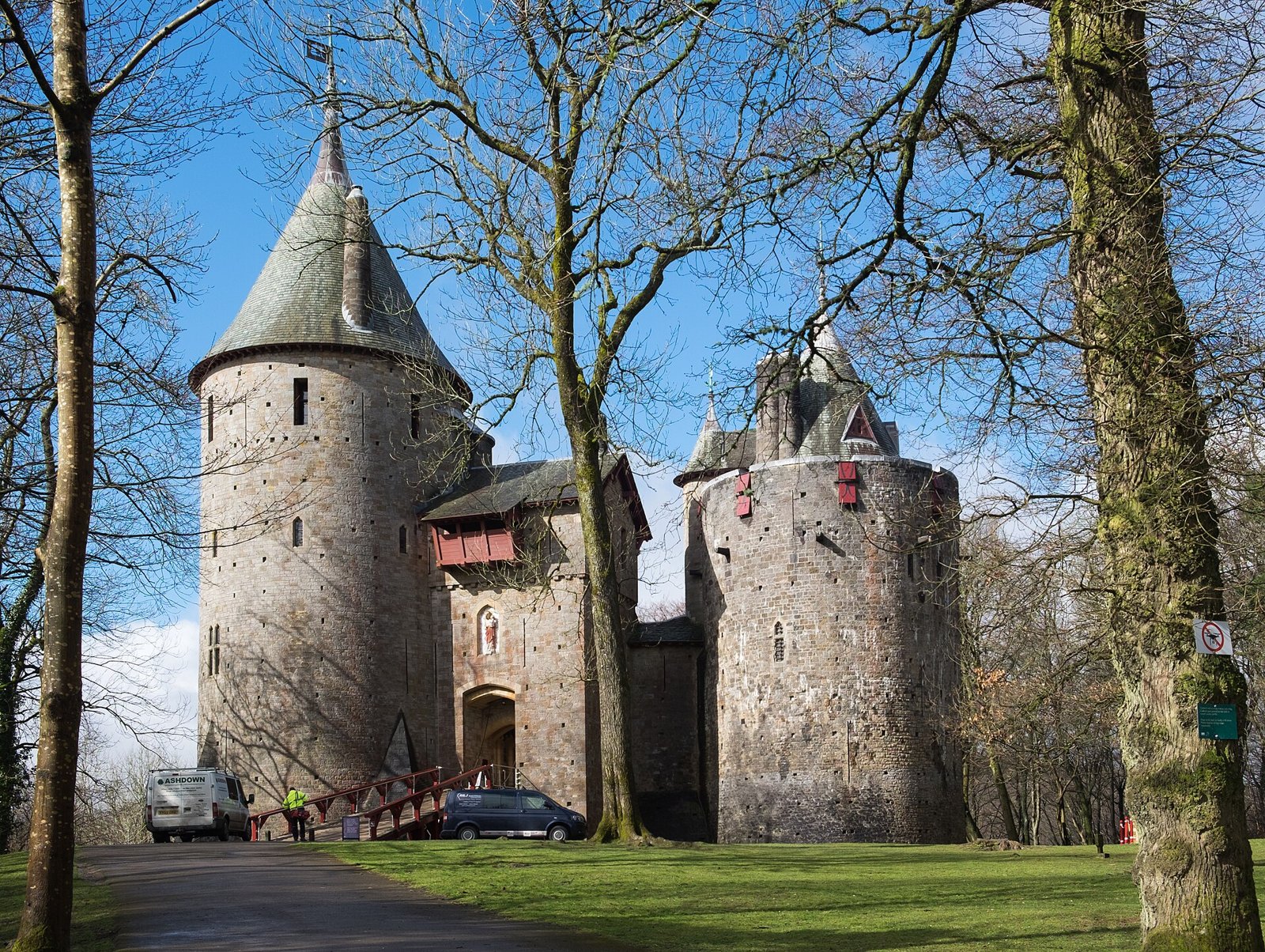
Castell Coch, the “Red Castle”, rises from beech woods above the village of Tongwynlais, just north of Cardiff. A medieval castle stood here, but by the 19th century it was a ruin. Between 1875 and 1891 it was rebuilt for John Crichton-Stuart, 3rd Marquess of Bute, one of the richest men in the world, by the architect William Burges. Burges, who also remodelled Cardiff Castle for Bute, created a Gothic Revival fantasy with conical towers, a working drawbridge and astonishingly rich interiors.
What to See
Highlights include the Drawing Room, with its painted walls and vaulted ceiling decorated with birds, butterflies and scenes from Aesop’s fables, and Lady Bute’s Bedroom, with its domed ceiling. Castell Coch has appeared in many films and TV shows.
Visiting
Cared for by Cadw. It is about 20 minutes from central Cardiff by car or bus, and the surrounding Fforest Fawr woods have walking trails.
More Welsh Castles Worth Seeing
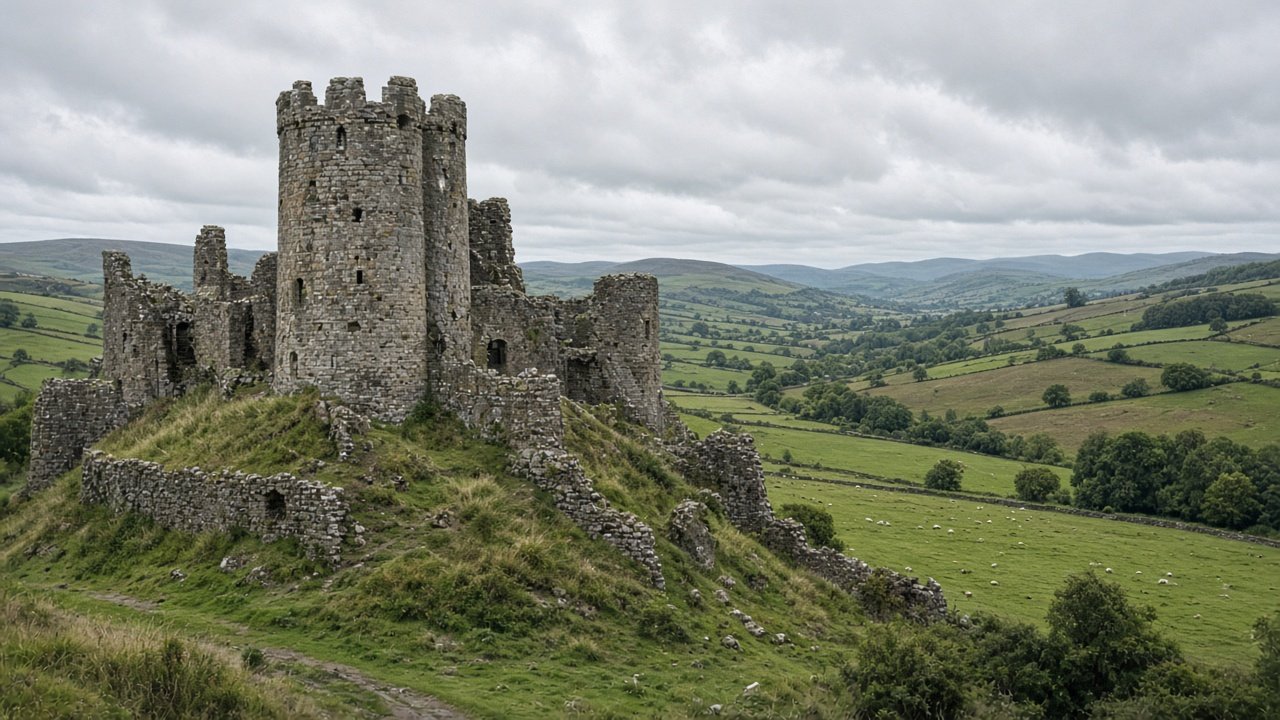
- Harlech Castle: another of Edward I’s masterpieces, set on a crag above the coast with views of Snowdonia. Its long siege during the Wars of the Roses is said to have inspired the song “Men of Harlech”.
- Beaumaris Castle: on Anglesey, often described as the most technically perfect castle in Britain thanks to its symmetrical concentric design, although it was never finished.
- Caerphilly Castle: the largest castle in Wales, begun in 1268, with huge water defences and a famous leaning tower.
- Cardiff Castle: in the heart of the capital, combining a Norman keep with lavish Victorian interiors by William Burges.
More Great Castles in South and West Wales
Edward I’s castles get the most attention, but some of the most rewarding castle visits in Wales are in the south and west, and a few were built by the Welsh princes themselves.
Chepstow Castle
Perched on a cliff above the River Wye on the border with England, Chepstow Castle was begun in 1067 by William FitzOsbern, a close companion of William the Conqueror. Its great stone hall-keep is often described as the oldest surviving post-Roman stone fortification in Britain. The castle was enlarged over the next four centuries, and its original wooden gatehouse doors, dated by tree-ring analysis to before 1190, are thought to be the oldest surviving castle doors in Europe. They are now displayed inside the castle.
Raglan Castle
Raglan, in Monmouthshire, is a late medieval castle built as much for show as for war. It was largely the work of Sir William ap Thomas and his son William Herbert, Earl of Pembroke, in the 15th century. Its hexagonal Great Tower, surrounded by its own moat, is one of its most striking features. During the Civil War Raglan was one of the last Royalist strongholds, and it surrendered to Parliament in August 1646 after a long siege, after which it was partly demolished.
Kidwelly Castle
Kidwelly in Carmarthenshire began as a Norman earth-and-timber castle founded by Roger, Bishop of Salisbury, in 1106. It was rebuilt in stone in the 13th century as a concentric castle, with an inner ward enclosed by a semicircular outer wall above the River Gwendraeth. Kidwelly is also linked with Gwenllian, a Welsh princess who led an attack on the Normans near the castle in 1136 and was killed in the fighting.
Dolwyddelan Castle
Not every Welsh castle was built by invaders. Dolwyddelan, in the mountains of Snowdonia (Eryri), was built in the early 13th century by Llywelyn the Great, Prince of Gwynedd, to guard a route through the mountains. Its rectangular keep stands on a rocky ridge with views of Moel Siabod, and it is a reminder that the native princes of Wales were great castle builders too. Like most of the castles in this guide, Chepstow, Raglan, Kidwelly and Dolwyddelan are cared for by Cadw.
A Suggested North Wales Castle Route
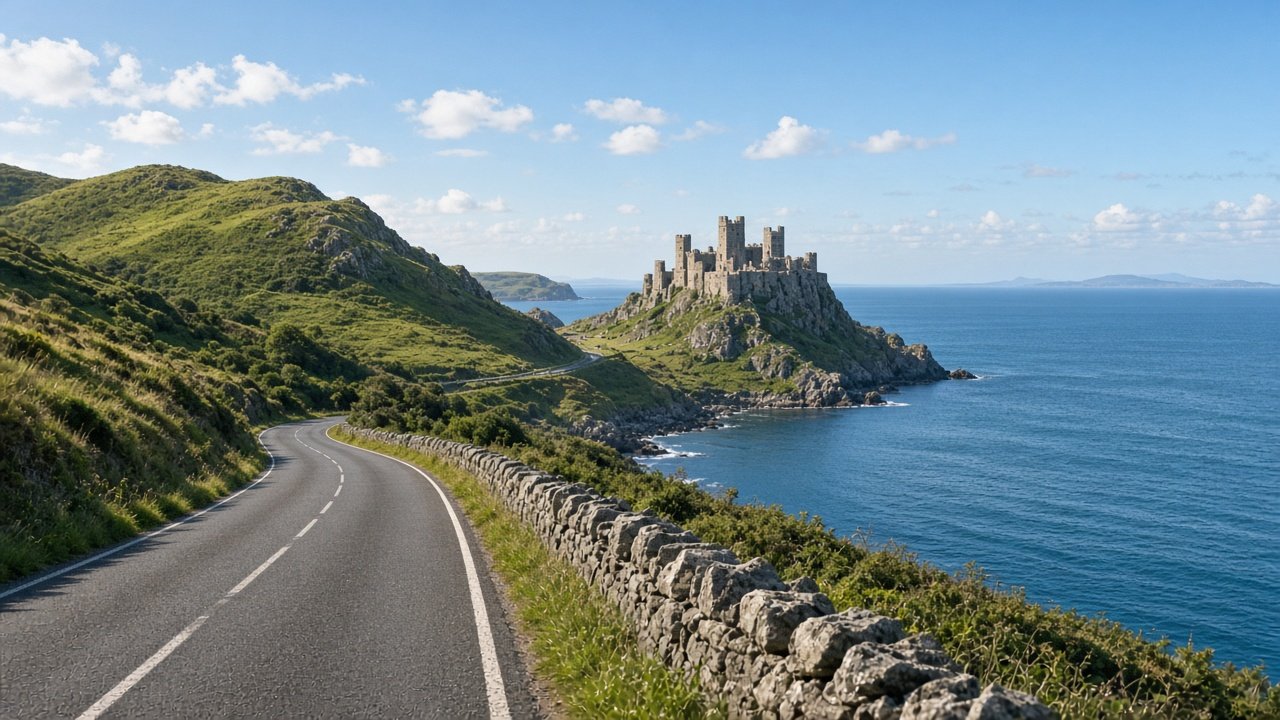
North-west Wales has the greatest concentration of Edward I’s castles and makes a superb two- to three-day trip. Start at Conwy, walking the castle and the town walls. Cross the Menai Strait to Anglesey for Beaumaris, then return to the mainland for Caernarfon. Finish by driving south along the coast, with Snowdonia’s mountains on your left, to Harlech, ideally arriving in time to see the sun set over the sea from its walls. Bases such as Conwy, Caernarfon or Porthmadog keep driving times short, and the Snowdon Mountain Railway and Portmeirion village are easy additions.
Quick Facts
| Castle | Area | Built | Known for | Managed by |
|---|---|---|---|---|
| Caernarfon Castle | Gwynedd | From 1283 | Birthplace of Edward II, investitures, UNESCO | Cadw |
| Conwy Castle | Conwy | 1283–1287 | Eight towers, town walls, UNESCO | Cadw |
| Pembroke Castle | Pembrokeshire | Late 11th century; keep c. 1200 | Birthplace of Henry VII | Private trust |
| Carreg Cennen Castle | Carmarthenshire | Mainly late 13th century | Clifftop setting, cave passage | Cadw / local farm |
| Castell Coch | Near Cardiff | Rebuilt 1875–1891 | Victorian Gothic fantasy | Cadw |
Tips for Visiting Castles in Wales
- Consider a Cadw pass: Cadw’s Explorer Pass or membership can save money if you plan to visit several of its castles.
- Plan by region: Caernarfon, Conwy, Harlech and Beaumaris are all in the north-west; Pembroke, Carreg Cennen, Castell Coch, Cardiff and Caerphilly are in the south.
- Allow travel time: north-south journeys through Wales take several hours by road or rail.
- Pack for the weather: Welsh weather changes quickly, and castle walls are exposed. Bring a waterproof jacket.
Frequently Asked Questions
How many castles are there in Wales?
Around 600 castle sites are often quoted, giving Wales one of the highest densities of castles in Europe.
What is the most famous castle in Wales?
Caernarfon and Conwy, both built by Edward I and part of a UNESCO World Heritage Site, are the best known.
Which Welsh castle was Henry VII born in?
Henry Tudor, later Henry VII, was born at Pembroke Castle in 1457.
Is Castell Coch medieval?
It stands on a medieval site, but the castle you see today was rebuilt between 1875 and 1891 for the 3rd Marquess of Bute by the architect William Burges.
Where were the Princes of Wales invested?
The investitures of 1911 and 1969 took place at Caernarfon Castle.
What is the oldest castle in Wales?
Chepstow Castle, begun in 1067 by William FitzOsbern, is usually described as the oldest surviving post-Roman stone fortification in Britain, which makes it the leading candidate for the oldest castle in Wales.
Which castles in Wales were built by Welsh princes?
Many Welsh castles were built by the native princes rather than by the English. Examples include Dolwyddelan, Castell y Bere and Dolbadarn, all built by the princes of Gwynedd in the 13th century, and Dinefwr in Carmarthenshire, linked with the princes of Deheubarth.
Do I need to book tickets for castles in Wales?
Most Cadw castles can be visited without booking, but buying tickets online in advance can be useful in summer and school holidays. Always check opening times before you travel, as many sites have shorter hours in winter.