

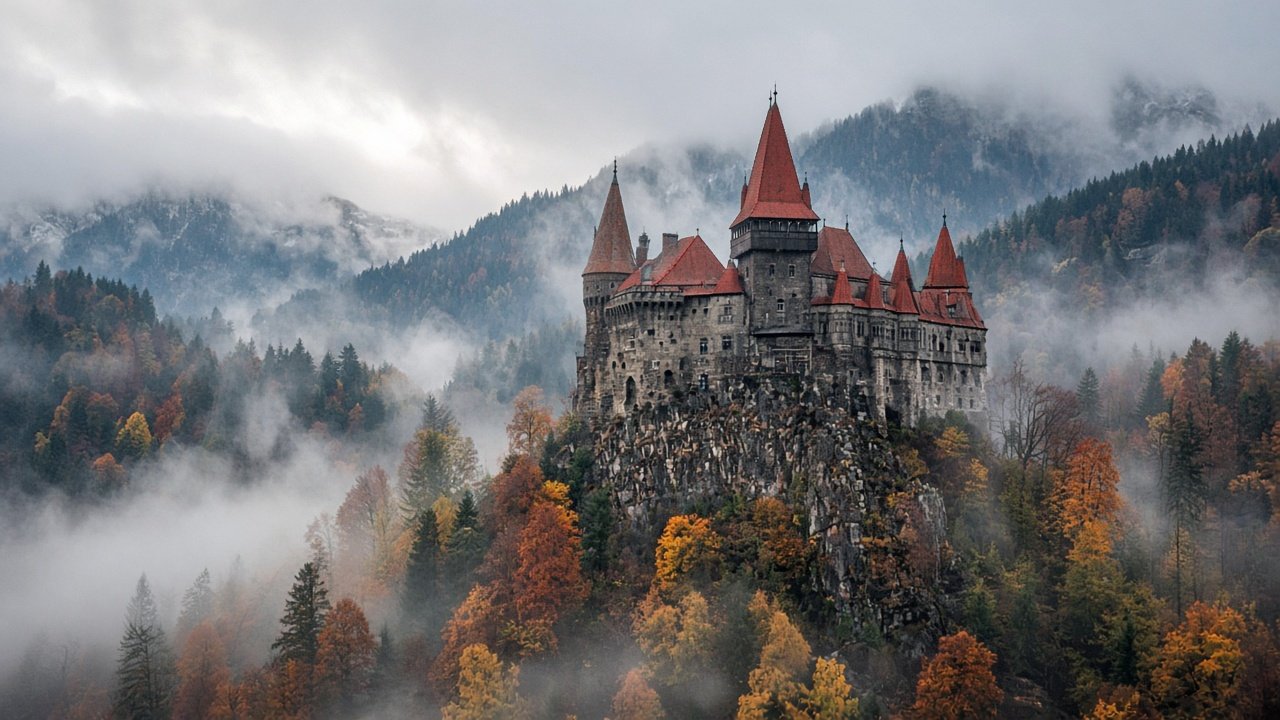

Romania, and especially Transylvania, is one of Europe’s great castle destinations. For centuries this region sat on the frontier between the Kingdom of Hungary, the principalities of Wallachia and Moldavia, and the Ottoman Empire. Hungarian nobles, Saxon townspeople and Romanian princes all built fortifications, from Gothic castles and mountain-top citadels to the unique fortified churches of the Saxon villages.
This guide is part of our guide to castles in Europe. If you enjoy separating legend from history, see our guide to the most haunted castles in Ireland, and for Germany’s great fortresses, our guide to medieval castles in Germany.
And then there is Dracula. Bram Stoker’s 1897 novel and the real 15th-century prince Vlad III, known as Vlad the Impaler, have made Romanian castles world-famous, though the truth behind the legend is more complicated than the souvenir shops suggest. This guide covers the best castles, fortresses and towers in Romania, separating fact from fiction along the way.
Dracula: Fact vs Fiction
Before you start, it helps to know who the real “Dracula” was. Vlad III ruled the principality of Wallachia, south of the Carpathians, three times in the 15th century, most notably from 1456 to 1462. His father, Vlad II, had been admitted to the Order of the Dragon, a chivalric order founded by the Hungarian king Sigismund, and was known as “Dracul” (the Dragon). “Dracula” simply means “son of Dracul”. Vlad III became notorious for his cruelty, especially impaling his enemies, which earned him the later nickname “Țepeș” (the Impaler). In Romania he is also remembered as a ruler who resisted the Ottoman Empire.
Bram Stoker borrowed the name for his 1897 novel, but his vampire count lived in a fictional castle in the north-east of Transylvania, and Stoker relied on books rather than travel for his research. So enjoy the Dracula connections as a blend of history, literature and tourism.
Bran Castle
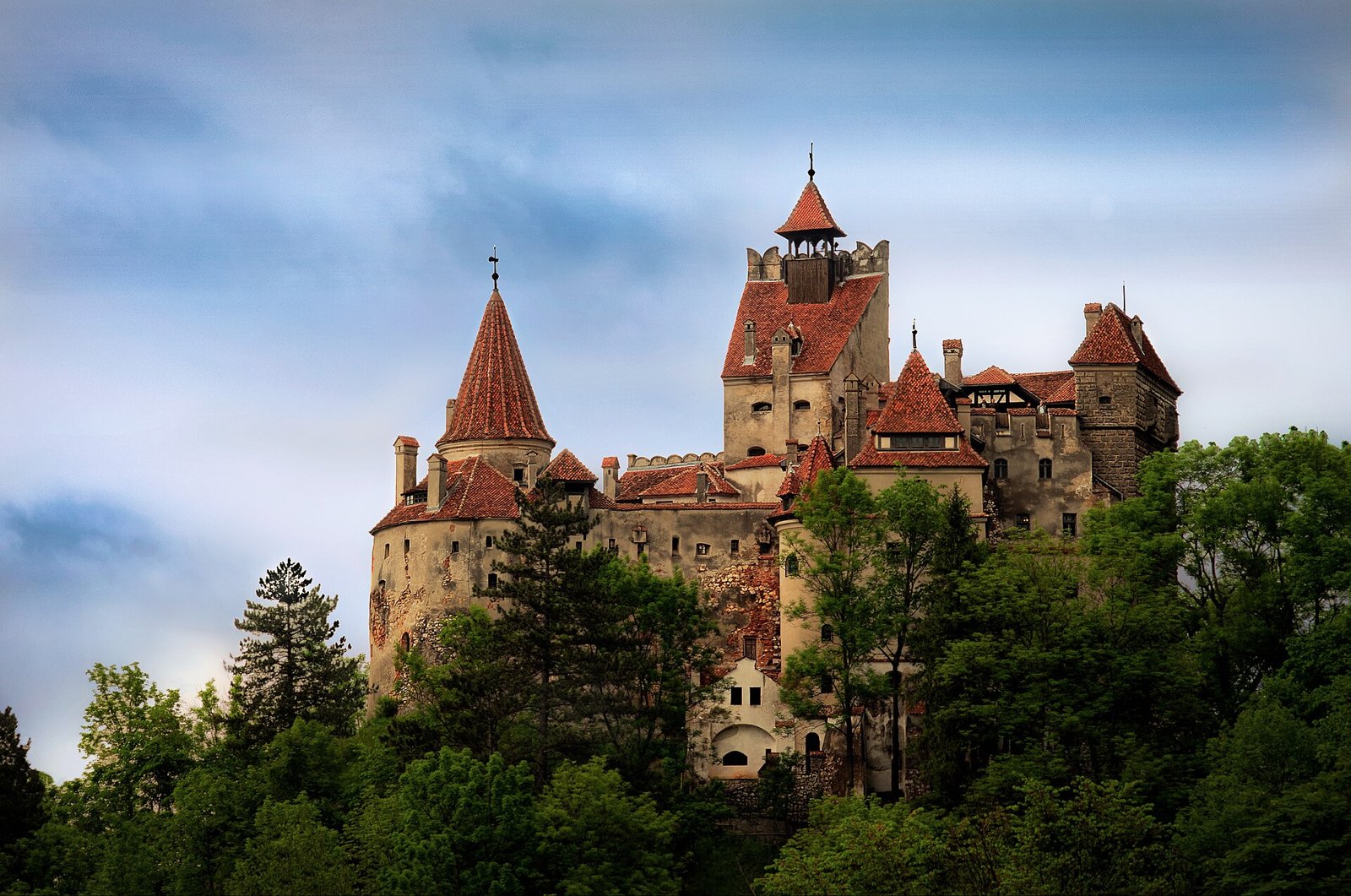
Bran Castle stands on a rocky outcrop guarding a mountain pass between Transylvania and Wallachia, about 30 kilometres from Brașov. It was built in the late 14th century by the Saxons of Brașov, under privileges granted by King Louis I of Hungary, as a fortress and customs post. In 1920 the people of Brașov gave the castle to Queen Marie of Romania, who turned it into a much-loved royal residence; many of the furnished rooms reflect her time there. After decades of state ownership under communism, it was returned to her descendants in the 2000s.
Bran is marketed as “Dracula’s Castle” because it resembles Stoker’s description, but Stoker never visited Romania, and there is no evidence that Vlad III lived here. Visiting: arrive early to avoid long queues, especially in summer, and expect narrow stairs and corridors.
Corvin Castle (Hunedoara)
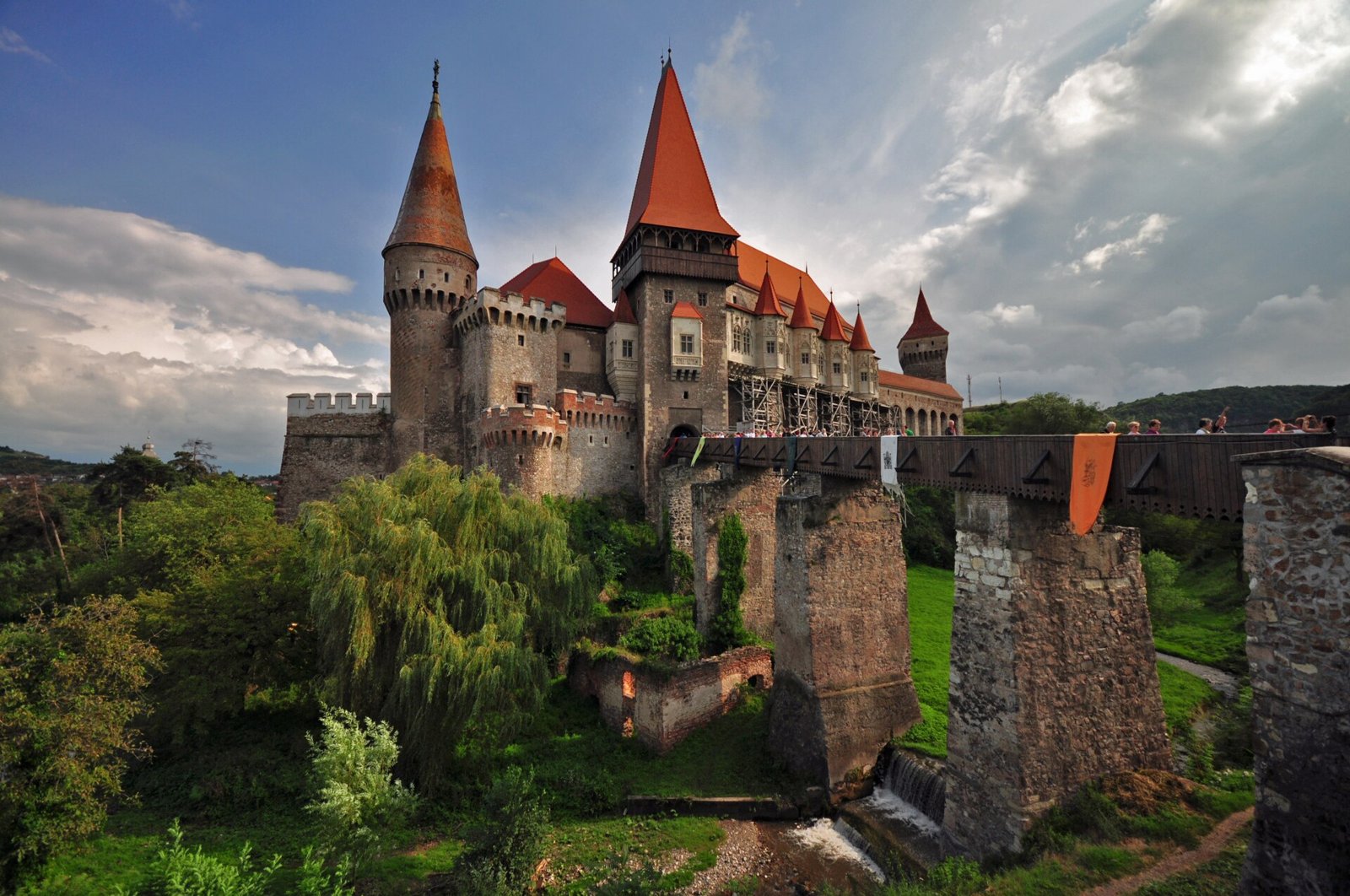
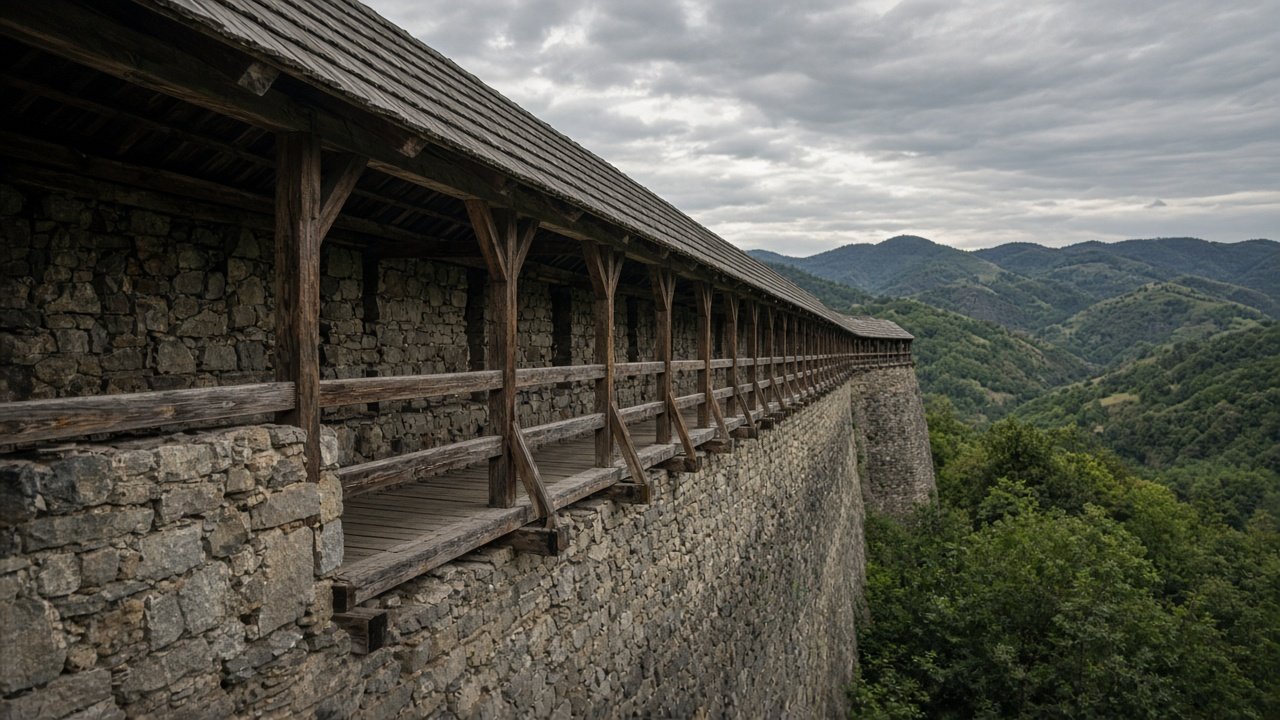
Corvin Castle in Hunedoara is the greatest Gothic castle in Romania and one of the largest in Europe. It was transformed into a magnificent residence in the 15th century by John Hunyadi, the celebrated military commander and regent of Hungary who fought the Ottomans, and later by his son, King Matthias Corvinus. Its pointed towers, tall roofs, high wooden bridge and Knights’ Hall make it look like a film set, and it has indeed appeared in films.
Legends cling to the castle, including a story that Vlad III was held prisoner here, but there is no reliable evidence for it. Visiting: Hunedoara is in western Transylvania, about two to three hours by car from Sibiu.
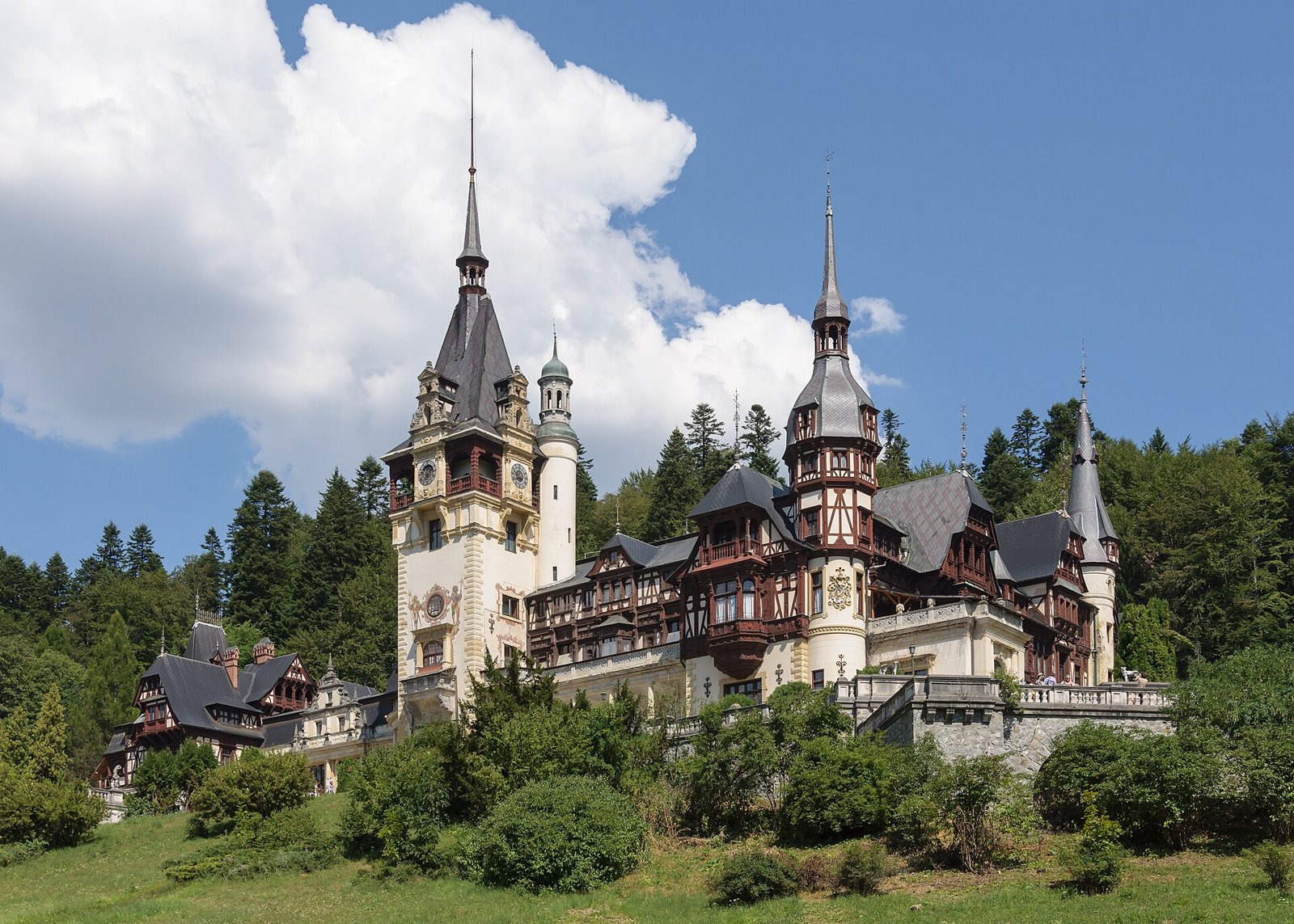
Peleș Castle
In the Carpathian resort of Sinaia, Peleș Castle is the most lavish palace in Romania. It was built between 1873 and 1914 as the summer residence of King Carol I, Romania’s first king, in a richly decorated Neo-Renaissance style. Its rooms are filled with carved woodwork, stained glass, weapons collections and art. It was also remarkably modern for its time, with electric lighting, central heating and an elevator.
Visiting: Sinaia is on the main rail line between Bucharest and Brașov. Peleș is shown on guided tours and is usually closed on Mondays, so check opening days. The smaller Pelișor Castle is nearby.
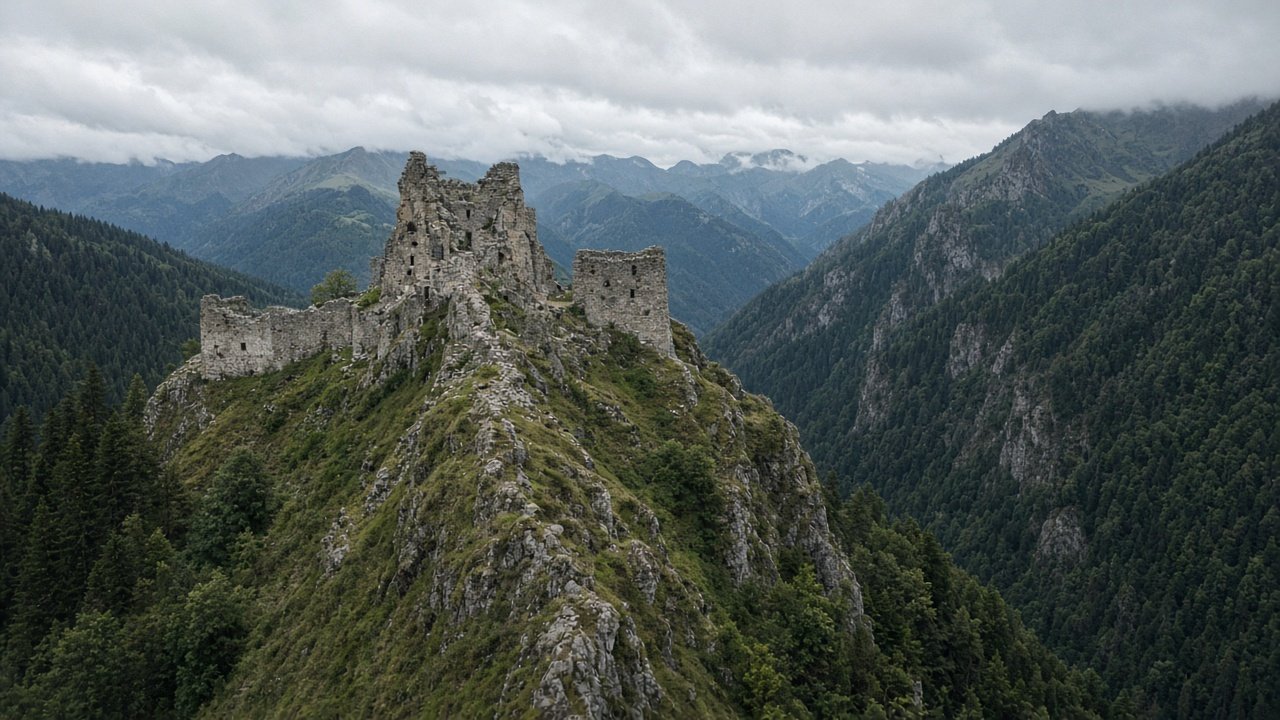
Poenari Fortress
If you want to see a castle genuinely linked to Vlad III, head to Poenari, high on a cliff above the Argeș river at the southern end of the spectacular Transfăgărășan road. Vlad rebuilt and used this fortress in the 15th century. It is reached by climbing roughly 1,480 steps up the mountainside, and the ruins offer dramatic views over the valley.
Visiting: brown bears live in the area, and the site has occasionally been closed to visitors because of bear activity. Follow local guidance and check before you go.
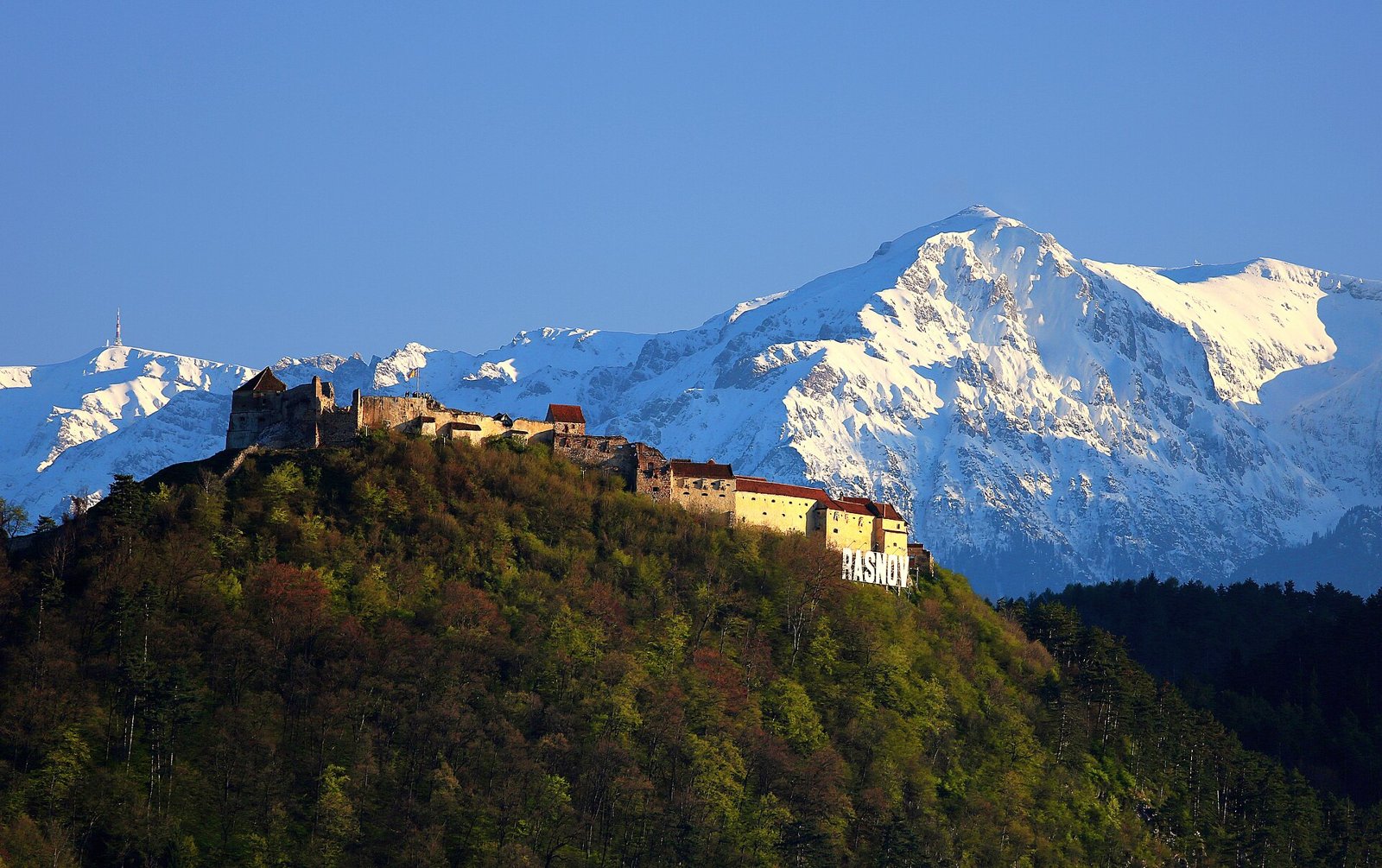
Râșnov Citadel
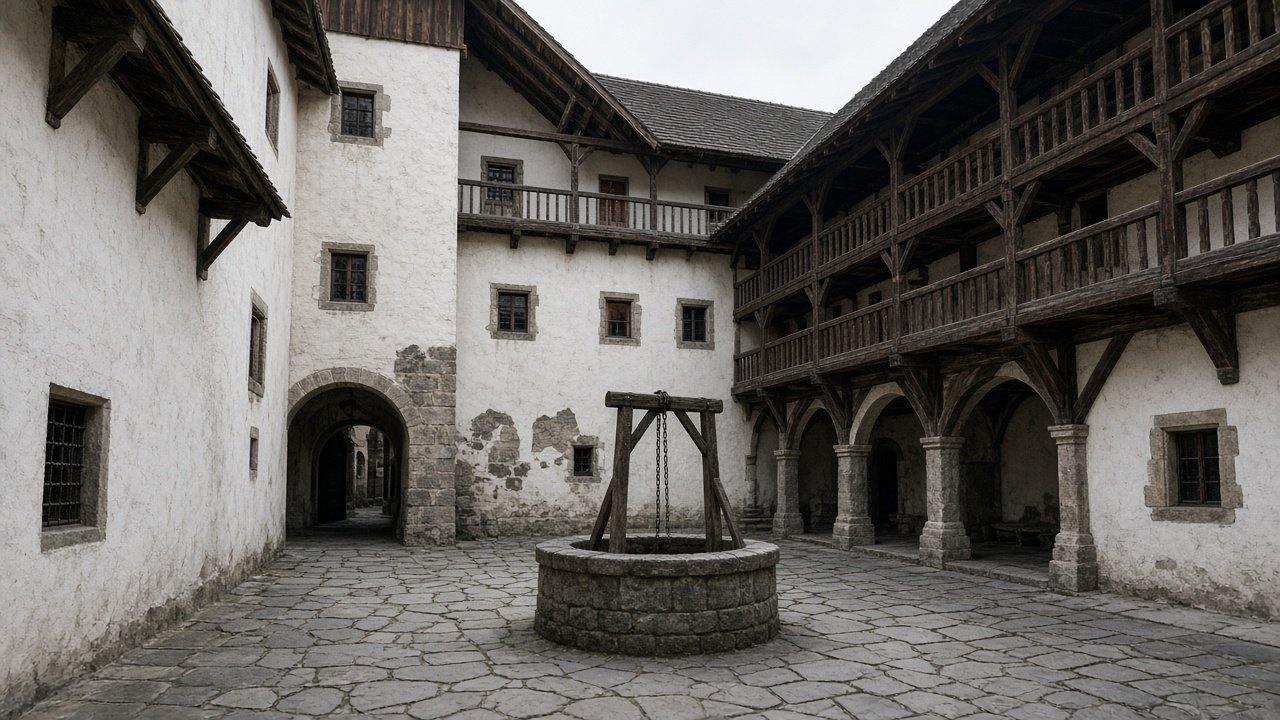
On a hilltop near Brașov, Râșnov Citadel was built in the 13th century, traditionally attributed to the Teutonic Knights, and expanded by local Saxon villagers as a refuge in times of attack. Inside its walls, families had their own houses, a school and a chapel, so they could survive a long siege. A deep well in the courtyard is the subject of a local legend that it was dug by prisoners promised their freedom. Visiting: walk up from the village or take a small lift. It combines easily with Bran Castle, about 15 minutes away.
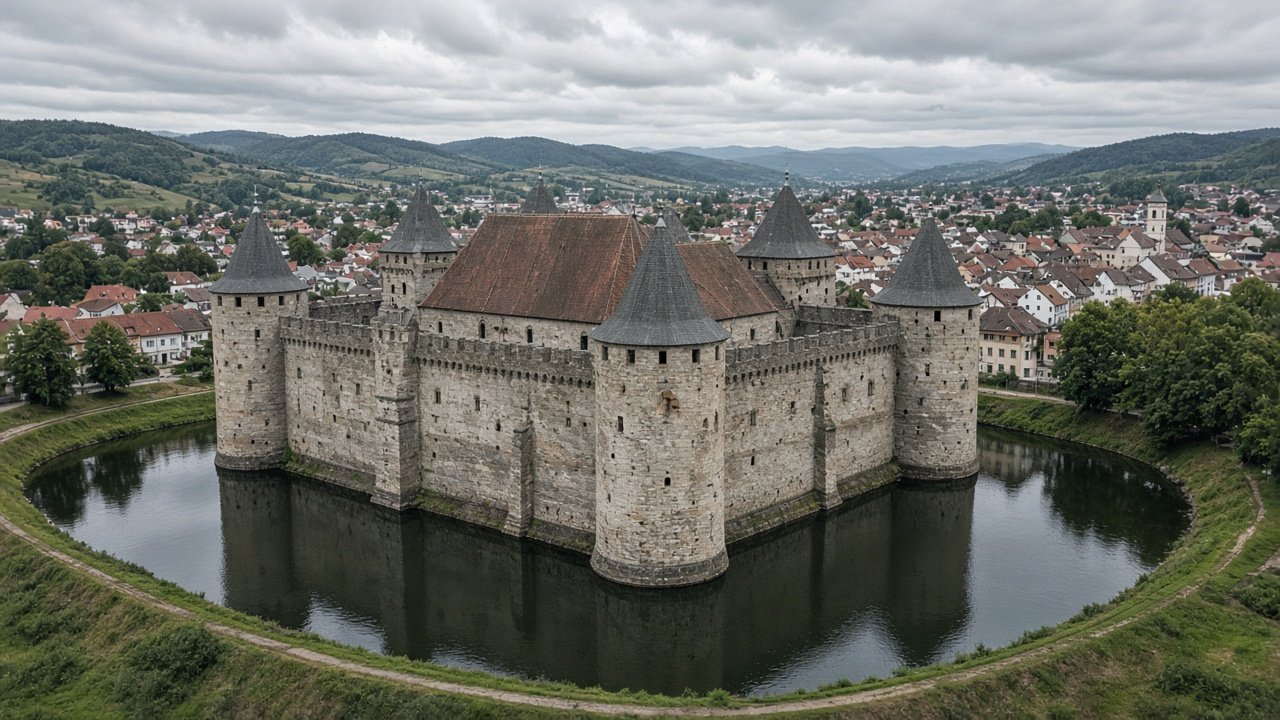
Făgăraș Fortress
In the town of Făgăraș, between Brașov and Sibiu, a massive fortress surrounded by a water-filled moat served as a residence for the princes of Transylvania in the 16th and 17th centuries. Much later, under communism, it was used as a prison for political prisoners. Today it houses a museum, and its moat and walls make it one of the best-preserved fortresses in the country.
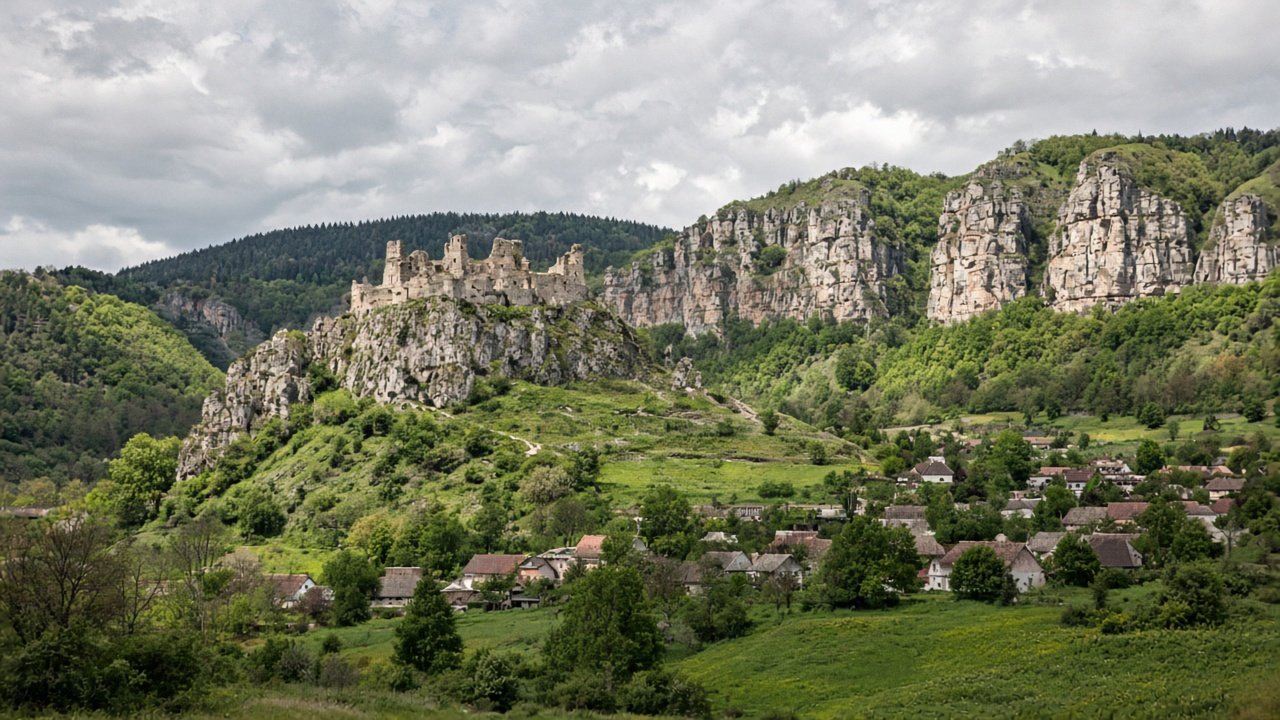
Colțești Fortress
In the Trascău Mountains of western Transylvania, the ruins of Colțești Fortress perch on a rocky crest above the village of Rimetea. Built around the turn of the 14th century, it is a peaceful, little-visited site. Rimetea, with its whitewashed houses beneath the limestone peak of Piatra Secuiului, is one of the most picturesque villages in Romania.
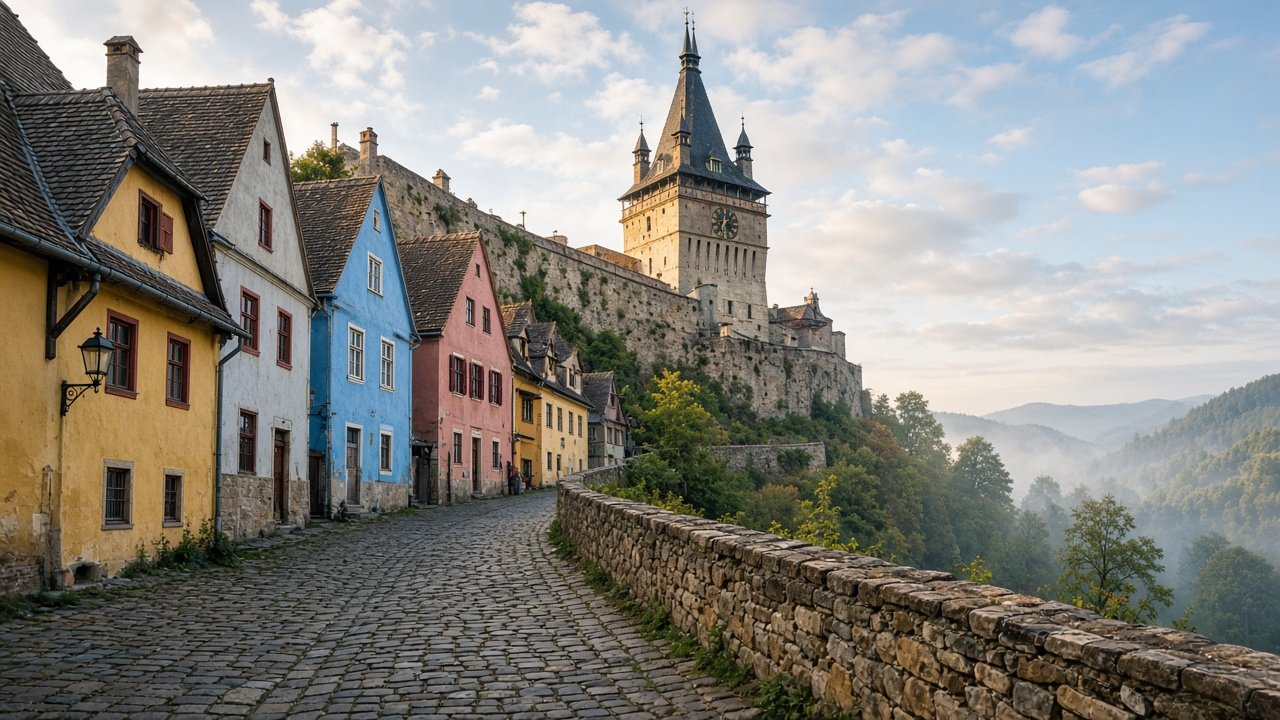
Sighișoara Citadel
Sighișoara is one of the best-preserved inhabited medieval citadels in Europe and a UNESCO World Heritage Site. Founded by Saxon colonists, it is enclosed by walls with towers that were each maintained by a different craft guild. The Clock Tower is the town’s emblem. A house near the main square is traditionally identified as the birthplace of Vlad III, around 1431.
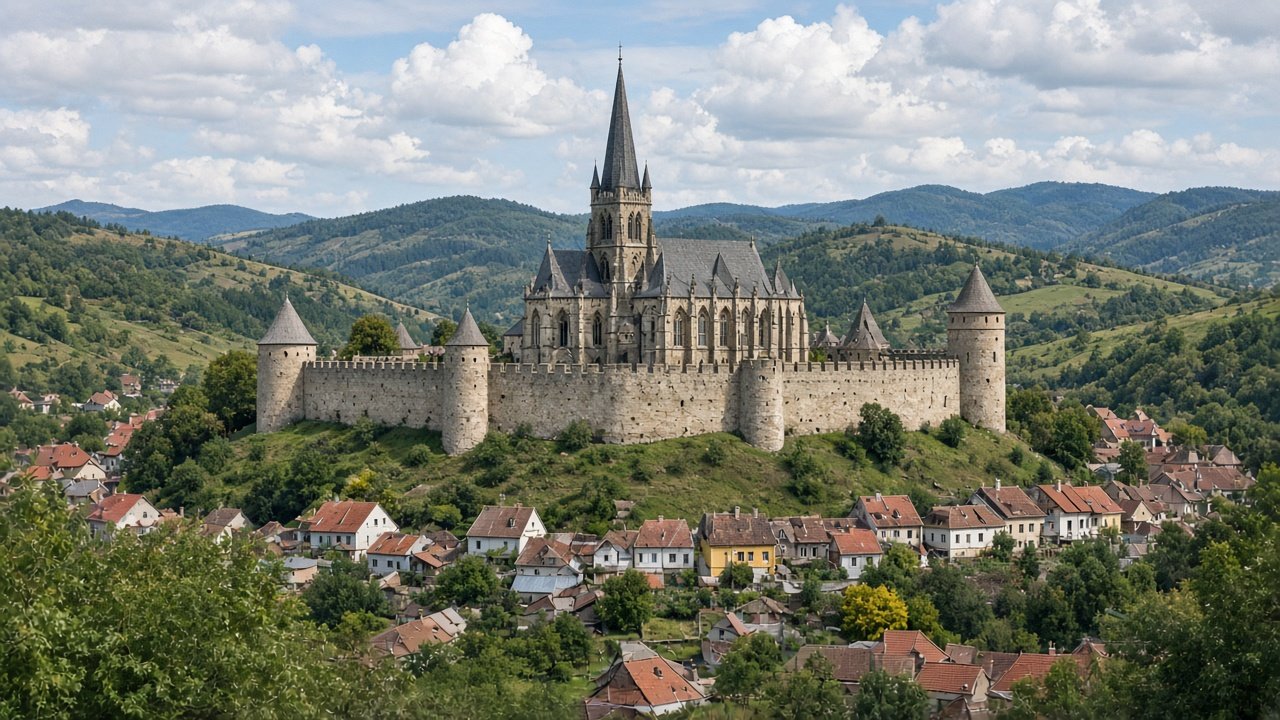
Prejmer and Biertan: Fortified Churches
Transylvania’s fortified churches are among its most unusual treasures. Several are part of the UNESCO World Heritage Site “Villages with Fortified Churches in Transylvania”.
- Prejmer: near Brașov, a Gothic church surrounded by a massive circular wall lined on the inside with rows of small storage rooms where villagers kept food and lived during sieges. It is one of the largest fortified churches in south-eastern Europe.
- Biertan: between Sighișoara and Mediaș, a hilltop church enclosed by three rings of walls. It was the seat of the Lutheran bishops of Transylvania for nearly 300 years. Look for the famous “marriage room”, where, according to tradition, quarrelling couples were locked up together until they reconciled.
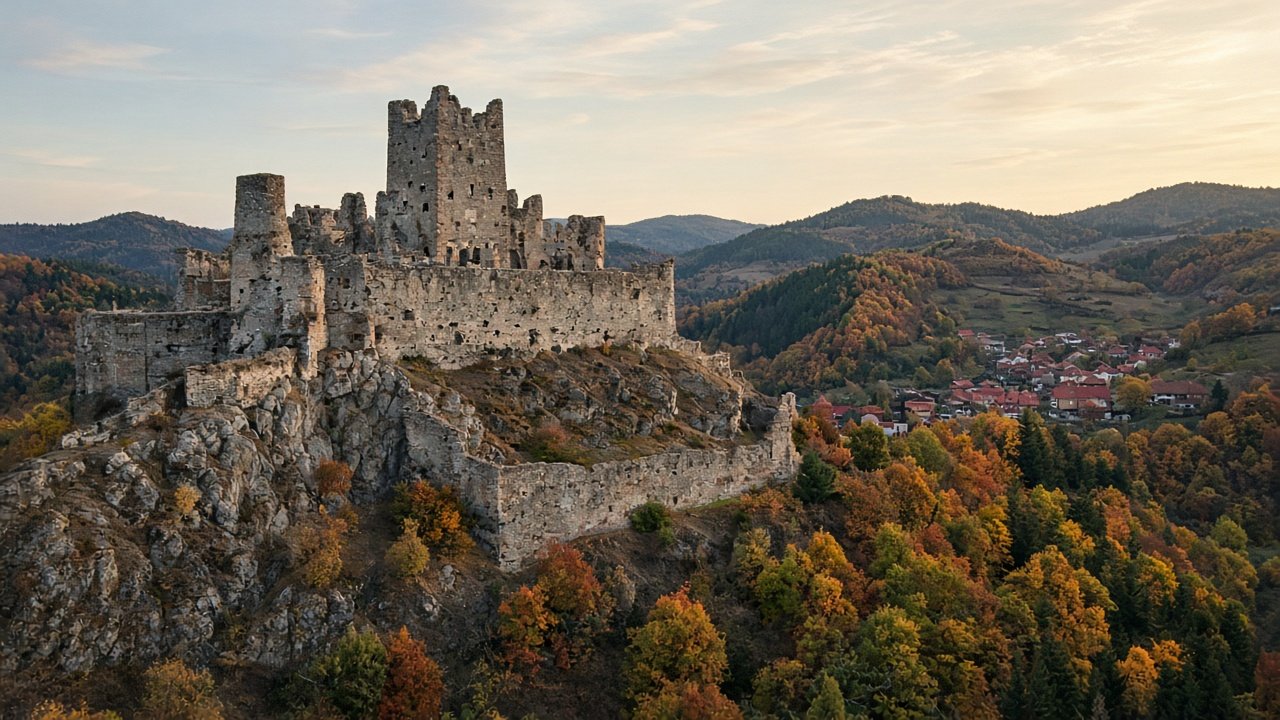
More Transylvanian Fortresses: Rupea, Deva and Alba Iulia
Transylvania’s castles did not stop with the famous names. These three fortresses help tell the story of the region, from medieval hilltop strongholds to an 18th-century star fort.
Rupea Fortress
Rupea Fortress sits on a basalt hill between Brașov and Sighișoara, which makes it an easy stop on the road between the two. The hill was fortified long before the Middle Ages, and the fortress is first documented in 1324. It was gradually extended by the local Saxon community, with several rings of walls climbing the slope. It was restored in the 2010s, and its walls and towers offer wide views over the Transylvanian countryside.
Deva Fortress
Deva Fortress crowns a steep volcanic hill above the city of Deva in Hunedoara County, not far from Corvin Castle. It was first mentioned in the 13th century and grew into an important stronghold of the Kingdom of Hungary and later the Principality of Transylvania. In 1849, during the Hungarian Revolution, an explosion in the powder magazine badly damaged it, and it was never rebuilt. A funicular now carries visitors up the hill, and the ruins were restored and reopened in the 2010s.
Alba Carolina Citadel, Alba Iulia
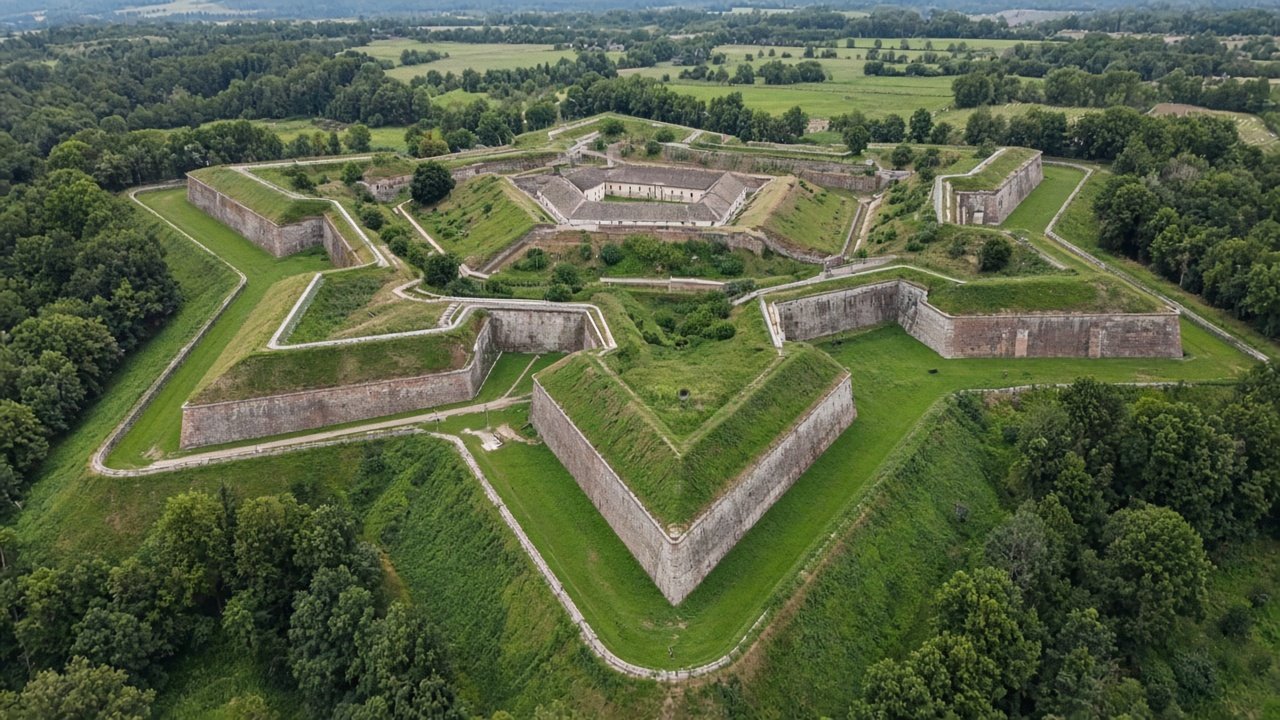
Alba Iulia’s citadel is a very different kind of fortress. It was built by the Habsburgs between 1715 and 1738 as a star-shaped bastioned fortress in the style associated with the French military engineer Vauban, and it is one of the largest fortresses of its kind in South-Eastern Europe. Alba Iulia also has a special place in Romanian history: on 1 December 1918 a great assembly here proclaimed the union of Transylvania with Romania, and 1 December is now Romania’s national day. The citadel’s gates, ramparts and cathedrals make for a rewarding half-day visit.
Quick Facts
| Site | Region | Built | Known for |
|---|---|---|---|
| Bran Castle | Near Brașov | Late 14th century | “Dracula’s Castle”, Queen Marie |
| Corvin Castle | Hunedoara | Mainly 15th century | Gothic architecture, John Hunyadi |
| Peleș Castle | Sinaia | 1873–1914 | Royal palace of King Carol I |
| Poenari Fortress | Argeș valley | Rebuilt 15th century | Vlad III, around 1,480 steps |
| Râșnov Citadel | Near Brașov | 13th century | Villagers’ refuge fortress |
| Făgăraș Fortress | Făgăraș | 14th–17th century | Moat, princes of Transylvania |
| Colțești Fortress | Trascău Mountains | c. 1300 | Quiet ruin above Rimetea |
| Sighișoara Citadel | Mureș County | Medieval | Inhabited citadel, UNESCO |
| Prejmer / Biertan | Brașov / Sibiu counties | Medieval | Fortified churches, UNESCO |

Suggested Route
Fly into Bucharest and head north to Sinaia for Peleș. Continue to Brașov, your base for Bran, Râșnov and Prejmer. Drive west to Făgăraș, then on to Sibiu, with a detour south along the Transfăgărășan to Poenari when the road is open (typically early summer to autumn). From Sibiu, visit Biertan and Sighișoara, then finish in the west at Corvin Castle and the Trascău Mountains. Allow a week to ten days.
Tips for Visiting Romania’s Castles
- Rent a car: trains link the main towns, but many castles and villages are much easier by car.
- Check mountain roads: the Transfăgărășan is closed for much of the year due to snow.
- Visit midweek: Bran and Peleș are extremely busy at weekends and in summer.
- Respect wildlife: bears are common in the Carpathians. Never feed them, and follow local warnings.
Frequently Asked Questions
Is Bran Castle really Dracula’s castle?
Not historically. Bran is marketed as Dracula’s Castle, but Bram Stoker never visited Romania, and there is no evidence that Vlad III lived there.
Which castle is truly connected to Vlad the Impaler?
Poenari Fortress, which Vlad III rebuilt and used in the 15th century. He is also traditionally said to have been born in Sighișoara.
What is the most beautiful castle in Romania?
Peleș Castle is often considered the most beautiful palace, while Corvin Castle is the most impressive Gothic fortress.
What are Transylvania’s fortified churches?
They are village churches surrounded by defensive walls, built mainly by Saxon communities to protect themselves during raids. Several, including Biertan, are UNESCO World Heritage Sites.
When is the best time to visit Romania’s castles?
Late spring to early autumn, when mountain roads are open and the weather is pleasant.
What is the biggest fortress in Romania?
The Alba Carolina Citadel in Alba Iulia, a star-shaped Habsburg fortress built between 1715 and 1738, is one of the largest fortresses of its kind in South-Eastern Europe.
Why is Alba Iulia important in Romanian history?
On 1 December 1918 a great national assembly in Alba Iulia proclaimed the union of Transylvania with Romania. The date is now celebrated as Romania’s national day.
Can you visit Rupea Fortress on the way to Sighișoara?
Yes. Rupea lies on the main road between Brașov and Sighișoara, so it is an easy stop for an hour or two on a Transylvanian road trip.
What is the best base for visiting castles in Transylvania?
Brașov is the most convenient base for many visitors. Râșnov Citadel and Bran Castle are both a short drive away, and Peleș Castle at Sinaia is about an hour south. Sighișoara and Rupea are to the north-west, while Corvin Castle, Deva and Alba Iulia are easier to reach from Sibiu or Alba Iulia itself.