


Ireland’s castles have witnessed clan feuds, sieges, rebellions and famine, so it is little surprise that so many come with ghost stories attached. Some of these legends are centuries old; others have grown up more recently, encouraged by ghost tours and television. Whether you believe in spirits or simply love a good story, visiting these castles is a memorable way to explore Irish history.
This guide is part of our guide to castles in Europe. For more dark tales from across the Irish Sea, see the stories behind Scotland’s medieval castles, and for Welsh fortresses, our guide to castles in Wales.
This guide covers five of the most famous “haunted” castles in Ireland. For each, we explain the real history first, then the legends, and finish with practical tips for visiting. A note before we start: ghost stories are folklore, not fact, so they are presented here as the traditions they are.
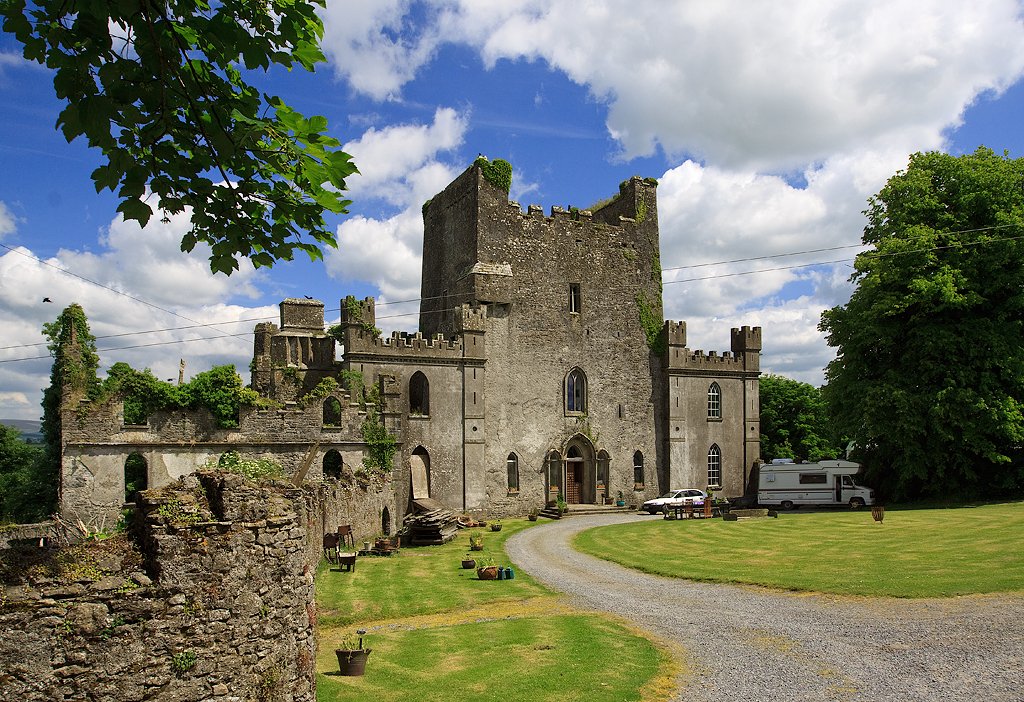
Leap Castle, County Offaly
History
Leap Castle, in the Irish midlands near Roscrea, is a tall tower house that was a stronghold of the O’Carroll clan, who controlled the surrounding territory of Ely O’Carroll. The family was notorious for bitter internal feuds. Later the castle passed to the Darby family, who added Gothic Revival features. In 1922, during the turbulent years of the Irish Civil War, the castle was burned and left as a shell. It has since been partly restored as a private home.
The Legends
Leap is often described as the most haunted castle in Ireland. Its most famous story centres on the “Bloody Chapel”: according to tradition, in the 1530s one O’Carroll brother killed another, a priest, at the altar during Mass in a dispute over leadership of the clan. The castle is also said to contain an oubliette, a hidden dungeon into which prisoners were dropped and forgotten, and later accounts claim human remains were found there. The most chilling legend concerns a malevolent spirit known as “the Elemental”, described in the early 20th century by Mildred Darby, a writer who lived at the castle and published accounts of the occult.
Visiting
Leap Castle is a private home, so it is not a regular visitor attraction. Visits have sometimes been possible by prior arrangement. Do not turn up unannounced; check for any current visiting arrangements first.
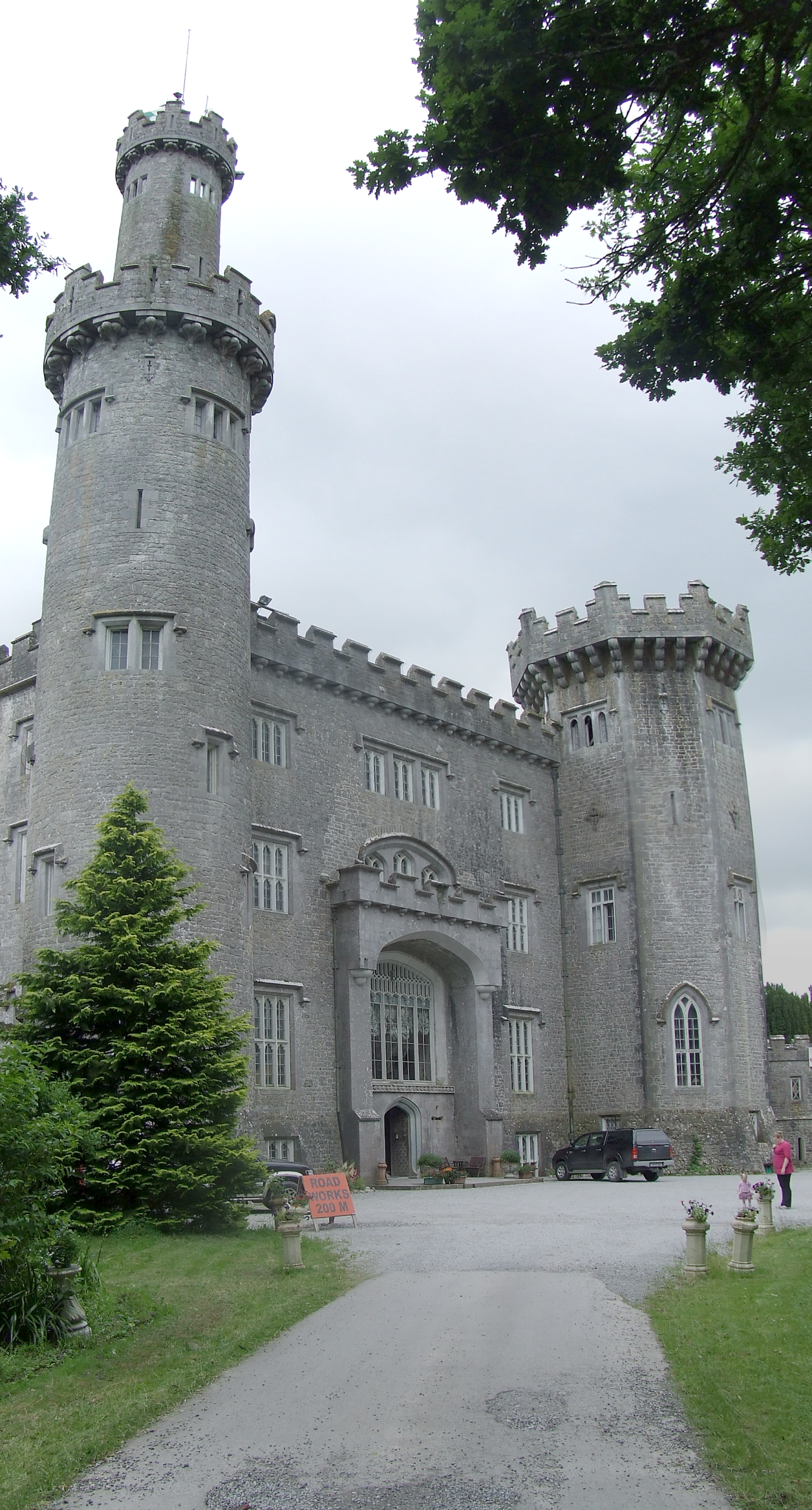
Charleville Castle, County Offaly
History
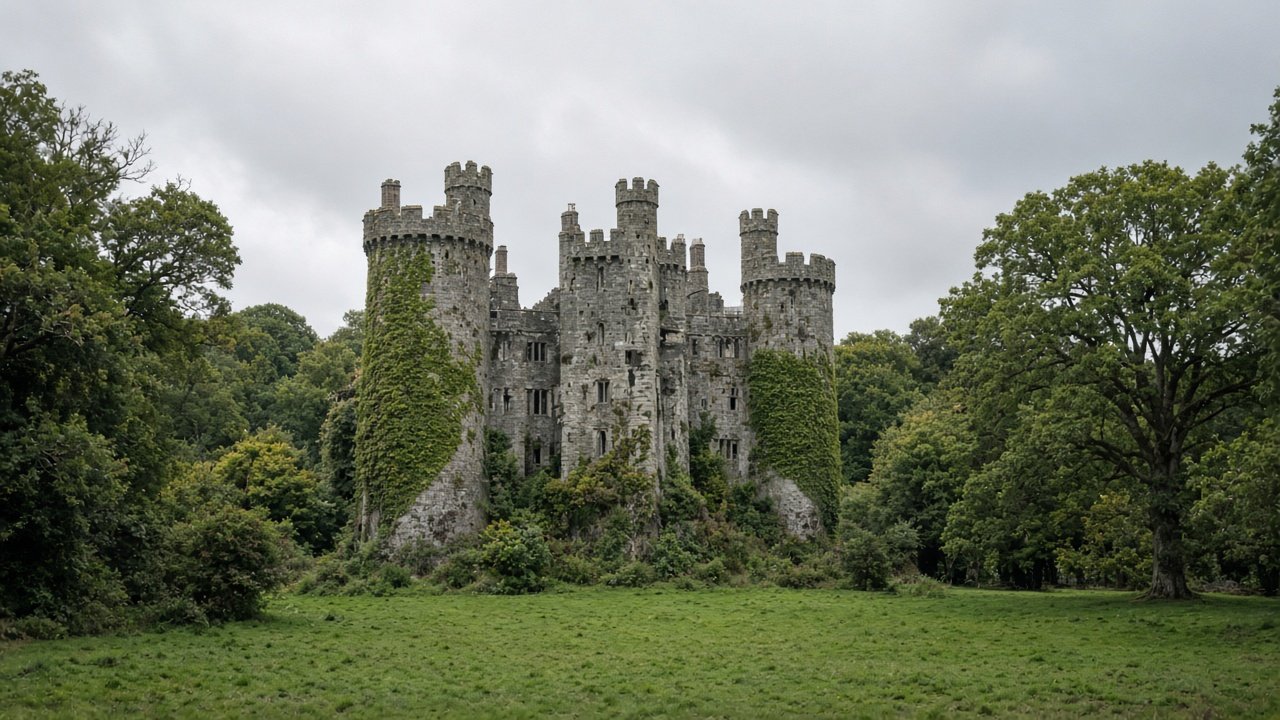
Charleville Castle, near Tullamore, is one of the finest Gothic Revival castles in Ireland. It was built between 1798 and 1812 for Charles William Bury, 1st Earl of Charleville, to designs by the architect Francis Johnston. Its battlements, turrets and pointed windows rise from an ancient oak forest. After the family left in the 20th century, the castle fell into disrepair, and it has since been gradually restored by owners and volunteers.
The Legends
The best-known story at Charleville concerns a young girl named Harriet, a daughter of the family, who is said to have died after falling while sliding down the banister of the main staircase in the 19th century. Visitors and staff have claimed to hear a child’s laughter or singing on the stairs. The castle has featured in paranormal television programmes and runs ghost tours.
Visiting
Charleville offers guided tours, ghost tours and events at certain times. Check the castle’s website or social media for current dates before visiting. The surrounding woodland, home to some of Ireland’s oldest oak trees, is lovely for walks.
Malahide Castle, County Dublin
History
Just north of Dublin, Malahide Castle was home to the Talbot family for almost 800 years, from the late 12th century until 1976, making it one of the longest family occupations of any Irish castle. The family’s history includes a famous tragedy: on the morning of the Battle of the Boyne in 1690, fourteen members of the Talbot family are said to have breakfasted together in the Great Hall before riding out to fight for King James II; none returned.
The Legends
Malahide’s most famous ghost is “Puck”, a jester said to have died in the castle centuries ago and who reportedly still roams its corridors. Other tales tell of a White Lady and of figures stepping out of portraits. These stories are part of the guided tour.
Visiting
Malahide Castle is owned by Fingal County Council and is open year-round for guided tours. The extensive gardens and parkland are free to wander. It is easily reached from Dublin by DART train to Malahide.
Ross Castle, County Kerry
History
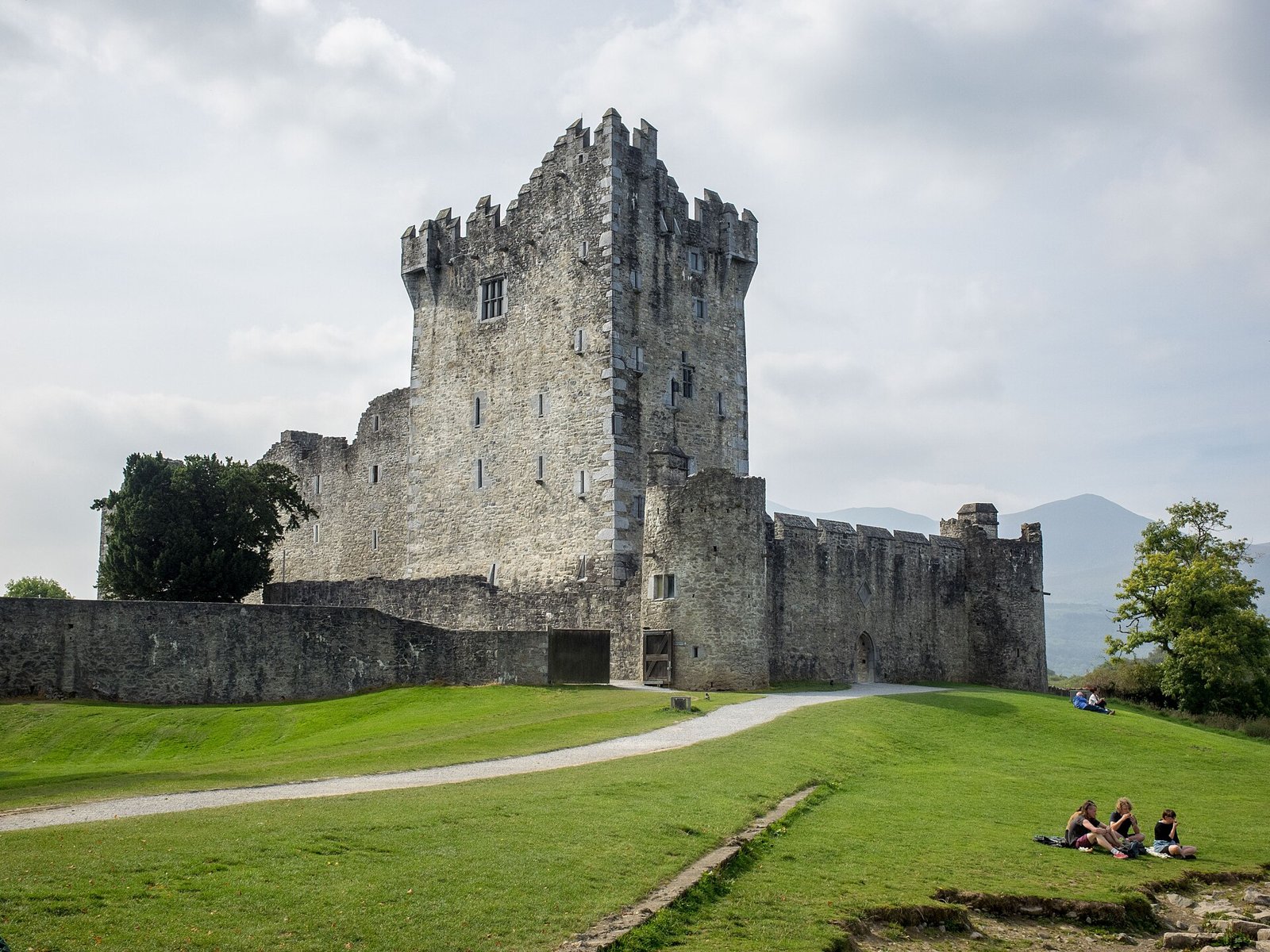
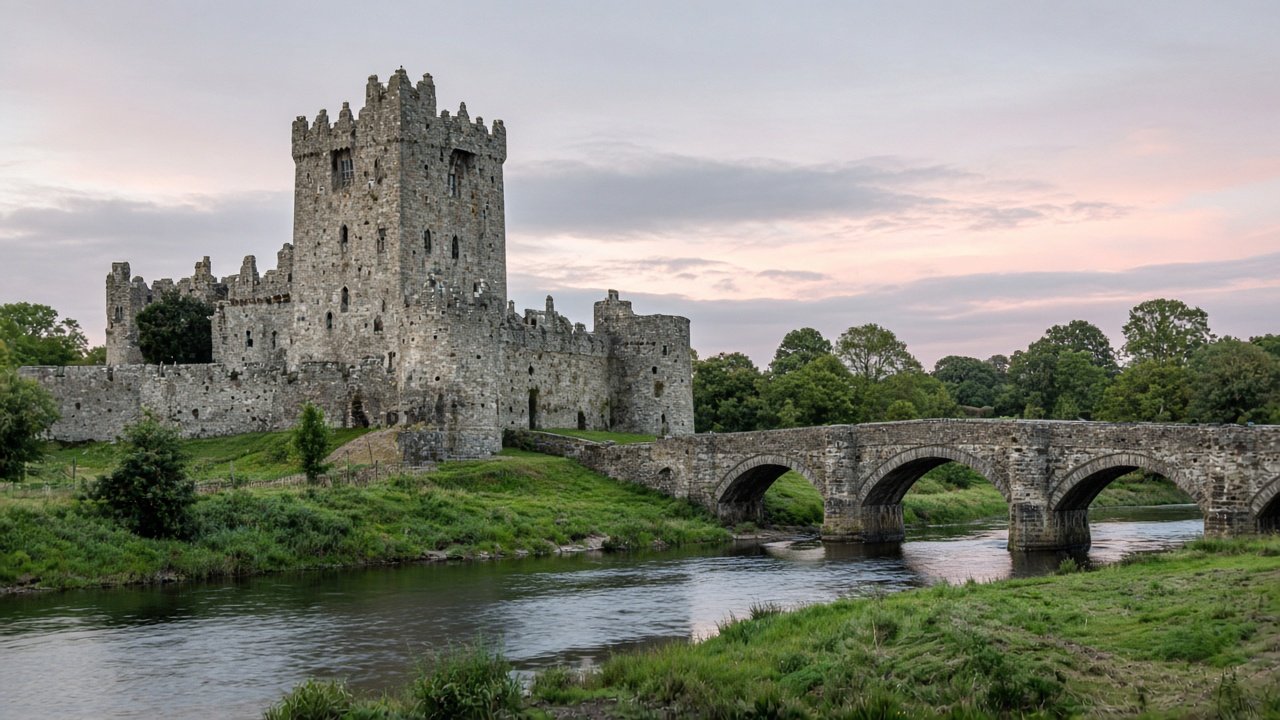
On the shore of Lough Leane in Killarney National Park, Ross Castle is a classic Irish tower house built in the late 15th century by the O’Donoghue Mór chieftains. It was one of the last strongholds in Munster to hold out against Oliver Cromwell’s forces, surrendering in 1652. According to tradition, the defenders believed a prophecy that the castle could never be taken until a ship sailed on the lake. When the Parliamentarian commander had boats brought overland and launched on Lough Leane, the garrison is said to have surrendered.
The Legends
Local legend says that the chieftain O’Donoghue lies in an enchanted sleep beneath the waters of Lough Leane, and that every seven years, on the first morning of May, he rises and rides across the lake on a white horse. Anyone who sees him is said to enjoy good fortune.
Visiting
Ross Castle is managed by the Office of Public Works (OPW) and shown by guided tour, usually in the main season. From the castle you can take a boat trip on the lakes or rent a bike to explore the national park. Killarney town is a short walk or cycle away.
Kilkenny Castle, County Kilkenny
History
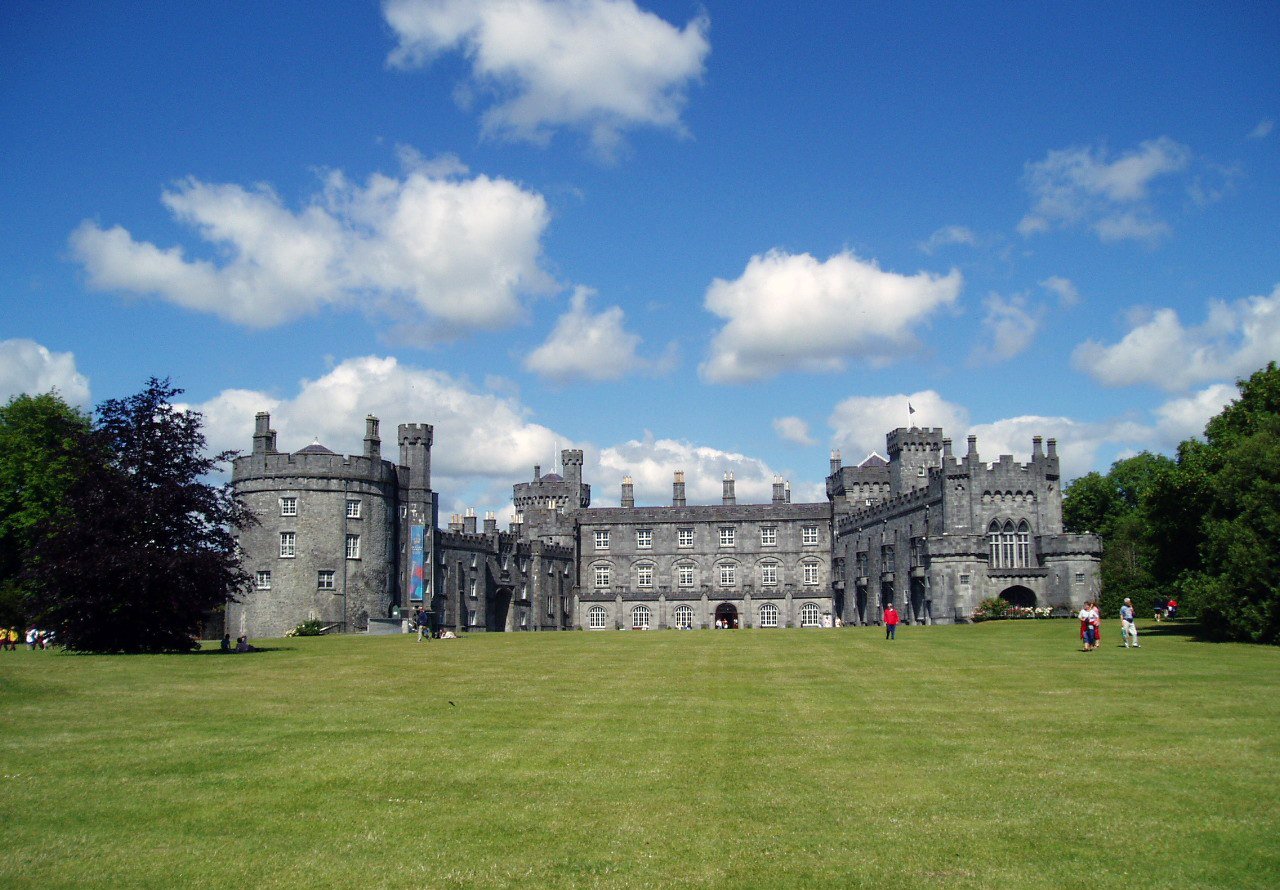
Kilkenny Castle, overlooking the River Nore, was built in stone in the early 13th century by William Marshal, Earl of Pembroke, on the site of an earlier Norman fortification. In 1391 it was bought by the powerful Butler family, later Earls and Dukes of Ormonde, who lived there for almost 600 years. In 1967 the family handed the castle over to the people of Kilkenny for a nominal sum, and it is now managed by the OPW.
The Legends
Kilkenny’s darkest story is connected with the city rather than the castle itself. In 1324 Dame Alice Kyteler, a wealthy Kilkenny woman, was accused of witchcraft in one of the earliest witch trials in Europe. Alice escaped, but her servant Petronella de Meath was burned at the stake. Ghost tours of the medieval city often include Kyteler’s story, and her name lives on in Kyteler’s Inn.
Visiting
The restored rooms, including the Long Gallery with its painted roof, are open year-round. The parkland is free. Kilkenny’s “Medieval Mile” links the castle with St Canice’s Cathedral and other historic sites.
More Haunted Castles on the Island of Ireland
Ballygally Castle, County Antrim
On the Antrim coast in Northern Ireland, Ballygally Castle was built in 1625 by James Shaw, a Scottish settler, and is now a hotel. Its best-known legend concerns Lady Isobel Shaw, who, according to the story, was locked in a room by her husband and fell to her death from a window. The hotel keeps a small “ghost room” in one of the turrets that guests can visit, making it one of the few haunted castles where you can actually spend the night.
Dunluce Castle, County Antrim
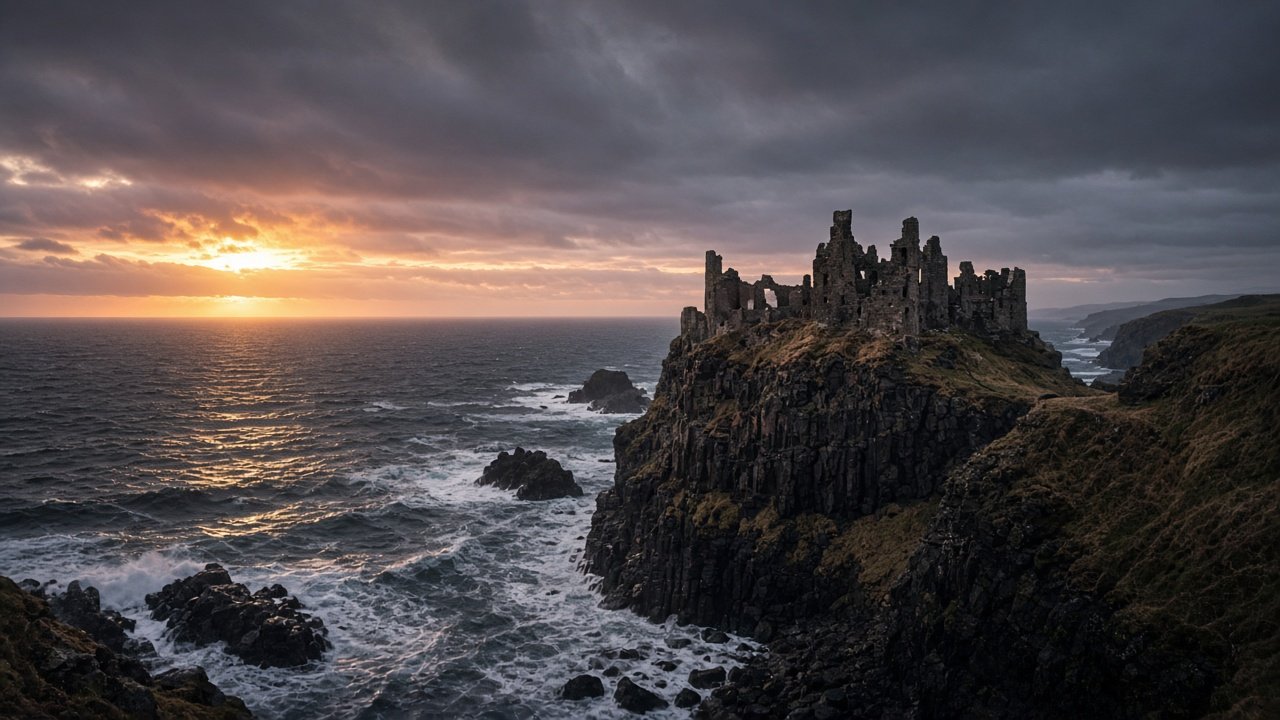
Further along the same coast, the ruins of Dunluce Castle cling to the edge of a basalt cliff above the sea, a stronghold of the MacDonnell family. A popular story claims that part of the kitchen collapsed into the sea during a storm, taking servants with it, although historians question how much of this tale is true. The ruins are cared for by the state, and the clifftop setting is one of the most dramatic in Ireland. Combine it with the Giant’s Causeway nearby.
Beyond the Ghosts: Trim, Blarney and Bunratty
Not every great Irish castle comes with a famous ghost, but these three are among the most visited castles in Ireland and fit easily into a haunted castle road trip.
Trim Castle, County Meath
Trim Castle is the largest Anglo-Norman castle in Ireland. It was begun in the 1170s by Hugh de Lacy, who was granted the lordship of Meath by King Henry II, and its huge cross-shaped keep, with 20 corners, still towers over the River Boyne. The castle was used as a filming location for the 1995 film Braveheart. It is cared for by the Office of Public Works, and the keep is shown on guided tours. Trim is about an hour from Dublin, so it pairs well with a visit to Malahide.
Blarney Castle, County Cork
Blarney Castle, a few miles from Cork city, is a tower house built by the MacCarthy family in the 15th century. It is world famous for the Blarney Stone, set into the battlements at the top of the tower. According to tradition, anyone who kisses it is given the “gift of the gab”, the ability to speak eloquently and persuasively. To do so, visitors lean backwards over a gap in the parapet while holding iron rails, with an attendant on hand. The castle grounds include a poison garden and a series of rock formations with names drawn from folklore.
Bunratty Castle, County Clare
Bunratty Castle, near Shannon, is a large tower house built around 1425 and later held by the O’Briens, Earls of Thomond. It was restored in the 1950s and furnished with medieval furniture and tapestries, and it is now known for its evening medieval-style banquets. Next to the castle, Bunratty Folk Park recreates rural Irish life in the 19th century, with cottages, farmhouses and a village street.
Quick Facts
| Castle | County | Built | Best-known legend | Open to visitors? |
|---|---|---|---|---|
| Leap Castle | Offaly | Medieval tower house | The Bloody Chapel and “the Elemental” | Private home; by arrangement only |
| Charleville Castle | Offaly | 1798–1812 | Harriet on the staircase | Tours and events at set times |
| Malahide Castle | Dublin | Talbot home from the 12th century | Puck the jester | Yes, year-round |
| Ross Castle | Kerry | Late 15th century | O’Donoghue rising from the lake | Yes, seasonal tours |
| Kilkenny Castle | Kilkenny | Early 13th century | Dame Alice Kyteler (city legend) | Yes, year-round |
Tips for a Haunted Castle Trip
- Visit around Halloween: Halloween has its roots in the ancient Irish festival of Samhain, and many castles and towns host special events in late October.
- Book ghost tours ahead: evening and ghost tours have limited places.
- Respect private homes: Leap Castle and several other “haunted” castles are lived in. Only visit by arrangement.
- Combine regions: Leap and Charleville are both in County Offaly; Malahide pairs with Dublin; Kilkenny and Ross fit a southern route towards Kerry.
Frequently Asked Questions
What is the most haunted castle in Ireland?
Leap Castle in County Offaly is the castle most often given that title, thanks to legends of the Bloody Chapel and a spirit known as “the Elemental”.
Can you visit Leap Castle?
It is a private home and not a regular visitor attraction. Visits have sometimes been possible by prior arrangement only.
Are there ghost tours at Irish castles?
Yes. Charleville Castle runs ghost tours at certain times, and towns such as Kilkenny and Dublin offer evening ghost walks.
Who was Dame Alice Kyteler?
A wealthy Kilkenny woman accused of witchcraft in 1324. She escaped, but her maid Petronella de Meath was burned at the stake.
Is Halloween Irish?
Halloween has roots in Samhain, a Celtic festival marking the end of the harvest and the start of winter, which was celebrated in ancient Ireland.
What is the largest castle in Ireland?
Trim Castle in County Meath is the largest Anglo-Norman castle in Ireland. It was begun in the 1170s by Hugh de Lacy.
Can you kiss the Blarney Stone?
Yes. The stone is set into the battlements at the top of Blarney Castle’s tower, and visitors lean backwards over a gap in the parapet, holding iron rails, to kiss it. Expect queues in summer and a narrow spiral staircase on the way up.
Are ghost tours safe for children?
Most castle ghost tours focus on history and storytelling rather than scares, but content varies. Check the age guidance for each tour, and consider a daytime visit for younger children.